

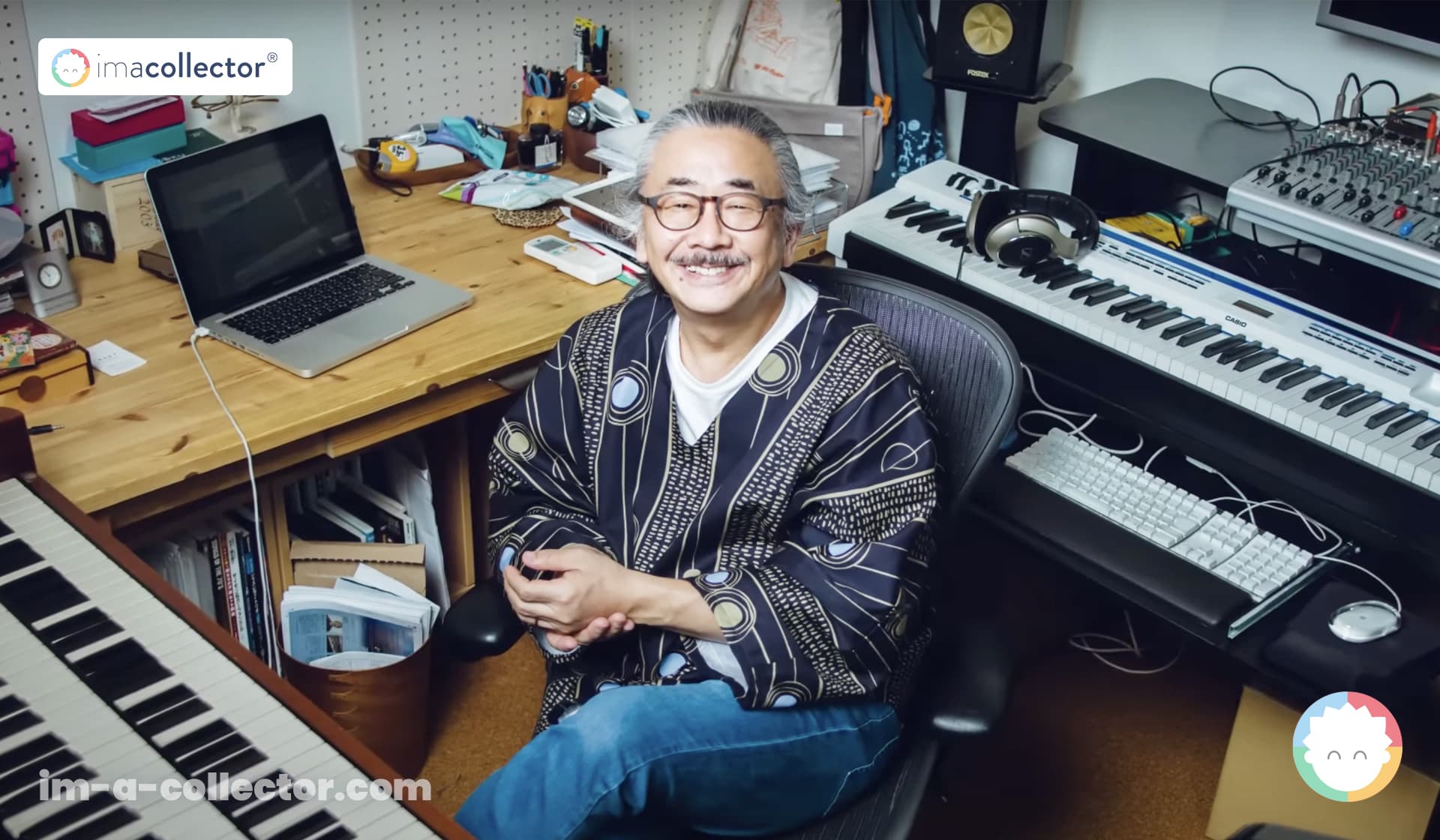
Nobuo Uematsu: the quiet reserve of a composer who shaped generations

People know his music. What they know less well is his reserve, his relationship with melody, and the creative fatigue he has spoken about himself. And that is probably where Nobuo Uematsu becomes most compelling.
Table of contents
- A towering composer who never really tried to stand in the spotlight
- Kōchi, nature, and mystery: what his music carries before it even begins to tell a story
- Some foundational pieces were born out of striking fragility
- Melody, time, and how age alters the creative act
- When the work becomes larger than the person who wrote it
A towering composer who never really tried to stand in the spotlight
Nobuo Uematsu belongs to that rare group of artists whose work has come to eclipse their own public image. His name immediately brings to mind pieces that several generations of players still carry within them. And yet, the more you read his interviews, the more one impression takes hold: Uematsu never really tried to turn himself into a monument or a myth (source : Daily Red Bull Academy).
If anything, the opposite seems true.
A closer look at his path reveals something quite different from the familiar image of the canonised composer. What emerges instead is a self-taught man, long haunted by doubt, drawn first to melody rather than status. One reference biography notes that he grew up idolising Elton John, never received formal musical training, and began learning by ear at the age of 12 on his grandparents’ guitar and his sister’s piano (source : squareenixmusic.com).
This is not a minor detail. It highlights something essential in his writing: for Uematsu, music (or perhaps melody would be the better word) seems to have come before legitimacy. He did not emerge from a rigid system where everything had been mapped out in advance. His connection to music was more instinctive, more direct, almost more exposed.
You can hear the same thing in the way he speaks about his beginnings. Before joining Square, he moved through a world of amateur bands, trial and error, uncertainty, and friends still trying to find their place. His arrival in video games looks less like a carefully charted destiny than an uncertain turn in the road. In his Red Bull Music Academy interview, he says himself that games were not his first goal, and that he had imagined moving toward a form of music seen as more legitimate (source : Daily Red Bull Academy).
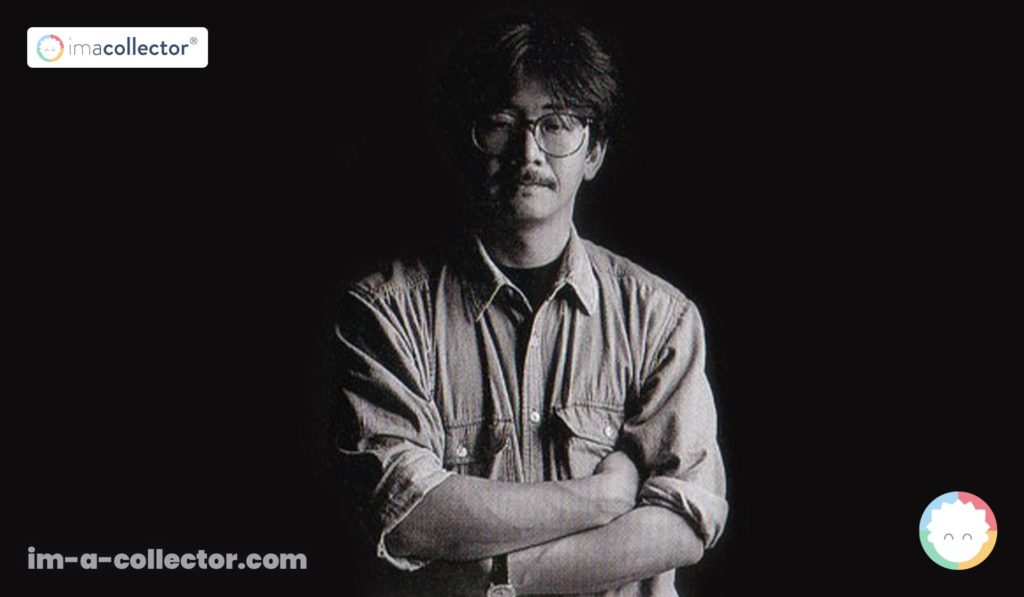
Kōchi, nature, and mystery: what his music carries before it even begins to tell a story
But to understand what his music carries, you probably have to go further back than Square. Further back than Final Fantasy.
In a 2014 interview, Uematsu says he was born in Kōchi on the island of Shikoku, in a landscape of mountains, rivers, and nature that he says he still deeply loves. He also links that childhood to a kind of spiritual mystery, and speaks very clearly about his long-standing attraction to the supernatural (source : Daily Red Bull Academy).
This is not just a biographical footnote. It is a key that changes how much of his work can be read.
Because with Uematsu, music does not seem to stem from technique or style alone. It grows out of a rare blend of landscape, memory, and emotion. In that same conversation, he explicitly links forests, rivers, castles, and fantasy worlds to what he already loved when he was living in Kōchi (source : Daily Red Bull Academy).
That may be why so many of his compositions feel as though they open an inner space before anything has even begun on screen.
Some foundational pieces were born out of striking fragility
That same feeling can be found in the way some of his works came into being. One of the best-known stories is also one of the most revealing. In his Red Bull Music Academy interview, Uematsu recalls that as he was finishing the music for the first Final Fantasy, Hironobu Sakaguchi asked him for one more piece for the title screen when he thought he was already done. He says he wrote it in a very short span of time, with no idea that the piece would go on living across the series for years afterward (source : Daily Red Bull Academy).
That story is often retold as a neat anecdote. I do not think that is the most interesting thing about the man or about his music.
What this memory reveals above all is the ordinary, deeply tangible fragility in the birth of a work. Some pieces that have since taken on near-heritage status do not emerge in perfect majesty, let alone in some divine moment of creation. Like certain graphic works, they appear under pressure, in a tense corner of the process, sometimes before their creator has any real sense of what they will come to mean.
With Uematsu, that gap between the moment of creation and the later fate of a piece is more than fascinating. It is a reminder that a work can become immense without having been conceived as a monument when it first appeared. Wwithout any awareness of the symbolic weight it would later carry.
What also stands out in his more recent remarks is the continuity in the way he relates to composition.
In an official PlayStation interview published around Final Fantasy VII Rebirth, Uematsu explains that he approached “No Promises to Keep” as a ballad, a form he is especially fond of. He says he wrote the melody first, before the lyrics, with the sole aim of making the song memorable through its structure and through the repetition of a key phrase (source : Playstation).
He also says he wanted to preserve a softness touched by emotional complexity that would suit Aerith. That passage matters because it shows that even after decades of work, he still speaks first as a composer of melodies. Not as the custodian of his own myth.
Even when working on a franchise so heavily charged with symbolism, he returns to nearly elemental questions: the line, memory, the voice, the right emotion. To me, that is why his music moves through time so well.
Its power does not rest only on orchestral scale or on the historical prestige of a series, but on something both simple and difficult: a melody must first live in the body and in memory.
Melody, time, and how age alters the creative act
That continuity does not erase time, however. And that is exactly where the subject becomes even more human.
In a long interview with Famitsu in 2021, Uematsu says that he can no longer imagine composing an entire game soundtrack on his own the way he once did, and connects that to the energy, physical condition, and mental endurance this kind of work demands. At the same time, he also says that his pleasure in making music has not disappeared (source : Famitstu).
That honesty matters. It does not reduce his work to a late-career fatigue; it makes it human again. What you hear in it is a creator refusing to lie about what this kind of work still demands. Spending years composing for a full game is not just a matter of talent. It is also a matter of stamina, mental availability, and the ability to endure over time.
That same interview also shows that this is not a simple withdrawal from creation. On the contrary, Uematsu still speaks there with curiosity about music, about the unknown, about what he does not yet fully understand within his own art. His relationship to composition is not that of a man shutting the door. It is closer to that of an artist narrowing the field in order to protect what still truly matters to him (source : Famitstu).
It is an essential distinction, especially today, when slowing down is so often mistaken for retreat or disappearance.
When the work becomes larger than the person who wrote it
There is one last, even subtler trait that makes Uematsu especially interesting today.
In January 2026, GamesRadar+ relayed comments from a Famitsu interview marking the 25th anniversary of Final Fantasy IX. In it, he explains that he does not like listening back to his pieces once they are finished, that he feels “too embarrassed” by them, and that he finds none of them truly satisfying. More than that, he says that after hearing them over and over during debugging, he sometimes ends up hating them (source : GameRadar+).
There is something more valuable here than a simple pose of humility: a crack, an intact demand, and a reminder that the works that accompany our lives are not necessarily experienced by their creator as monuments fixed outside time.
In that same article, he nonetheless admits to retaining a particular affection for part of the Final Fantasy IX soundtrack, especially in connection with his fondness for medieval fantasy. That mix of distance, high standards, and attachment says a great deal about how he relates to his own compositions (source : GameRadar+).
In another interview with Automaton, he even cites “Roses of May” and “The Final Battle” among the pieces he is especially fond of (source : Automaton media).
That is probably where Nobuo Uematsu becomes most interesting. Not only as a major video game composer, but as a creator whose reserve never diminished the reach of his work.
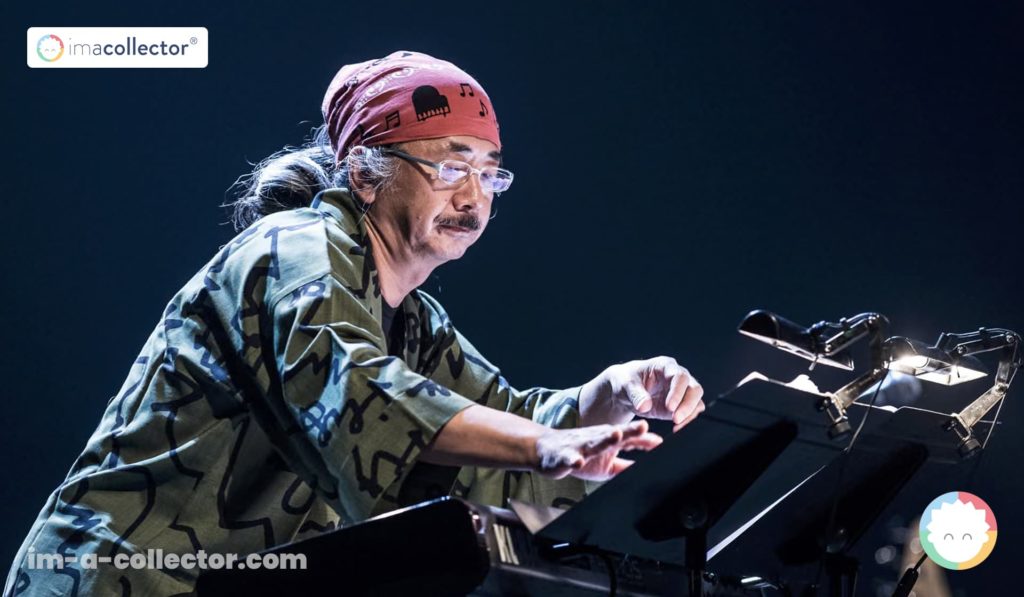
Having met him several times, I find that same impression in the way he carries himself: a very simple kind of humility, without performance, in which the music always seems to matter more than the man.
With him, greatness seems to come less from any desire to impress than from the ability to let the work occupy more space than its author.
And perhaps it is precisely that step back which made his music endure so powerfully.