

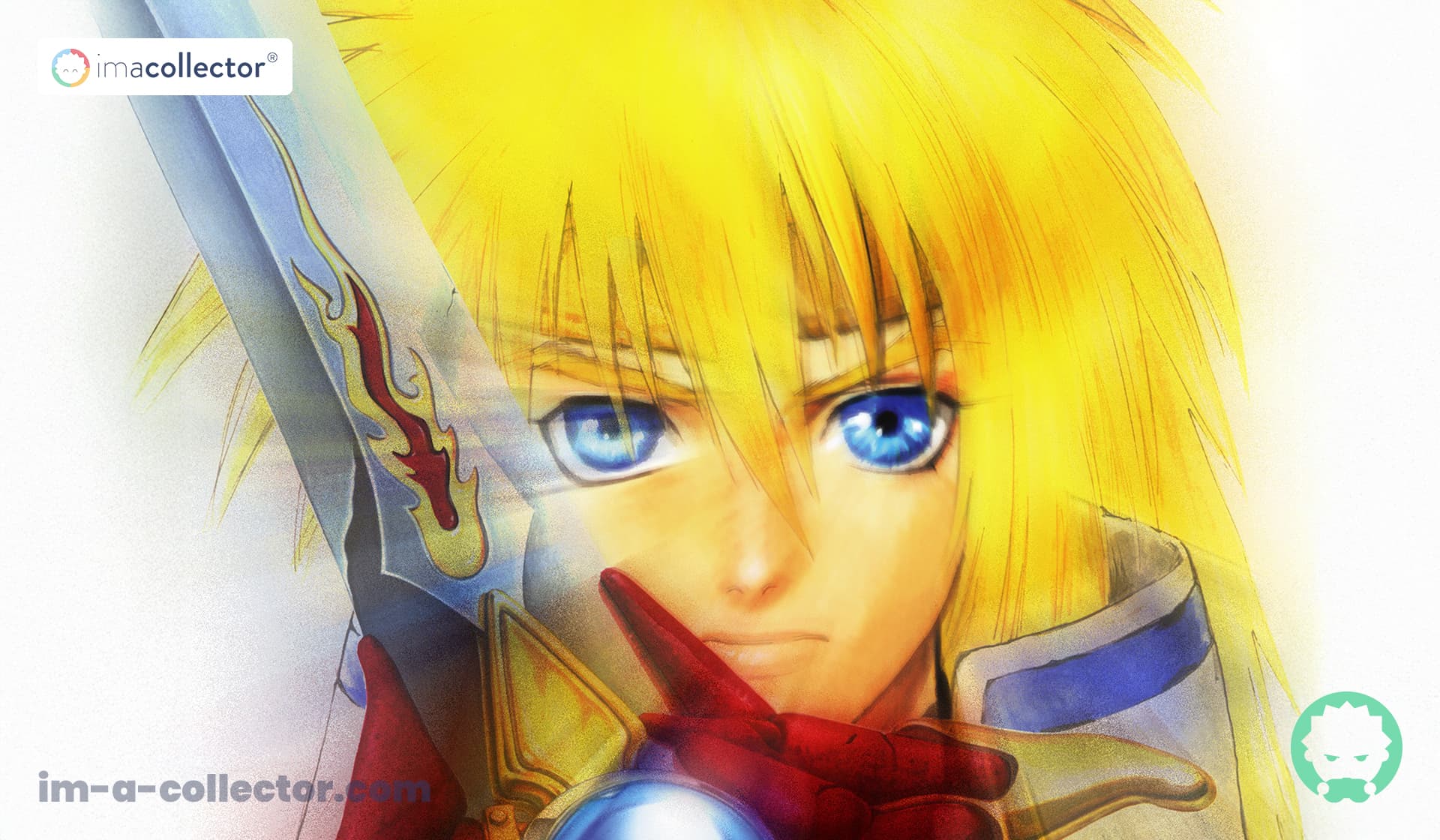
[Memory card] Tales of Destiny (PS1, 1997) — unforgettable

Released in 1997 in Japan and in 1998 in North America, Tales of Destiny is the first entry in the Tales series to be officially released outside Japan. Developed by Wolf Team and published by Namco, it laid the foundations for the franchise’s global success with its dynamic real-time combat system (LMBS), highly endearing characters, and animated cutscenes produced by the prestigious studio Production I.G.
It is a game I struggled to obtain for a long time, and one that only joined my personal collection in 2025.
Sommaire
General overview
Tales of Destiny is the second main entry in the Tales of series, developed by Wolf Team and published by Namco.
- The Japanese version was released on December 23, 1997, for PlayStation.
- In North America, the English version was released on September 30, 1998.
- It is the first Tales of title to be officially localized in English.
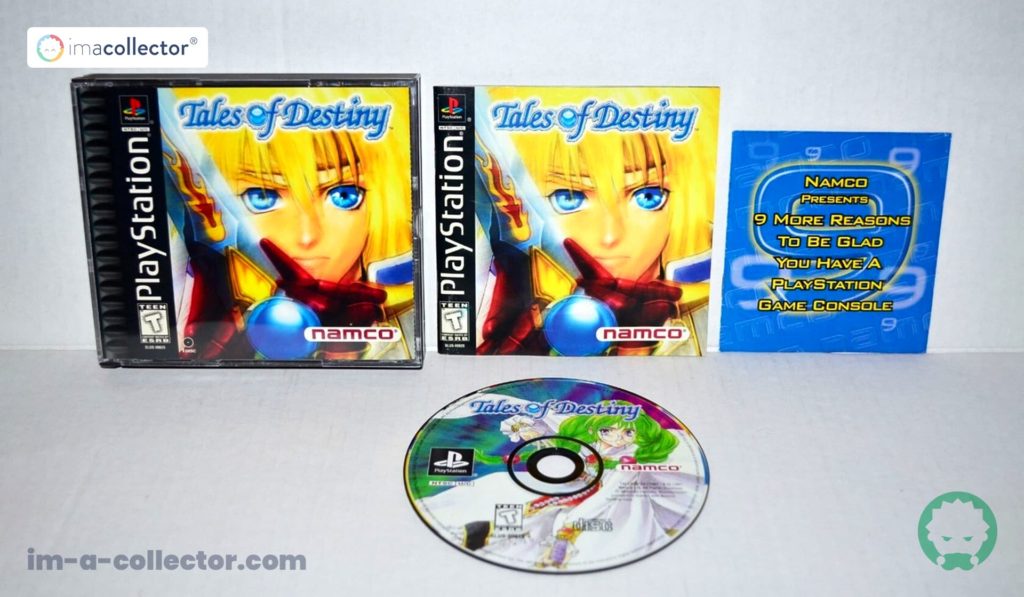
The game
There is no PS1 collector’s edition for Tales of Destiny; collector editions were primarily released later with the PS2 remakes.
PS1 game content:
- A single-player adventure set in a fantasy world, featuring Stahn as the main protagonist, alongside companions encountered throughout the journey.
- High-quality animated intro and outro sequences produced by Production I.G.
- A soundtrack composed by two renowned composers: Motoi Sakuraba and Shinji Tamura.
Other versions
In 2006, Tales of Destiny was remade for PlayStation 2, featuring improved graphics and redesigned sprites, followed by a Director’s Cut version released in January 2008.
The Japanese Director’s Cut “Premium Box” includes:
- The game itself
- An illustration booklet (approximately 128 pages) featuring new artwork by Mutsumi Inomata
- An original soundtrack dedicated to this version
- A special package with an alternate outer cover
Gameplay system
- Tales of Destiny uses the Linear Motion Battle System (LMBS), an enhanced version (“E-LMBS”) compared to Tales of Phantasia.
- Battles take place in real time on a 2D plane: characters and enemies move, attack, and cast spells dynamically. The player directly controls one character at a time, while issuing commands (spells, special attacks) to allies.
- The player directly controls one character at a time, while issuing commands (spells, special attacks) to allies.The game combines world map exploration, dungeons, main story quests, occasional puzzles, and extensive dialogue.
- Playtime: approximately 20–25 hours depending on pacing and side content. Some segments may slow the overall rhythm.
Strengths and limitations
Strengths
- A strong narrative atmosphere, with characters that possess genuine personalities and evolve throughout the story.
- A dynamic combat system for its time, offering a compelling balance between action and strategy, more engaging than purely turn-based RPGs.
- A very strong, cohesive visual style: the sprites, the animated cutscenes, and Inomata’s art direction. This game had everything going for it.
- High-quality music composed by well-respected figures in the JRPG genre.
Limitations
- Graphics that feel somewhat dated by modern standards: certain environments and the world map lack refinement, though the game retains undeniable charm.
- The pacing can be uneven at times, with certain sequences feeling rather long and some dialogue going on a bit too much (personally, I don’t mind it, but I know that can be a sticking point for some players). And let’s not forget the occasional monotone dungeon design, though I’ve definitely seen far worse.
- A moderate, sometimes even too easy difficulty level: many battles are fairly simple if you have even a basic grasp of the system. For players looking for a real challenge, that may not be enough.
- Minor localization issues, where certain nuances of the original Japanese dialogue were softened or simplified.
Why play it?
At the time
- It was one of the few high-quality PlayStation RPGs available in English. For fans, this was a major event—a Tales ofgame released outside Japan was far from common at the time.
- The mix of action, adventure, and emotionally engaging characters felt refreshing compared to many Western titles of the era. Unfortunately, it never received a French localization.
- Production I.G’s animation and the soundtrack gave the game a premium feel, especially for a PS1 release.
Today
- For nostalgics (like myself): a chance to revisit a classic that helped establish the Tales series worldwide.
- For fans of old-school JRPGs: the game offers a clear picture of what action RPGs were like before modern standards.
- For collectors or Tales completists: the PS1 versions, remakes, Director’s Cut, and Japanese Premium Box editions are all worth exploring. Fan patches such as Tales of Destiny Reforged, which address localization issues and bugs, further enhance the experience for modern collectors.
My personal take
Tales of Destiny remains a pillar of the genre for those who enjoy vintage action RPGs. It may not be the greatest RPG ever made, but it delivers a solid adventure, strong artistic direction, and an immersive soundtrack.
If you are willing to accept the technical limitations of the PlayStation era, you can easily be drawn into its universe and find genuine enjoyment in discovering a game that still deserves attention today.
Article produced by imacollector® — an editorial archive dedicated to the memory and heritage of Japanese pop culture.
Content published for informational and documentary purposes. All rights reserved to the respective rights holders.