

Video Games & Music: when an exhibition about video game music forgets to talk about music

Exhibitions devoted to video games are becoming more frequent, larger, and more spectacular. Screens keep getting bigger, projections spread across the walls, retro consoles return under glass, and arcade cabinets reappear as reassuring fragments of a collective memory that has now become profitable. People bring their children to show them “the games from our time”, take photos of a giant Game Boy, play a few minutes of old classics, then leave with that familiar feeling of having walked through something important. Yet when I left Video Games & Music at the Philharmonie de Paris, satisfaction was not what I felt.
Table of contents
- A huge promise, an absent journey
- An exhibition that triggers memories more than it explains them
- Nostalgia is not enough
- The composers remain the great absentees of the story
- Spectacular scenography, but too little structure
- More a family exhibition than a music exhibition
- What this exhibition reveals in spite of itself
- Video game music deserves more than nostalgic scenery
Behind the dozens of screens, the playable retro consoles and games, and the giant projections, I mostly felt as if I were moving through an exhibition that constantly used video game music without ever really taking the time to talk about it. Everything seemed designed to trigger an immediate memory, sustain a permanent sense of immersion, or produce that strange satisfaction tied to nostalgia, helping us instantly recognise an era, a console, or a licence.
That is probably what frustrated me most, because video game music now deserves far more than the role of emotional wallpaper between two arcade cabinets and a few lifeless display cases.
A huge promise, an absent journey
On paper, the exhibition had everything it needed to become a real moment of transmission.
The Philharmonie de Paris presents Video Games & Music as an exhibition devoted to the relationship between music and video games, from the 8-bit era to symphonic orchestras. For anyone who still sees video game music as more than a simple sonic backdrop, that promise was almost unreal.
If you are reading this, you probably know as well as I do that this music has never merely dressed up a game. It accompanies waiting, exploration, defeat, rising tension, solitude, combat, and sometimes even a quiet form of intimacy between a player and a virtual world they grew up with, or grew through. It works differently from film music because it follows an action. It has to loop without wearing itself out, support without distracting, and exist even when the player hesitates, gets lost, or stands still.
It also has a fascinating history. A history shaped by technical constraints, limited sound chips, insufficient memory, MIDI, themes composed with almost nothing, then increasingly ambitious orchestrations as technology evolved. In that history, melodies built on only a few audio channels sometimes became more memorable than entire film scores.
C’est cette histoire-là que j’espérais voir racontée : celle d’une musique née dans la contrainte, devenue langage, puis mémoire collective. J’attendais qu’on m’aide à comprendre comment ces thèmes se sont construits, pourquoi ils ont autant marqué les joueurs, et comment ils sont passés d’un simple accompagnement fonctionnel à une matière culturelle que l’on rejoue aujourd’hui en concert, que l’on collectionne en vinyle, et que l’on reconnaît souvent en quelques secondes seulement.
An exhibition that triggers memories more than it explains them
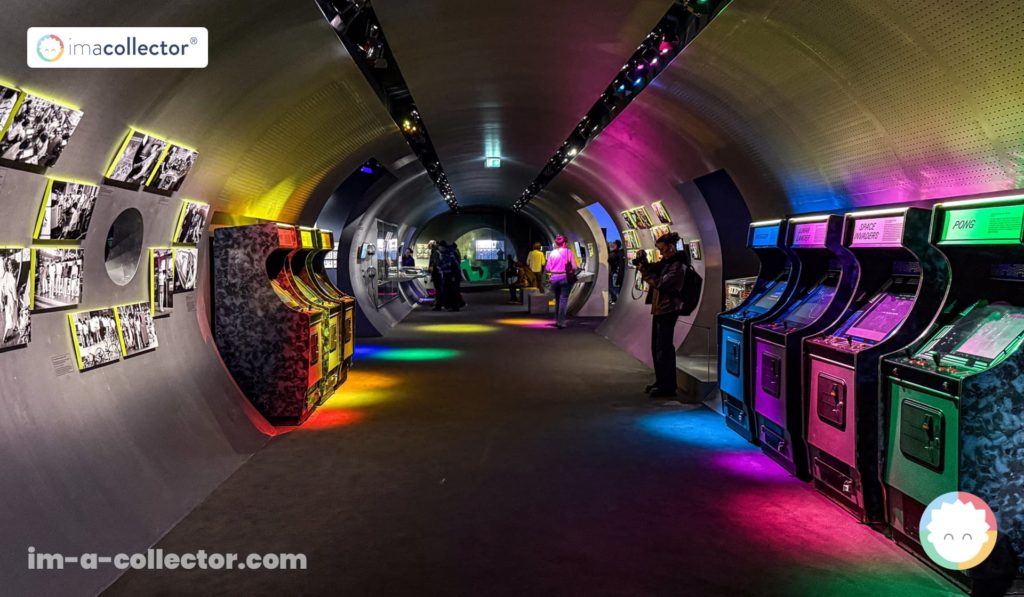
Visually, the exhibition makes an immediate impression as soon as you enter. Projections fill the space, the installations are immersive, references follow one another quickly, and the playable arcade cabinets and retro consoles create constant movement throughout the route.
Everything seems designed to hold attention, trigger an immediate reaction, bring back a memory, or activate a reflex of recognition.
C’est précisément là que j’ai ressenti mon premier malaise. En effet, cette exposition semble constamment préoccupée par l’effet produit sur le visiteur que par ce qu’elle devrait réellement transmettre sur la musique elle-même.
So we move through familiar fragments of video game culture, iconic images, and famous licences. But the route rarely takes the time to explain what these works express musically, how they speak to one another, or why certain compositions profoundly changed the way we listen to video games.
Here, music becomes a diffuse, blended presence, and ultimately a secondary one because it gets lost. It tries to accompany the experience and stimulate memory. It struggles to connect the spaces and is too rarely analysed as a subject in its own right.
That is probably what creates this strange feeling of constant skimming. The exhibition shows a great deal, but rarely leaves enough time to truly listen.
Nostalgia is not enough
Let’s be clear: this exhibition is built on nostalgia. Nostalgia is part of video game culture. It is even one of the reasons these pieces of music continue to move so powerfully across generations.
A few notes can sometimes reopen an entire period of our lives. A Final Fantasy theme, a save-room melody, the atmosphere of Silent Hill, a Zelda village, the opening of Wild Arms, a tune heard hundreds of times without ever growing tired of it. Video game music often works as condensed memory.
A time when we lived games more than we watched them. A bedroom. A cathode-ray television. A console left on late at night, the volume lowered but not completely, so the sounds, atmospheres, and music could still be heard. A sense of adventure that has become almost impossible to recover in quite the same way as an adult.
And it is precisely that emotional power that deserved to be unpacked.
Why do certain loops remain etched in memory despite their technical simplicity? How did hardware limitations shape musical writing? Why did certain Japanese composers create themes that are so instantly identifiable? How did video game music move from functional tool to a culture of listening, concerts, and collecting?
That is where the exhibition could have become fascinating. Nostalgia only becomes interesting when we understand what it reveals. Here, we were shown only a tiny fragment of that.
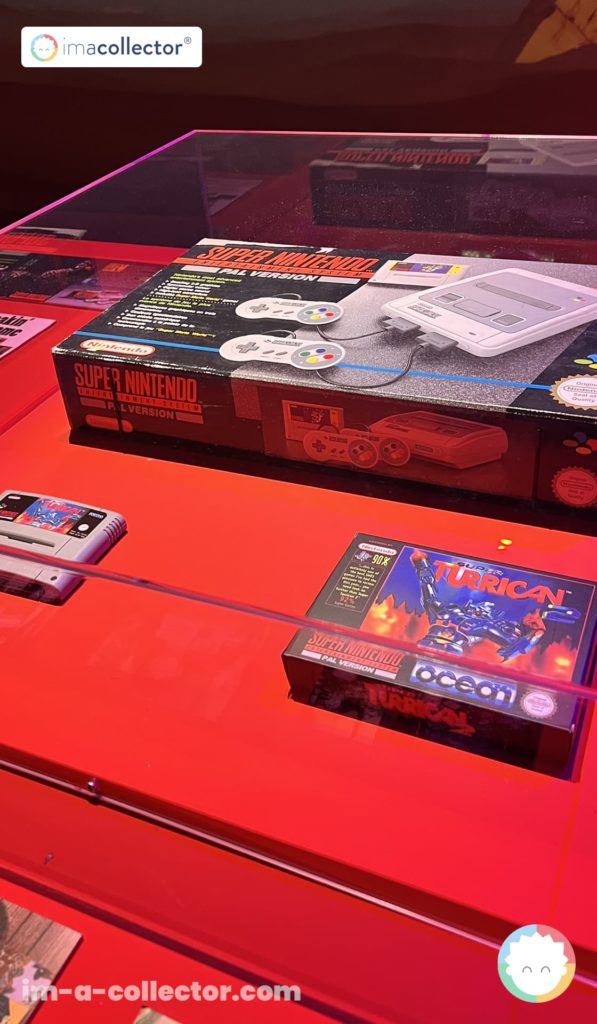
The composers remain the great absentees of the story
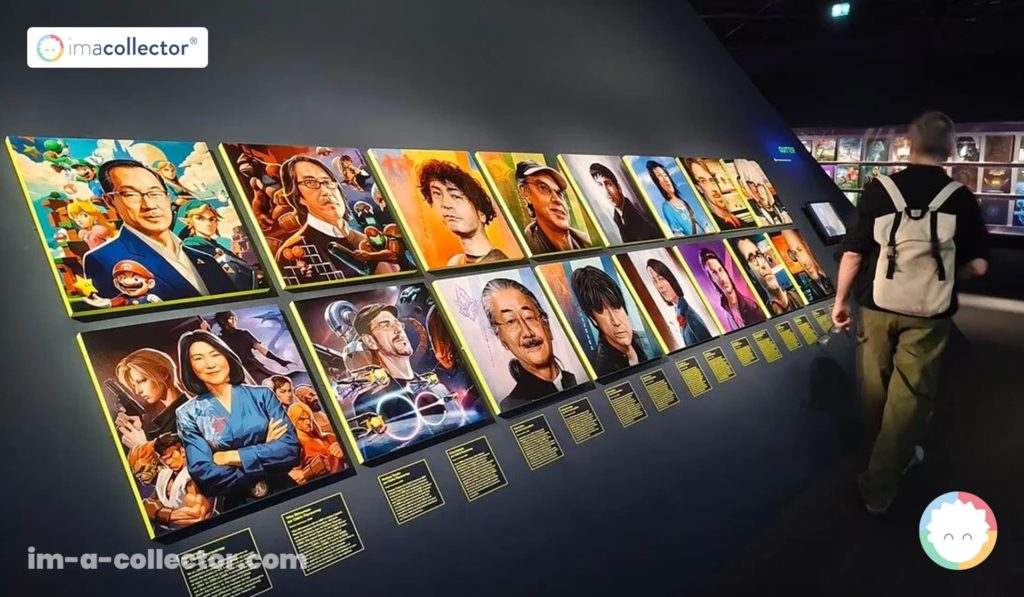
This was probably my greatest frustration in the whole exhibition. In an exhibition devoted to video game music, the composers should have been at the centre of the story, treated as authors rather than secondary names attached to famous franchises or to a stand in a dark room.
In reality, countless players already know their compositions without truly knowing their work. Nobuo Uematsu, Koji Kondo, Yoko Shimomura, Yasunori Mitsuda, Akira Yamaoka, and Motoi Sakuraba have shaped a vast part of the emotional memory of Japanese video games.
The problem is that the exhibition sometimes seems to treat this implicit recognition as enough. We hear certain themes and glimpse certain faces, but the route almost never takes the time to clearly connect a piece of music to its construction, its technical context, its intention, or the person who composed it.
Et c’est vraiment dommage. Parce qu’une exposition à la Philharmonie de Paris avait justement l’occasion de faire ce que les playlists nostalgiques, les compilations YouTube ou les montages TikTok ne font presque jamais : remettre les compositeurs au centre de la mémoire vidéoludique.
Faire écouter un thème puis expliquer pourquoi il fonctionne. Montrer comment une contrainte technique devient parfois une signature musicale. Comparer une version originale à ses réorchestrations modernes. Rappeler pourquoi certaines mélodies composées sur des supports extrêmement limités continuent aujourd’hui encore d’émouvoir des millions de joueurs.
Unfortunately, that depth is what Video Games & Music lacks throughout its route.
Spectacular scenography, but too little structure
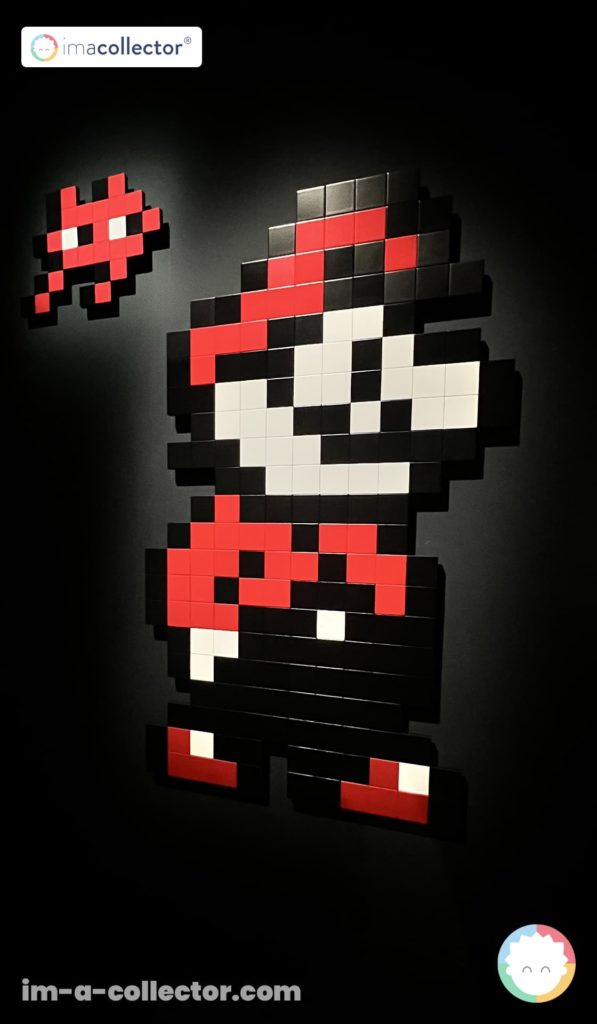
The central tunnel almost sums up the limits of the exhibition on its own. The images and sounds are immediately impressive, offering a stream of highly recognisable titles and reassuring us with a giant Mario.
But the further the route goes, the more a strange feeling takes over: everything seems emotionally connected, but rarely intellectually connected. Seeing the opera from Final Fantasy VI appear after Daft Punk in Fortnite could have been fascinating if the exhibition had taken the time to build that connection. There was so much to say about the evolution of musical performance in video games, the staging of interactive spectacle, and the shift from a narrative JRPG sequence from the 1990s to virtual concerts embedded in global live-service games.
Instead, these juxtapositions feel more like a succession of strong references than a real reflection on the evolution of video game music. Everything moves quickly here. Too quickly. Everything seems important, but very little is given the time to truly exist.
The spectacular then becomes a trap: it constantly gives the impression that something is happening, without always building a sufficiently deep line of thought behind what it shows.
More a family exhibition than a music exhibition
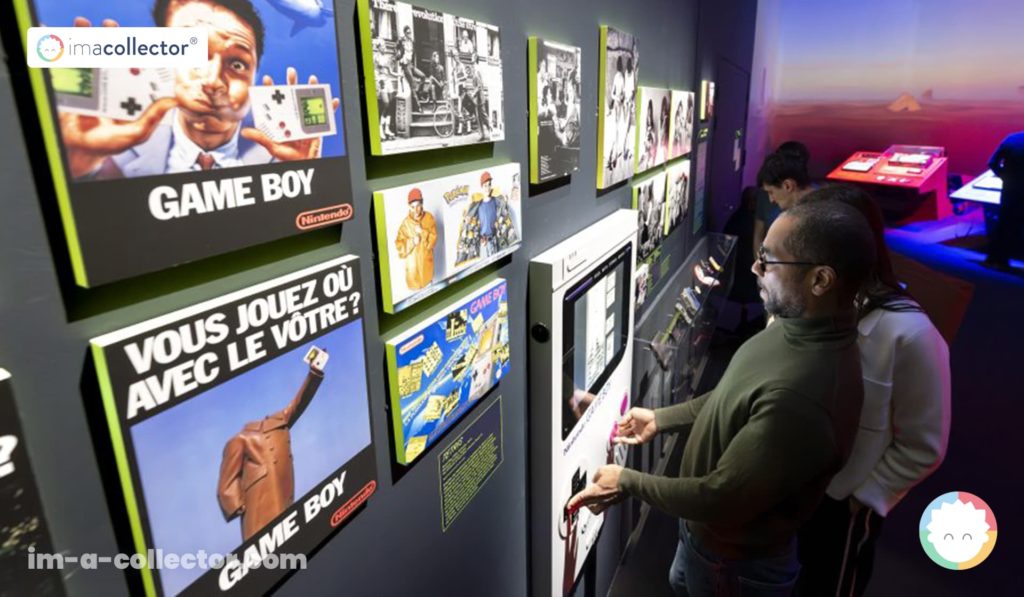
This may be where the exhibition disappointed me the most. Video Games & Music probably works very well as a family outing. You can bring your children, show them the games from your era, share memories, play a few minutes of classic titles, compare consoles, and observe that strange cultural continuity between generations of players. Fair enough. But that was not what I was sold, and even less what I was looking for when I bought my tickets.
The main problem lies in the gap between what the title promises and what the exhibition actually offers.
When an institution like the Philharmonie announces an exhibition devoted to video game music, it is natural to expect more than an immersive space where nostalgia mainly serves as a tool for movement and shared recognition.
In any case, I expected more. A reading. A structure. A way of understanding why this music continues today to be performed in concert, collected on vinyl, studied, reorchestrated, and above all transmitted.
Yet the exhibition sometimes seems afraid to let the music exist on its own. It surrounds it with screens, cabinets, interactions, visual effects, and references, when the subject actually deserved more listening, more silence, more time. And even more light. Most of the route, after all, takes place in dark or very dimly lit rooms.
Video game music no longer needs to be protected by the image of video games in order to exist culturally. It can stand on its own. But only if it is given the chance.
What this exhibition reveals in spite of itself
In the end, the most interesting thing about this exhibition may not be only what it shows. It is what it reveals about the way we currently exhibit video games.
Behind the accumulation of screens, projections, and interactive devices, there is also this persistent impression that video games still have to reassure in order to be treated as a serious cultural subject.
The exhibition constantly tries to keep visitors inside an immersive, stimulating, immediately accessible experience, even though it is speaking about music that deserved more silence, more listening, and a slower form of attention.
And this logic goes far beyond Video Games & Music. It appears in many exhibitions devoted to contemporary pop culture: visually efficient, emotionally powerful routes that still hesitate to slow down enough to develop a real underlying reflection.
By trying so hard to make these worlds immediately appealing, we sometimes reduce their depth. Works become mere references. Nostalgia takes up so much space that it can prevent us from seeing what actually built this collective memory.
The exhibition constantly shows the memory-image of video games, but never what allowed that memory to take shape.
Video game music deserves more than nostalgic scenery
I do not regret seeing this exhibition. But I deeply regret the exhibition it could have been. I would have liked to see a route that placed composers back at the centre, explained why certain technical limitations produced such strong musical identities, and reminded us that a theme recognisable within seconds often carries an entire era of video game history behind it.
Because video game music is not merely a nostalgic trigger placed between giant screens and pop culture icons. It is one of the places where video games learned to create memory, emotion, and sometimes even a very particular form of solitude that other media struggle to reproduce.
And that is exactly why it deserved far more than a spectacular journey through interactive memories. A shame.