

OST vinyl records (video games, anime, films…): why this merchandise becomes an object of memory

Within the broader world of merchandise, vinyl records hold a distinct place. At first glance, they may look like just another format designed to extend the experience of a video game, an anime or a film. A beautiful collector’s edition for fans, more substantial than a badge or an artbook, yet still filed under the same category as everything else. In reality, their status is often quite different.
Table of contents
- Why OST vinyl records are not merchandise like any other
- When collecting a vinyl record means pursuing a trace
- Final Fantasy & Nobuo Uematsu: when a collector vinyl becomes a central piece in a collection
- Collecting does not ennoble everything: it absorbs disappointment too
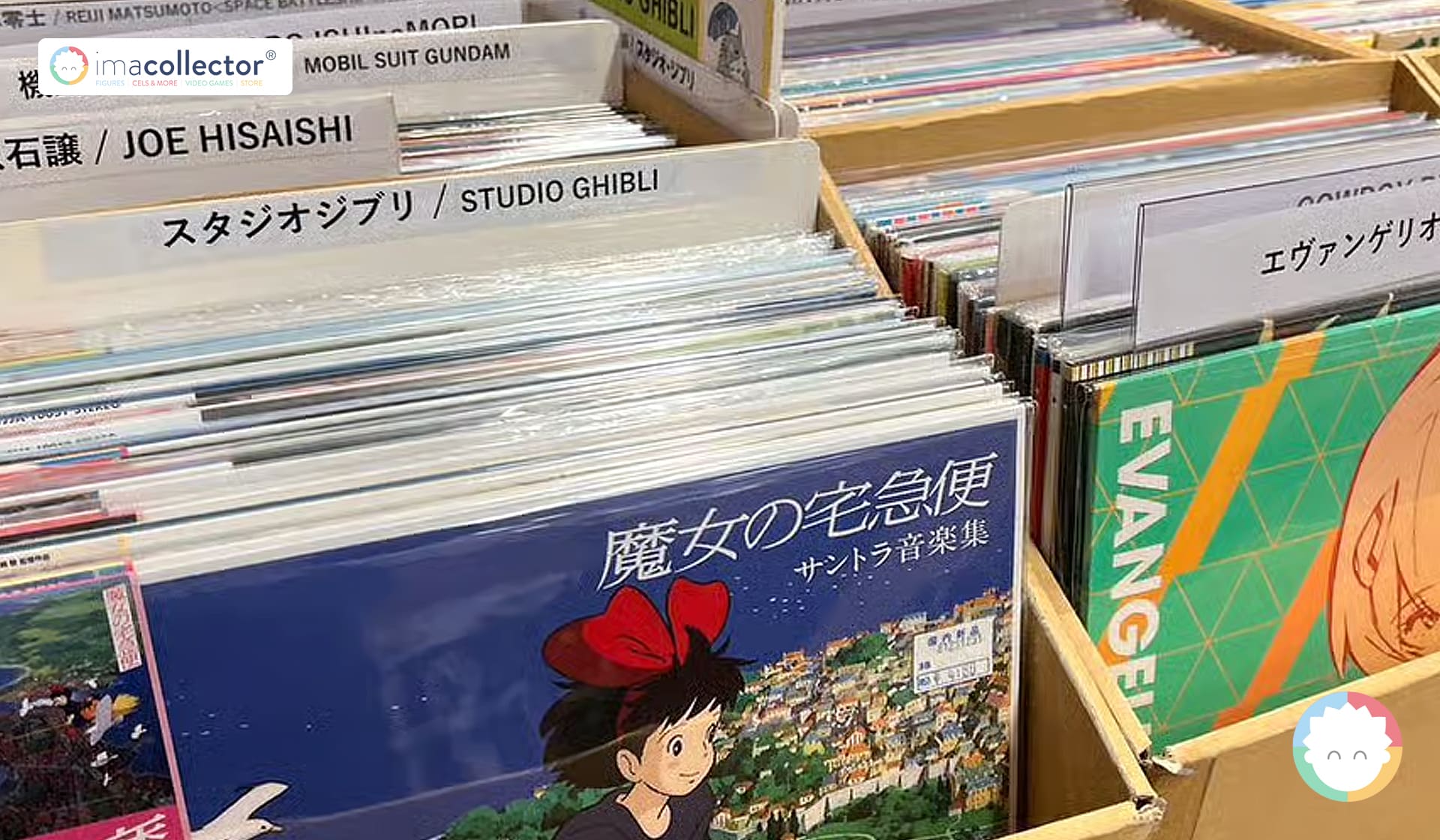
- Joe Hisaishi, Ghibli and the vinyl record as a support for memory
- Vinyl or streaming: why the object still holds a place of its own
- A collection that never really ends
- When a simple piece of merchandise becomes an object of memory
An OST vinyl does more than accompany a work: it preserves a sonic, visual and material trace of it. Through its format, through the way it is played, and through its rarity as well. It changes the relationship we have with the music, and with the world it comes from.
That is precisely why vinyl holds such a particular place in certain collections. Where other pieces of merchandise often function as a nod, a keepsake or a complement, a vinyl record can become something central: a sought-after piece, something displayed, sometimes signed, and very often tied to a specific moment.
In other words, a format that ends up outgrowing its original function.
Why OST vinyl records are not merchandise like any other
In the collective imagination, a piece of merch usually suggests something simple and easy to buy: a keychain, a clear file, a badge, a small figure, a promotional item bought at an event or slipped into a limited edition release.
These objects matter, of course. They extend the attachment we feel toward a work and give visible form to that passion.
A vinyl record works differently.
First, because it imposes a material presence that very few formats can match. Its size leaves room for visuals, staging, sleeve design and an entire artistic direction built around the music. Where an audio file disappears into the depths of a hard drive, a vinyl record remains visible at all times: it is stored, displayed, handled and, of course, listened to.
It also creates a very different relationship with listening. You do not put on a vinyl record the way you let a Spotify or Deezer playlist run in the background. You have to take it out, place it on the turntable, set the needle down, listen to one side, then turn the record over. That framework changes the experience entirely. It slows access to the music and gives it a weight it no longer has elsewhere.
Finally, OST vinyl records are often tied to a form of rarity. Limited print runs are common, and it can quickly become difficult to tell apart concert editions, exclusives, colour variants or certain pressings that are harder to track down.
Very quickly, then, the object stops being a simple music format. It becomes a collectible in its own right. That is the moment when vinyl changes nature. As soon as an object demands time, waiting, patience and sometimes years of searching, it no longer belongs only to the category of merchandise. It enters another logic altogether: the logic of the search.
When collecting a vinyl record means pursuing a trace
That is probably why vinyl records hold such a singular place in certain collections tied to video games, anime and film, mine included.
I do not look for them only to listen to them. I look for them because they hold something else: a foundational work, a memory, an encounter, a very specific period of my life, sometimes even an old frustration that time eventually resolved.
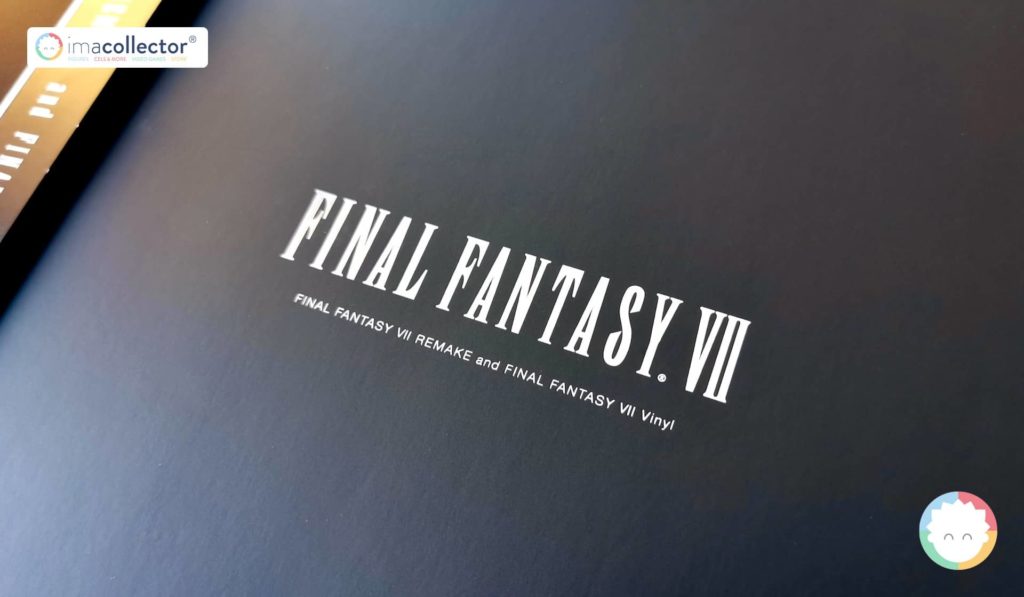
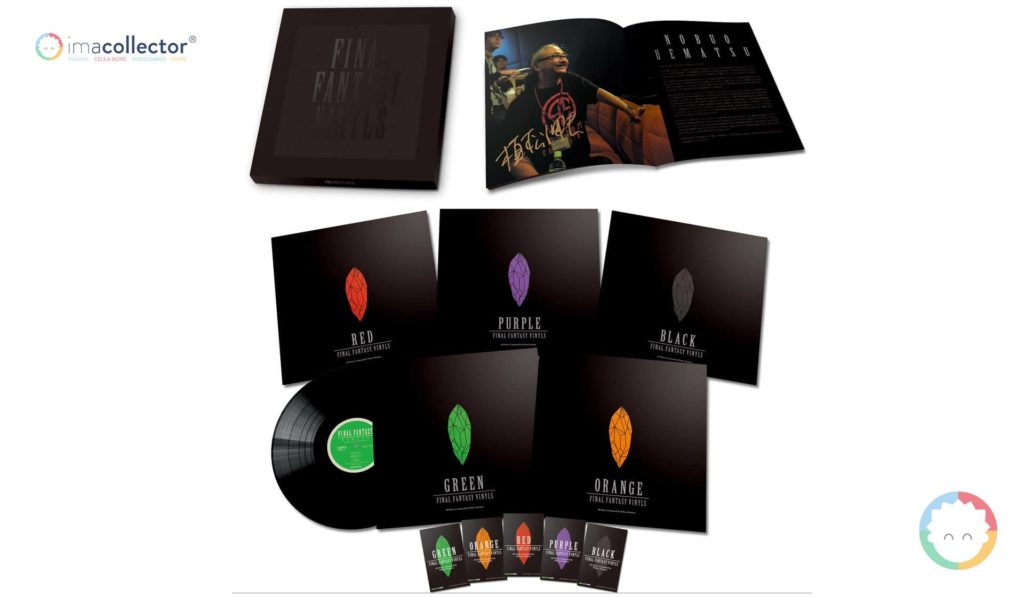
From that point on, the vinyl becomes less a consumer object than a point of fixation. It holds the music, of course, but also everything that eventually becomes attached to it. In my case, that dimension took shape through Final Fantasy, and more specifically through the Final Fantasy Vinyls box set released in 2013.
For years, that box set bordered on obsession. It surfaced so rarely, auctions were few and far between, and the price was often close to absurd.
That too is part of collecting: the constant alternation between lack, waiting, excitement and frustration. The ability to keep chasing an object for a long time without knowing whether you will ever truly get it. When I was finally able to add it to my collection, it was not just another purchase. It was the end of a search that had begun long before.
The box set mattered not only for what it contained or for its rarity. It also carried the weight of all the years spent looking for it.
And with them, everything Nobuo Uematsu’s music represents to me.
Final Fantasy & Nobuo Uematsu: when a collector vinyl becomes a central piece in a collection
Some pieces end up mattering far more than others because they come to represent more than what they visibly are.
The Final Fantasy Vinyls box set already carried weight as an object in its own right: a sought-after edition, major compositions, and a direct link to one of the most defining musical worlds in video game history.
But it took on another dimension once it became tied to a lived experience.
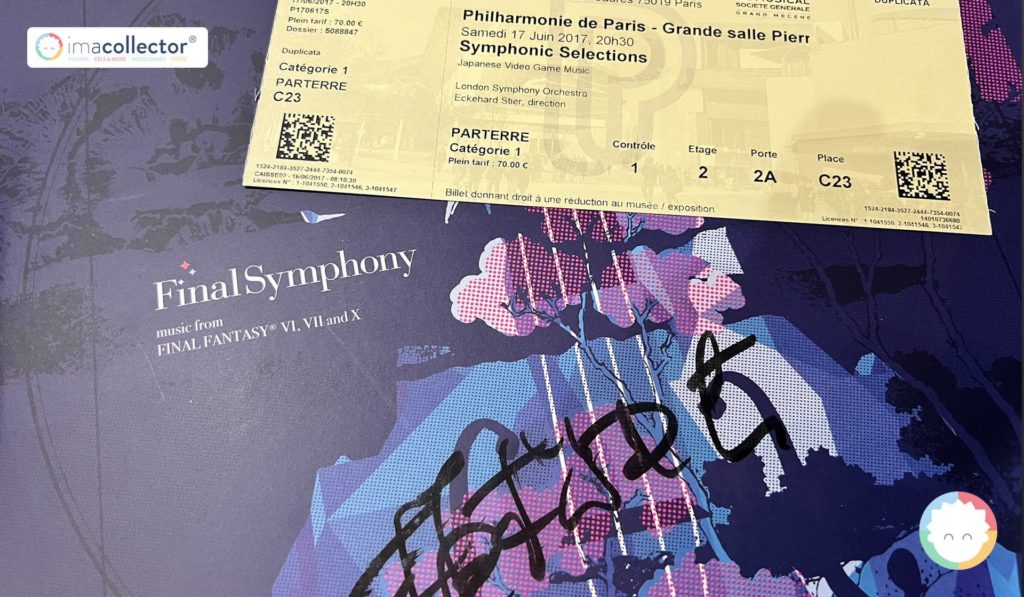
That experience was a Distant Worlds concert. My first major symphonic concert devoted to Final Fantasy. Hearing live the themes you have carried inside you for years creates an effect that is difficult to describe.
At that point, the music leaves the realm of private memory and becomes both a personal and collective experience. It fills a hall, passes through bodies, and reactivates a shared memory.
Then came Nobuo Uematsu’s signature. From that point on, the vinyl was no longer just a collector’s piece or the result of a long search. It became the trace of a precise moment: the moment when the work, the music, the composer and the object finally met.
That is often how a vinyl record changes status. Not only because of its rarity or its price, but because it becomes charged with a lived experience that other formats do not preserve in quite the same way.
Collecting does not ennoble everything: it absorbs disappointment too
Still, it would be wrong to reduce vinyl records to a chain of perfect memories. As with any collection, moments of disappointment are everywhere.
You know it as well as I do: a collection is never a straight line. It does not produce only great moments. It also carries poorly rewarded expectations, experiences that disappoint more than others, objects that fail to live up to what they promised, and events that leave a bitter aftertaste.
That is what I experienced with Saint Seiya Symphonic Adventure at the Grand Rex in 2022.
On paper, everything seemed in place for a major moment: the nostalgia, the iconic opening themes, the symphonic treatment, the anticipation built up over the years, even the VIP pass costing more than 200 euros, bought to experience it under the best possible conditions, surprises included.
The reality was more disappointing. Mediocre merchandise, questionable sound quality, vocal sections that felt alarmingly fragile, an overall result that sometimes fell below my expectations, and an organisation clearly shaken, not least by the health context at the time, as we were still in the middle of COVID.
Given the price, I have to admit the disappointment was hard to swallow.
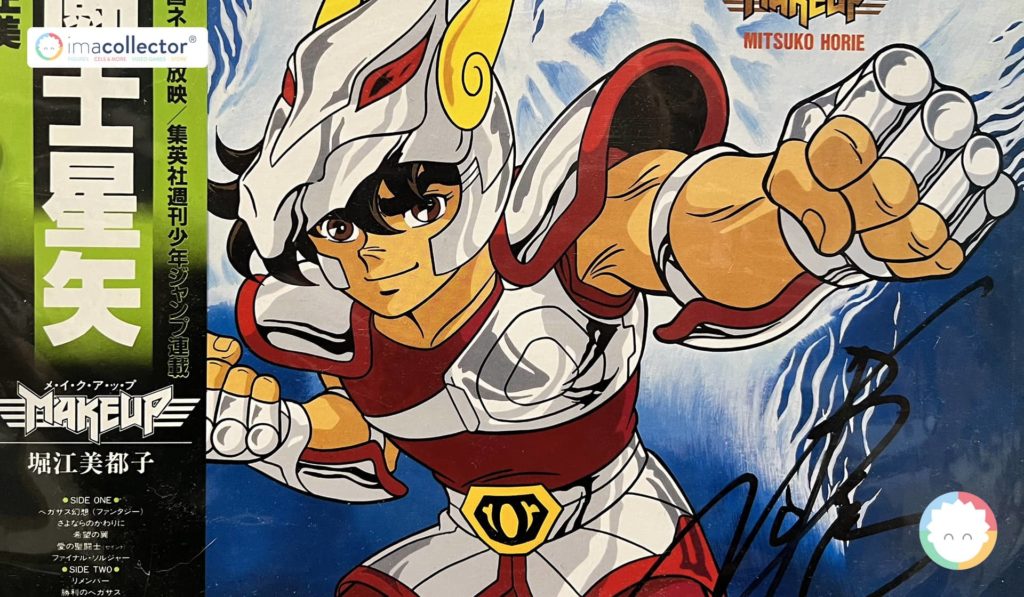
And yet even there, a single object ended up making me remember something else. Because that day, I had the chance to meet Nobuo Yamada (NoB), the singer of Pegasus Fantasy, who has since passed away.
He signed my vinyl record. And in an instant, my memory of that day changed. The disappointing concert did not disappear, but it stopped being the central part of what I remembered. What remained was the meeting, the signature, and the trace left by that exchange.
That too is part of collecting. Not just accumulating perfect pieces, but keeping objects that preserve the complexity of lived moments.
Joe Hisaishi, Ghibli and the vinyl record as a support for memory
If there is one field where this logic becomes even more visible, it is probably the music Joe Hisaishi composed for Studio Ghibli. Because here, collecting touches something larger than individual passion alone.
Hisaishi’s music has long outgrown the frame of animated film. It belongs to a shared, collective memory. It moves across generations, countries, cultures and sensibilities.
It speaks just as powerfully to those who know every shot by heart as it does to those who simply retain the memory of a feeling, a scene or a childhood moment.
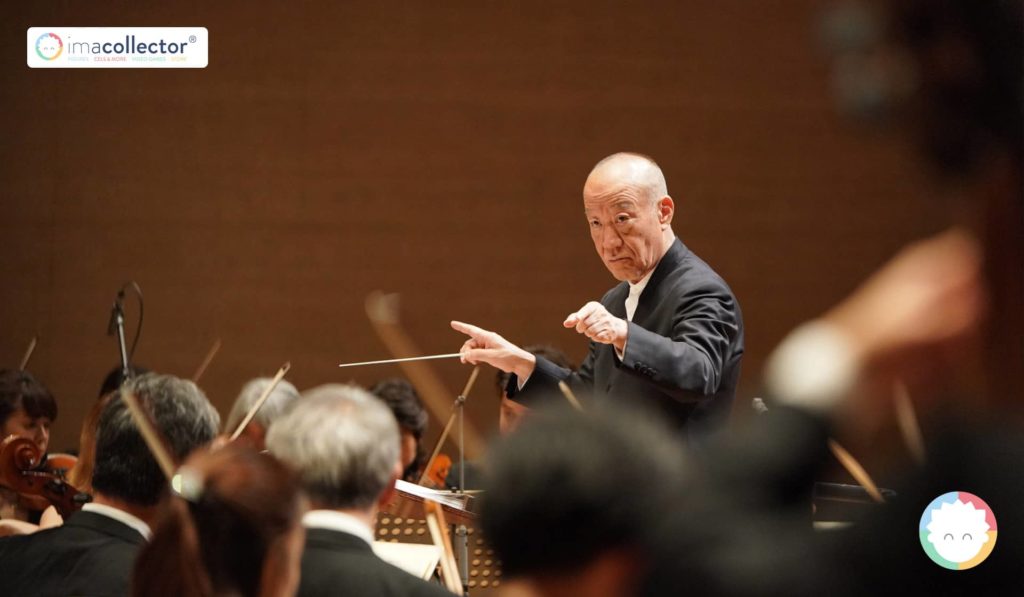
Having experienced it myself, I can say that attending a Joe Hisaishi concert creates a very particular effect. You do not go there simply to hear a soundtrack. You go to reconnect with an imaginary world, an old emotion, a part of yourself.
In that context, leaving with a signed vinyl is anything but trivial. The record no longer contains only a piece of admired music. It becomes the material trace of a powerful experience. It holds something of the hall, the silence, the waiting, the opening notes, and that collective emotion some concerts can create without ever needing to overstate it.
That is where the vinyl record fully reveals its meaning as an object of memory. Not as a relic in the emphatic sense of the word, but as a medium capable of holding more than a simple recording.
Vinyl or streaming: why the object still holds a place of its own
One could argue that all of this is secondary now. After all, you only need to open Spotify, YouTube or another platform to listen to almost any OST.
I cannot say otherwise: that is absolutely true. But you will not convince me that it creates the same relationship with music.
Streaming gives access. Vinyl gives presence.
Streaming makes listening simple, immediate and endlessly repeatable. It lets you hear whatever you want, anywhere, at any time, with no real constraint. But it also makes music more volatile. Works become part of a stream. You play something, skip it, stop it, come back later, or sometimes never do.
Vinyl does the exact opposite. It anchors music in matter, in something concrete. It imposes a real frame, slows listening down, and requires a gesture, a space and a moment. It also gives visible form to attachment.
You do not pull out a sleeve you searched for over many years, sometimes signed, tied to a concert or to a specific period of your life, in the same way you tap on a track in an app.
That is why vinyl is not simply a replacement for digital. It answers a different need.
So I can say this: where streaming makes use easier, vinyl fixes memory in place.
A collection that never really ends
A vinyl collection is never really finished. It lives in the pieces already acquired, of course, but just as much in the ones you still hope to find, in the concerts still to come, in the objects you can already imagine tying to your own story, and in the mercantile logic of distributors that we, poor collectors, sometimes end up following with our eyes half closed.
A collection is not made only of what it contains. It is also built out of expectations, projections and promises.
In a few weeks, I will attend a symphonic Attack on Titan concert. I already know that the moment will leave a trace, whether I come home with something or not. Because some music carries such a charge that it almost calls for the object, as a natural extension of the experience.
I do not yet know whether that concert will add a new vinyl record to my collection, nor in what form the memory will settle. But I already know it will become part of that continuity in which works, concerts and objects eventually begin to speak to one another.
That too is part of collecting: linking what you have lived with what you have not yet lived.
When a simple piece of merchandise becomes an object of memory
On the surface, vinyl records tied to video games, anime or films may look like merchandise that is simply more beautiful, rarer or more expensive than the rest.
But that definition feels too limited to me. A vinyl record does not merely extend a work: it can become one of its points of memory. It preserves the music, of course, but also the search that came before it, the concert that accompanied it, the signature that changed its status, and the memory to which it remains attached.
That is why some vinyl records end up occupying a disproportionate place in a collection. Not because they are worth more, but because they contain far more than some people are able to see.
More time. More waiting. More lived experience. More memory.
In a world saturated with merchandise, vinyl is a reminder that a format can still gain depth, that an object can still become a trace, and that a piece of merch can sometimes end up telling a far richer story than it was ever meant to at the beginning.