

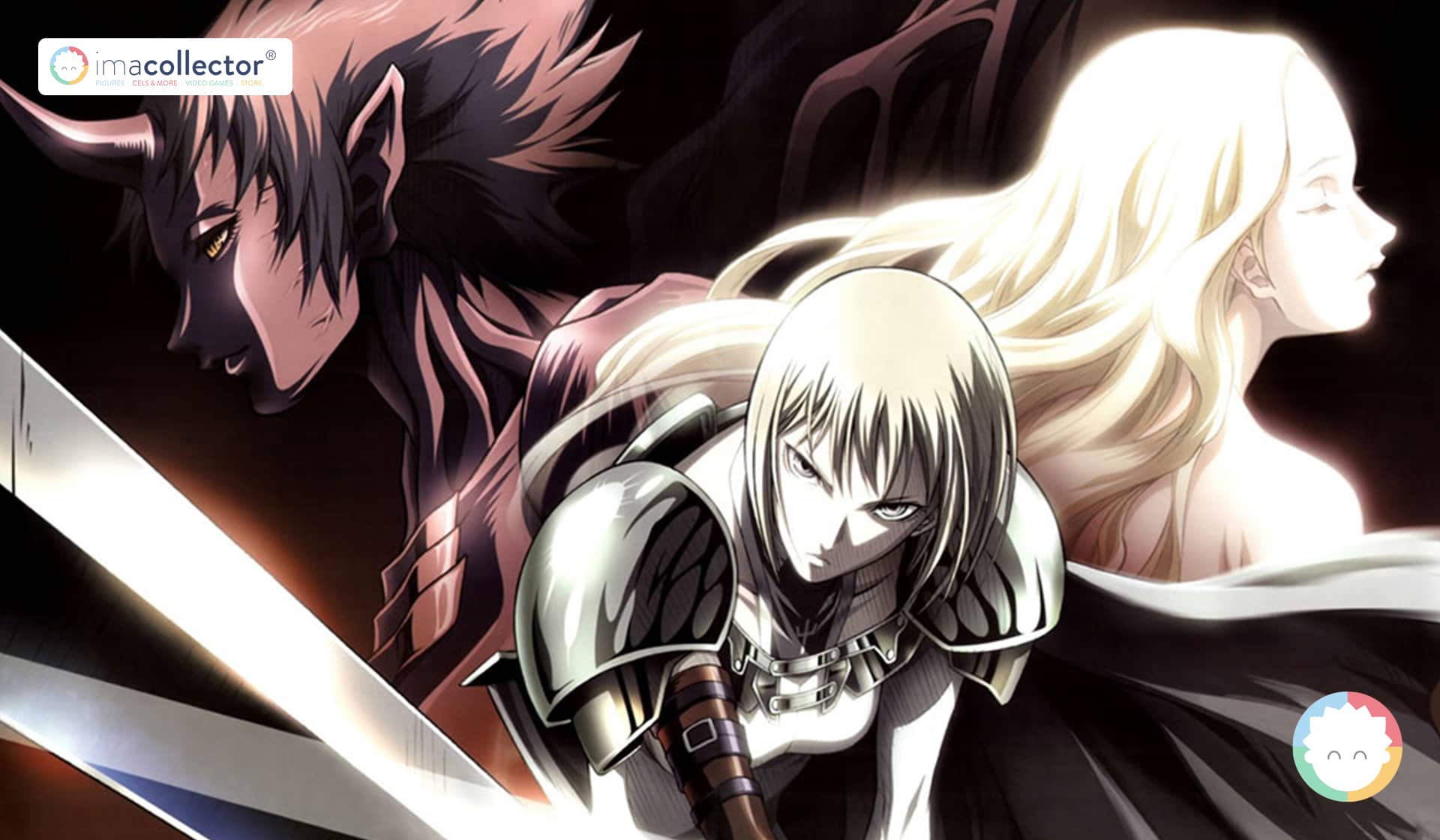
Claymore: a cracked closed world and tragic heroines in an unfinished universe

For a long time, Claymore felt to me like a world with no horizon: a realm of flesh, fear and fatality, sealed in on itself. That is exactly what makes its final revelation so unsettling. Just as the manga finally hints at an outside world, another conflict and a different scale, it closes back in almost at once. And that may be where Claymore becomes more than an effective dark fantasy: a tragic, gripping enclosed world whose incompletion feels almost like part of the wound the series left me with at the end.
Sommaire
- Claymore, an enclosed world in every sense
- Geographical confinement
- Organizational confinement
- Psychological confinement
- Female confinement
- The final revelation: a closed world that never truly opens
- An abrupt ending and a lingering sense of incompletion
- Norihiro Yagi’s manga
- Madhouse’s anime: a beautiful, broken UFO
- The soldier-heroines: weapons and tragedies
- Women stronger than men
- Weapons serving a male power
- Tragic heroines
- Why Claymore deserves to be (re)discovered
- Collector’s note
- Conclusion
I will never forget the first time I read Claymore. A dark world inhabited by demons that feed on humans. A shadowy organization sending out its warriors, half human and half Yoma, to protect doomed villages. And above all, that strange feeling of being trapped inside a deeply uneasy, oppressive universe without ever seeing where it truly ends.
To me, Claymore is more than a dark fantasy shōnen. It is a beautifully constructed closed world that reveals itself only to collapse more completely. Once the truth comes out (spoiler warning: the Organization is nothing more than a military experiment, and this world is only an island) everything changes.
That reversal is what stayed with me: a sudden opening that, unfortunately, leaves behind a sense of something unfinished. This article is my way of sharing that experience — the fascination and the frustration, the visual beauty and the narrative pain, the singular role of these soldier-heroines I am especially attached to, and that lingering feeling of a masterpiece left incomplete.
Claymore, an enclosed world in every sense
Geographical confinement
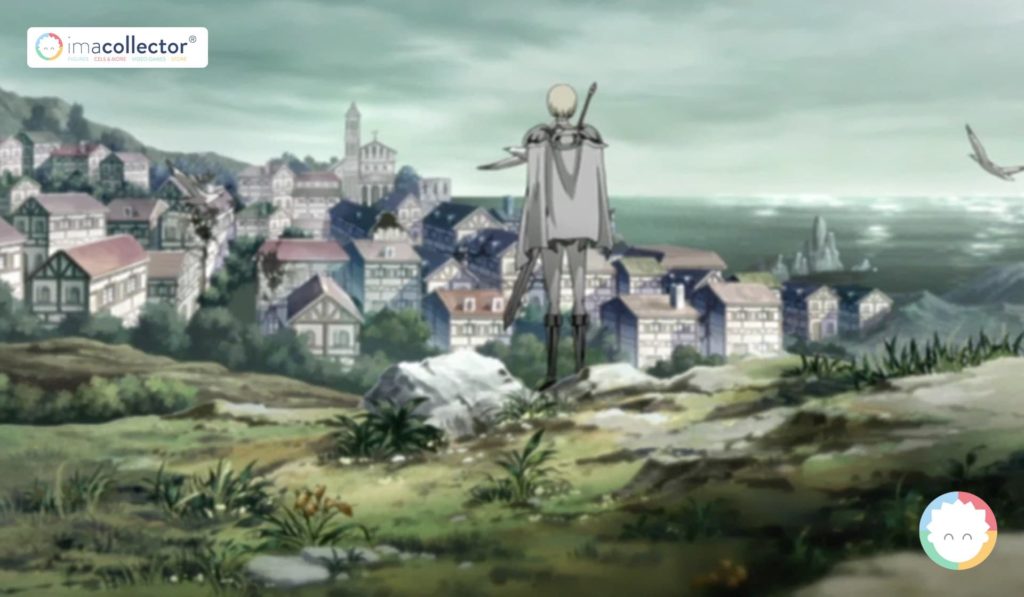
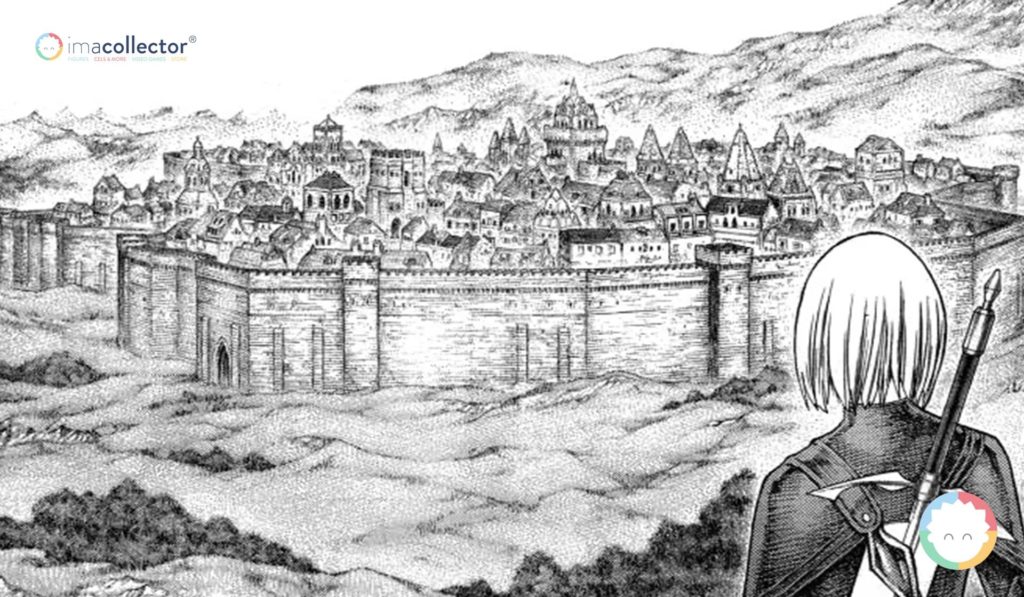
From the very first chapters, it feels as though the world of Claymore is easy to grasp: isolated villages, monsters known as Yoma that terrorize and devour humans, and in the middle of it all, female warriors sent in to save them.
Everything seems to unfold within this limited setting. The world is tightly enclosed, with no real opening to the outside.
You can barely breathe, just like the characters trapped in an endless loop:
Village → Yoma(s) → Claymore → slaughter → new mission
Organizational confinement
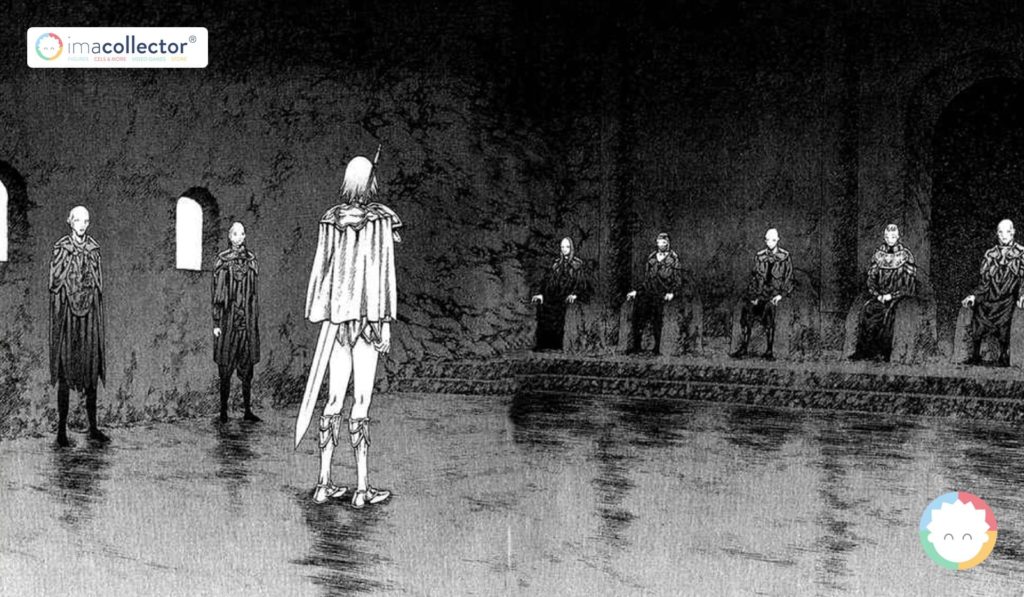
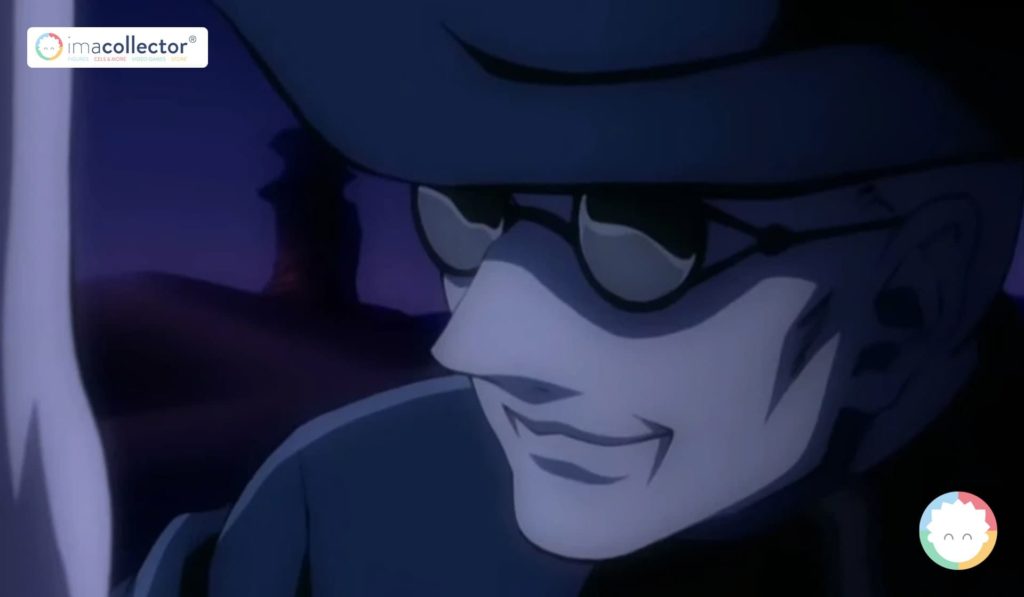
The Claymores do not choose their fate. They are created and used by the Organization. Stripped of their humanity, reduced to a number and a mission, they live in a system where the slightest act of disobedience is punished by elimination. Plain and simple.
In the end, the real enclosure is not the island itself so much as the social and hierarchical cage that turns them into obedient tools.
Psychological confinement
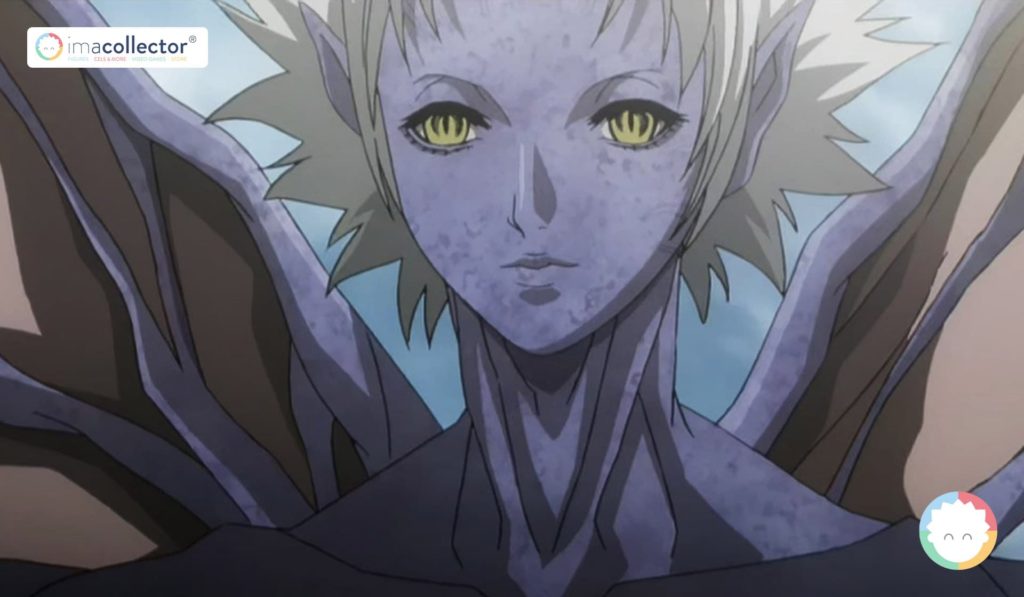
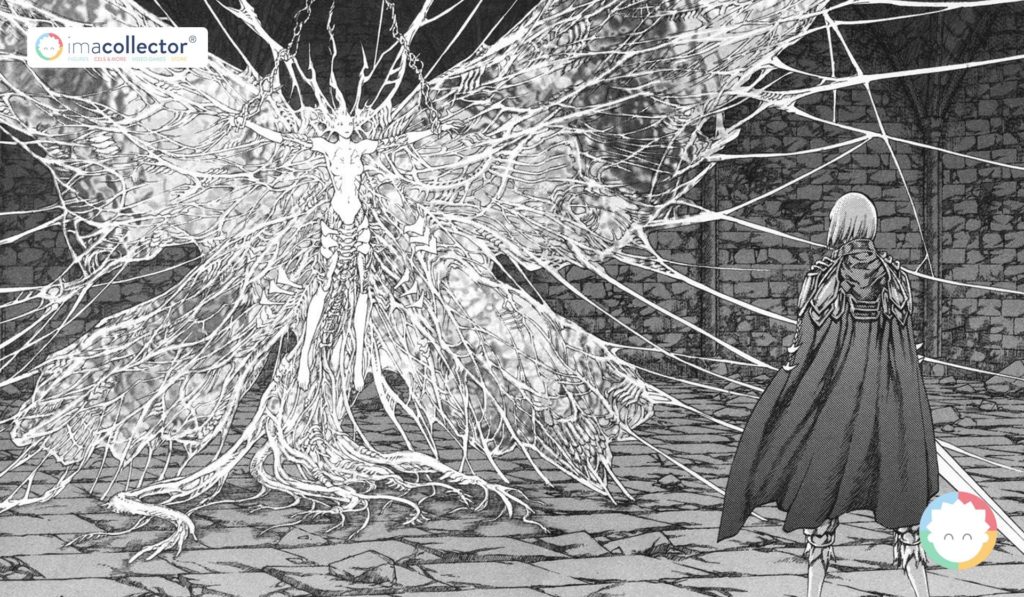
Every Claymore lives in fear of her own limit: awakening. By drawing too deeply on their Yoma powers, these half-human, half-demonic beings risk crossing the line and becoming the very thing they fight.
That constant tension is a form of inner confinement. Their own bodies become a prison, and their minds a fragile cell they must constantly hold together.
Female confinement
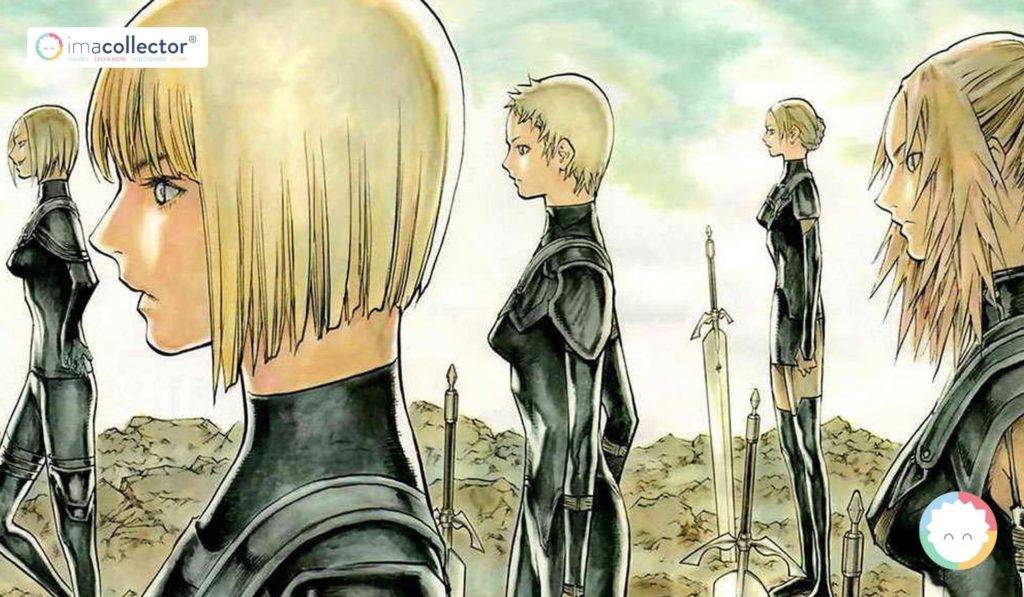
Then there is one fundamental fact: all Claymores are women. The explanation is brutal. Men transform too quickly because they are far too unstable. Women, by contrast, endure pain for longer.
In Claymore, the female body is instrumentalized. It is chosen not for softness or beauty, but for endurance.
It is a reversal of familiar codes: these heroines are not figures of sensuality or display, but living weapons shaped by men operating from the shadows.
The final revelation: a closed world that never truly opens
As the manga moves forward, the enclosure begins to crack.
Through Miria’s revelations, we gradually understand that this world is not naturally sealed off. It is an isolated island, used as a testing ground by powers at war on a distant continent.
So the Organization is not simply a mysterious sect.
It is the public face of a military biological warfare program: humans turned into weapons and tested far from the real front line to feed a conflict being fought elsewhere.
It’s a powerful reveal because it reframes everything: we weren’t just trapped in a grim fantasy world. We were inside an open-air laboratory, cut off from the rest of humanity.
But it’s deeply frustrating too.
Just when the story finally begins to hint at the outside (the war on the continent, other races, wider geopolitical stakes), it chooses to remain on the island and stop there.
You close the manga with the strange feeling that the enclosed world was cracked open… but never truly broken apart.
And that is where, for me, its unfinished quality comes from: the sense of a world far larger than what we were shown, left just out of sight.
An abrupt ending and a lingering sense of incompletion
Norihiro Yagi’s manga
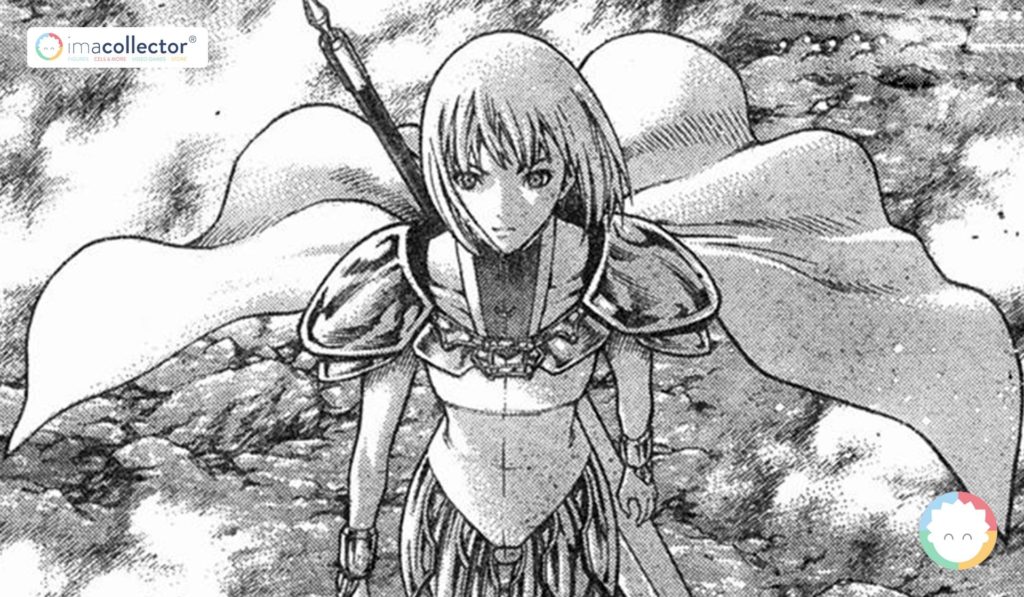
Published from 2001 to 2014, the manga runs for 27 volumes that are easy to read straight through. Its escalation is well controlled, and its memorable characters (Teresa, Claire, Miria, Priscilla, Raki and others) leave a lasting mark.
But its ending remains divisive.
Some see it as Yagi’s deliberate choice: to bring the story to a clean close without stretching it artificially.
Others, and I am one of them, feel a real sense of loss: an unfinished world that could have opened onto new territory beyond the island, beyond the Organization.
Madhouse’s anime: a beautiful, broken UFO
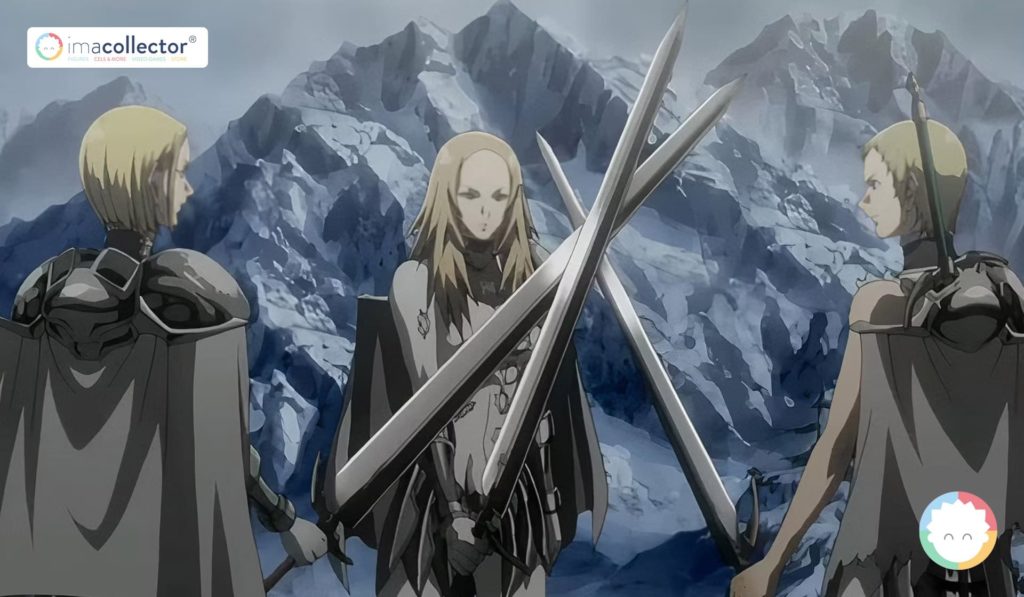
In 2007, Madhouse adapted Claymore into an anime.
Its style is dark, brutal and faithful to the spirit of the manga. I still go back to those episodes regularly, and I do so with undiminished pleasure.
But the studio had to make a radical choice: it created an original ending because the manga had not yet been completed.
The result is an anime that stops halfway, cut short, hybrid in form, fascinating and, once again, frustrating.
To me, it remains an outlier in the history of anime adaptations: a remarkable work, but one that feels deliberately cut short.
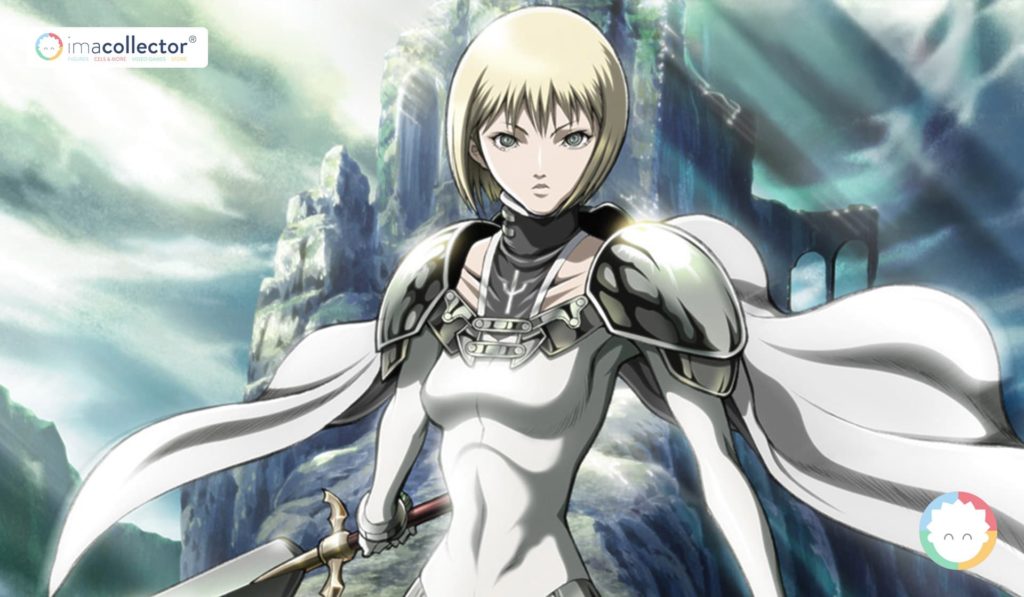
The soldier-heroines: weapons and tragedies
Women stronger than men
As I said at the beginning of this article, the premise is chilling. Only women can endure the transformation into Claymores. Men fail, collapsing far too quickly into monstrosity and brutality.
Women survive. But it’s not a victory: it’s a sentence.
To be chosen is to be mutilated, altered and, of course, used.
Weapons serving a male power
For all their strength and power, the Claymores are not free. Quite the opposite. Their power belongs to the Organization, which controls them and disposes of them whenever necessary.
They are disposable weapons.
Tragic heroines
And yet, in this brutal, dehumanizing universe, the Claymores shine the brightest.
Their power belongs to the Organization, which controls them and disposes of them whenever necessary.
These tragic heroines, forced into the role of tools, still find a form of greatness in their struggle.
That is where Claymore becomes singular: it tells the story of women turned into weapons who nevertheless become figures of resistance and dignity.
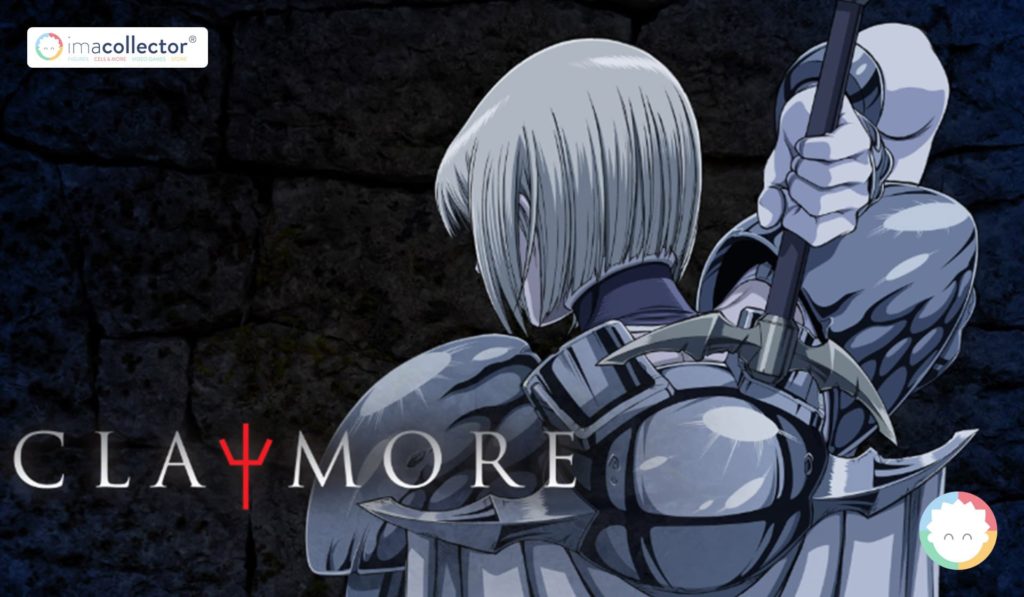
Why Claymore deserves to be (re)discovered
To me, Claymore leaves a mark because it does more than entertain. It leaves you with questions, with absences, with scars.
Thus, the manga builds a closed world only to crack it open later on. And the anime fascinates as much as it disappoints.
It offers unforgettable tragic heroines.
And that may be exactly why I care about it so much: because it is not perfect. Because it leaves me with regret and frustration, like a collection piece that was never fully completed.
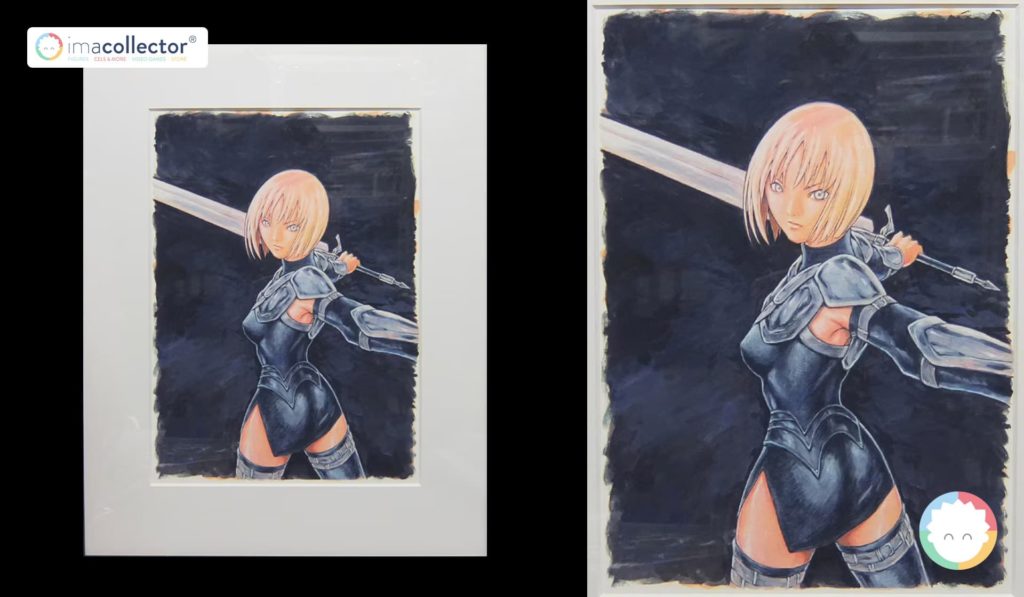
Collector’s note
As a collector and longtime fan, I have always tried to track down physical traces of Claymore — sketches, douga, genga from the Madhouse anime. I never found any.
The only things I managed to find were an art book and a poster from the series. I also came across a few lithographs and shikishi that I could not buy, either because I did not have the money at the time or simply because I missed them when they appeared at auction.
In a way, that absence echoes the manga itself: a powerful work, but an incomplete one, from which something still feels missing.
Conclusion
Claymore stands apart. It is a dark, brutal manga that traps its heroines inside a world closed off both psychologically and socially.
The anime is beautiful but incomplete.
The world opens up just as the story ends.
And at the center of it: tragic heroines, warrior-women turned into weapons who discover, through pain, an unforgettable strength.
Perhaps that’s the true magic of Claymore: leaving you with a sense of longing, a desire for more, a new scar.
And if you’ve never read or watched it, now is the perfect time to dive into this harsh, striking, unforgettable universe.
Article produced by imacollector® — an editorial archive dedicated to the memory and heritage of Japanese pop culture.
Content published for informational and documentary purposes. All rights reserved to the respective rights holders.