

[analysis] Opening Tales of Destiny (PS1 / Namco) – 1997

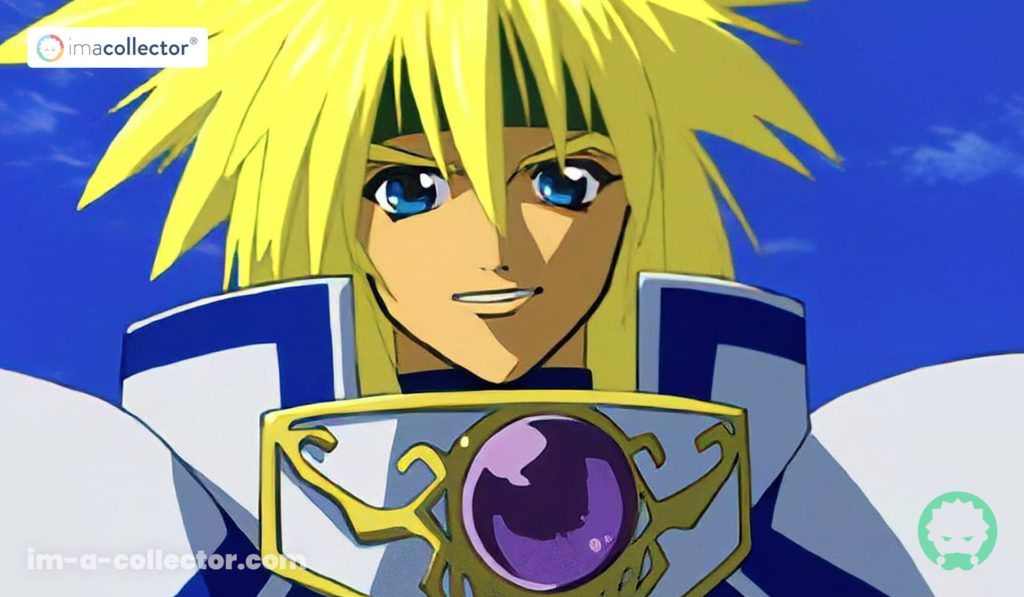
The opening of Tales of Destiny is one of the earliest JRPG introductions to truly function as an anime-style opening designed as a standalone emotional experience that precedes gameplay. This article examines the opening video not as a simple cinematic, but as an anime-like opening in its own right, which for many players became their first emotional point of contact with the game.
Table of contents
Released in Japan in 1997 on PlayStation, Tales of Destiny is one of the foundational titles in the Tales of series. Developed by Wolf Team and published by Namco, it belongs to a pivotal moment in JRPG history, when games were beginning to draw more and more directly from the codes of Japanese animation. There are games I remember with perfect clarity. And then there are those that feel a little more diffuse in my memory. Tales of Destiny belongs to the latter category.
Il y a des jeux dont je me souviens très précisément. Et puis il y a ceux pour lesquels ma mémoire est un peu plus diffuse. Tales of Destiny appartient à cette seconde catégorie. I couldn’t tell you exactly when I played it for the first time.
But I know that every time the console powered on, the opening did its job. It set something in place. Something that felt a bit new for the time.
An opening before the game even begins
In 1997, starting Tales of Destiny on PlayStation did not mean landing on a bare, static title screen.
On the contrary, players were welcomed by a fully animated sequence, conceived as a true anime opening.
At the time, this choice was far from insignificant.
Many RPGs featured cinematic sequences—sometimes spectacular—but rarely a fully autonomous introduction with its own music, rhythm, and identity.
Here, the opening does not summarize the story. It explains nothing. It simply puts the player in a certain state. And that may be precisely why it left such a lasting impression on so many people.
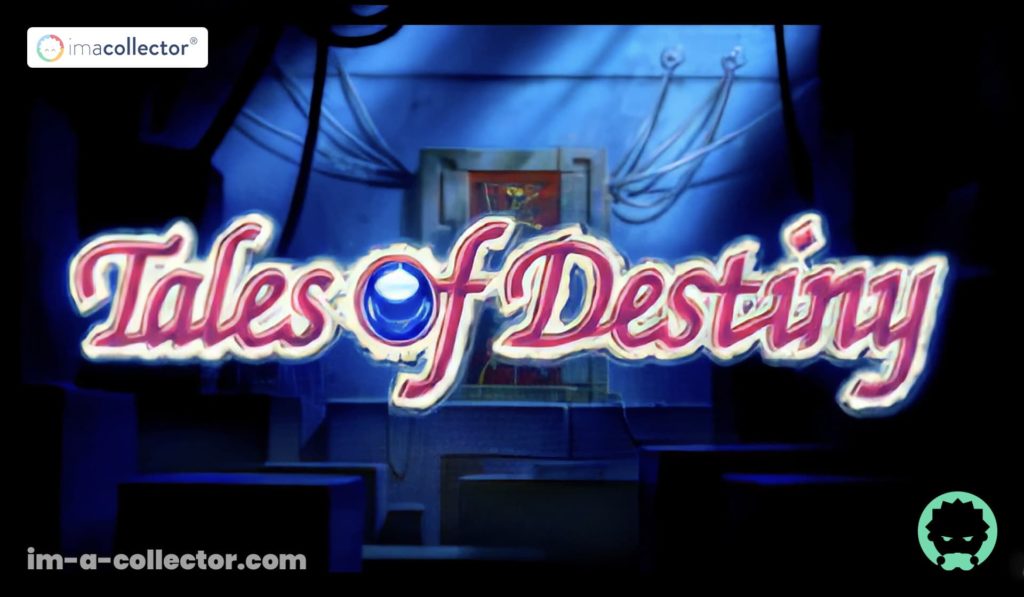
Production I.G.: a choice that says a lot
This opening sequence was not produced in-house. It was entrusted to Production I.G., a studio already well established at the time within the animation industry, known for standards far removed from the idea of a simple “visual bonus.”
That small detail changes everything.
From that point on, the opening is no longer perceived as a video game cutscene.
It is viewed as an anime opening, complete with its own conventions:
- clear character emphasis
- visual symbolism
- emotion-driven editing
- music as the emotional core
The game begins before the player even touches the controller.
Music as a trigger for memory
In the Japanese version, the opening is accompanied by Yume de Aru Yō ni, performed by DEEN. It is a soft, melancholic song, with nothing overtly spectacular about it. But deeply memorable.
This is the kind of music that embeds itself in memory without warning.
A melody you don’t consciously memorize, yet one that resurfaces years later—unexpectedly—carrying the same softness and a quiet sense of nostalgia.
For many players, Tales of Destiny is remembered through this song, sometimes even more than through its story or combat system.
As you likely know, memory does not always operate logically.
It often travels through sound.
Watch the JP opening (HD 720p)
Watch the JP opening (AI-enhanced upscale – 4K 30fps)
Watch the JP opening (AI-enhanced upscale – 4K 60fps)
An opening that differs by region
As is often the case, opening videos are not always distributed identically across regions and editions.
This opening is no exception.
Due to music licensing constraints, some Western releases altered or removed the original song.
The result is a familiar one: a visually identical opening that is emotionally different.
This detail matters. Because it reminds us that a game experience is never entirely universal.
Two players can speak about the same game without having received the same sonic (and sometimes visual) imprint.
Why this video deserves an article of its own
This introduction is not a simple nostalgic bonus.
It is, in itself, an autonomous memory object.
This opening sequence has been watched:
- sometimes several times a day
- sometimes without even starting a game
- sometimes simply to feel something
It wasn’t something you could save on a memory card. And yet it was always there, stored somewhere else. In what we now associate with an era, a feeling, a different way of playing.
What remains today
When I think back on Tales of Destiny, I do not think first of a specific scene from the game. I think of that opening. That suspended moment, before any action. To that silent promise.
Perhaps that is the true role of certain openings: not to explain a game, but to prepare memory to receive it.
Article produced by imacollector® — an editorial archive dedicated to the memory and heritage of Japanese pop culture.
Content published for informational and documentary purposes. All rights reserved to the respective rights holders.