

[analysis] Wild Arms opening (PS1 / Media Vision) – 1996

When an RPG lays its foundations before the game even begins, expectations are naturally high. Wild Arms has stayed with me ever since I first launched it at release, largely thanks to an opening sequence that was as memorable as it was full of promise.
Sommaire
- An RPG opening that belongs to no era
- Nocturnal staging as a statement of intent
- Madhouse animation: restraint and clarity
- Into the Wilderness: a music inseparable from the image
- Wild Arms and what the RPG could have been
- From night to dawn: a promise, not a conclusion
- A heritage object rather than a simple cinematic
- Bonus
Released in 1996 on PlayStation in Japan, Wild Arms immediately stood out within the JRPG landscape for its western-fantasy universe, its melancholic tone rather than overt spectacle, and a narrative approach that was uncommon at the time. From its opening cinematic, the game asserts a clear identity—without heavy exposition or technical showmanship—relying instead on nocturnal staging and a piece of music that has since become inseparable from its world.
This article revisits that opening (animation, music, and structure) to analyze its fundamental role: not as a simple prelude, but as a true founding act, announcing a vision of the RPG that is more adventurous, more restrained, and surprisingly timeless.
An RPG opening that belongs to no era
Some introductions age alongside the tools that created them. Others feel detached from any specific period. The opening of Wild Arms clearly belongs to the latter category.
Its resistance to time is not due to technical superiority (its limitations are visible today) but to a construction that relies almost entirely on atmosphere and rhythm.
Nothing here is anchored to a fleeting trend or a flashy effect. The sequence still works because it is built on a simple, readable, and above all coherent emotional system. Watching this cinematic today does not primarily evoke technical nostalgia (although, when compared to certain modern anime, one may raise an eyebrow), but an immediate recognition of intent.

Nocturnal staging as a statement of intent
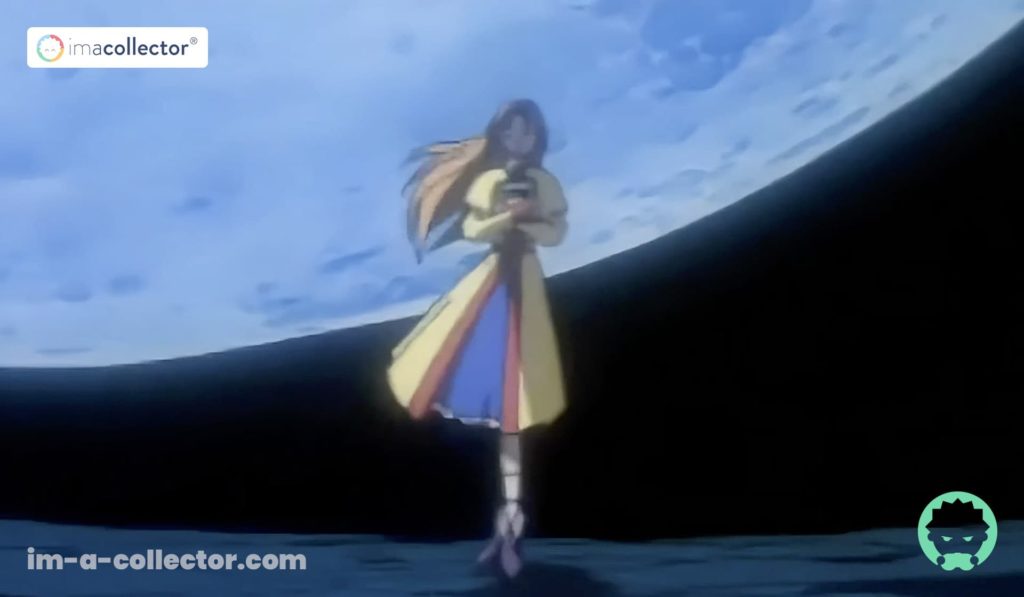
One of the most striking choices in this opening is its temporality. Nearly everything unfolds at night. This stands in contrast to JRPG conventions of the era, which often introduced their worlds through bright environments, lively villages, or clearly defined heroic figures.
Here, night is not merely a backdrop: it is a narrative framework. Its aura establishes distance and anticipation, suggesting a world that does not reveal itself immediately.
The player is not guided; they observe. This absence of explicit exposition creates a subtle yet constant tension, inviting projection rather than instant understanding.
Madhouse animation: restraint and clarity
The cinematic was produced by Madhouse, a choice that feels especially meaningful in hindsight and one that does not surprise me, given how many of my favorite anime have come from this studio over the years.
The animation never tries to sell the game. Quite the opposite. Movements are precise, characters are quickly identifiable, yet nothing is overemphasized.
The camera accompanies rather than dictates.
This restraint gives the opening a rare quality: it does not seek to persuade through performance, but through coherence. The animation serves the atmosphere, not the other way around.
What lingers is not a single spectacular shot, but a sense of continuity; a controlled drift that carries the viewer naturally toward the title screen.
Into the Wilderness: a music inseparable from the image
Music plays a central role in this construction. Into the Wilderness, composed by Michiko Naruke, does not function as a standalone theme meant to be extracted from its context.
The whistling, quite unusual for an RPG at the time, immediately conveys a feeling of space and solitude. The strings that follow add a quiet gravity, without any sense of grandiosity.
Nothing here glorifies action or celebrates combat. The music accompanies movement and waiting. To me, it sounded like a promise.This dependence on the image is precisely what gives it strength. Without the opening, this theme would likely not resonate in the same way.
It feels designed specifically for this game, this world, this night.
Wild Arms and what the RPG could have been
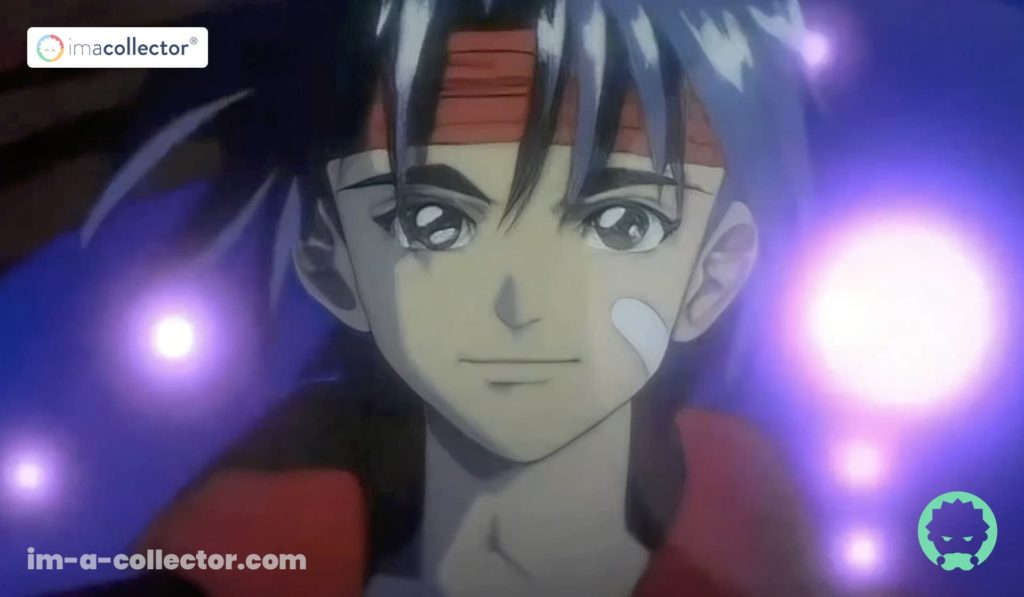
With hindsight, this opening reads as a clear signal of what an RPG can be when it stops trying to explain everything.
A heroic RPG without triumphalism.
Engaged, without overt discourse.
Adventurous, without forced spectacle.
This intent carries over into the game itself, particularly through a striking narrative choice: the appearance of the credits at a moment when the player believes the adventure is over—only to realize that it was merely a threshold.
This false ending extends exactly what the opening already suggested: a desire to break expectations in order to deepen engagement.
From night to dawn: a promise, not a conclusion
The final sequence of the opening encapsulates this philosophy. The ascent, the gathering of companions, rotating lights, then dawn.
This is not a resolution. On the contrary, it is only the beginning.
Nothing is settled. The rising day offers no answers—only an opening. The player is not rewarded with a symbolic victory.
Instead, they are invited to continue, to commit to a world that still refuses to fully explain itself.
A heritage object rather than a simple cinematic
Despite recent (and sometimes clumsy) high-definition upscale attempts, the Wild Arms opening continues to resonate because its effectiveness does not rely on technology, nor on nostalgia.
It rests on a deep coherence between animation, music, and intent.
In that sense, this cinematic far exceeds its role as an introduction. It stands as a genuine heritage object, bearing witness to a vision of the RPG as an experience of wandering and projection—one whose modernity remains intact nearly thirty years after its release.
Bonus
I’ll let you discover this small gem for yourself: an opening can take many forms—and still find ways to come back to us.
Article produced by imacollector® — an editorial archive dedicated to the memory and heritage of Japanese pop culture.
Content published for informational and documentary purposes. All rights reserved to the respective rights holders.