

Choosing your first figure already means choosing the kind of collection you want to build

Choosing your first anime or video game figure is not just about taste or budget. Prize figures, scales, Nendoroids, Figmas or resin statues all lead to different ways of collecting, displaying and building a collection over time. With this guide, I want to help you understand the real differences between these formats, avoid a first purchase you may end up regretting, and above all identify the one that best fits your space, your budget and the way you relate to the object itself. By the end of this article, you will have everything you need to start collecting with a clearer head.
Table of contents
- Why your first figure matters more than you think
- The real trap when you are starting out is thinking you are choosing a format, when in fact you are choosing a use
- Prize, scale, Nendoroid, Figma, resin: what each choice really means
- Starting with a Prize figure
- Starting with a Nendoroid
- Starting with a Figma
- Starting with a scale figure
- And what about pre-painted resin statues?
- Which format to choose depending on your collector profile
- You want to start without pressure
- You have little space and you like kawaii aesthetics
- You already know exactly what you want
- You like the idea of posing and handling your figures
- You are already dreaming about massive showpiece statues
- The most common mistakes when choosing your first figure
- Wanting to buy too big, too expensive, too fast
- Not knowing yourself well enough
- Underestimating the space you actually have
- Buying under the pressure of FOMO
- Choosing a figure that only appeals to you “in theory”
- My verdict: the best first choice depending on your situation
Choosing your first figure often feels simple at first. You like a character, a piece catches your eye, a price drop tips you over the edge. It all makes you think you just need to start somewhere. And that is exactly where many people get it wrong.
Because when you are starting out, you often think you are choosing a figure. In reality, you are already choosing a way of collecting, displaying, and looking at your future purchases. From the very beginning, you are deciding how much money you are willing to spend, how much space you are willing to dedicate to it, the level of standards you want to set, and sometimes even the entire direction of your future collection.
That is why the question “Prize, scale, Nendoroid, Figma, or resin?” does not deserve one single, clear-cut answer. Listing advantages and drawbacks is not enough. You first need to understand what each format will actually change for you: in your space, in your budget, in your level of expectations, and in the way your collection will gradually take shape.
In other words, the right first purchase is not necessarily the most impressive piece. It is the one you are least likely to regret, and the one that allows you to understand how you truly want to collect.
Why your first figure matters more than you think
Your first figure is rarely insignificant. Of course, it will not determine the entire future of your collection. But it often sets an initial framework.
It establishes a level of spending that will later feel more or less normal or acceptable. It shapes your relationship with display. It influences your eye. It may even push you toward more coherent purchases… or, on the contrary, toward compulsive and confusing accumulation.
This is especially visible with beginners who start with a very spectacular piece, a very expensive one, or something far removed from their actual needs. At the time, the purchase feels justified, strong both psychologically and financially. But as the months go by, they realize that this piece does not represent them that well after all. It takes up too much space, overwhelms everything else, or sets a standard they simply do not want to maintain.
By contrast, a better-chosen first figure can play a far more logical and useful role. It does not just give you immediate pleasure. It helps you see more clearly what you genuinely like: a certain presence, volume, faithfulness to the original design, a more playful side, a degree of modularity, and so on.
A first figure is therefore not only valuable because of its quality. It is also valuable because of what it teaches you about your own relationship to collecting.
The real trap when you are starting out is thinking you are choosing a format, when in fact you are choosing a use
Most comparisons stop far too early. They will tell you that a Prize is cheaper, a scale is more premium, a Nendoroid is chibi, a Figma is articulated and a resin piece is more impressive.
All of that is true, of course, but it still does not really help you choose. Because I will say it again: the real issue is how you are going to live with that format.
Do you want a piece that is easy to buy and easy to display, just to see whether collecting really suits you? Do you want something with more presence, something that can almost carry a room or a display case on its own? Do you like handling your figures, changing poses and playing with accessories? Do you want a flexible, lively collection, or a rarer and more structured one? Are you looking for a sensible way in, or for a big statement piece even if it may disappoint you later?
Your first purchase will shape something in you, whether you notice it or not. A Nendoroid can steer you toward a collection that is dense, playful, compact and instantly recognisable. A scale can push you toward something more selective, more demanding and also more expensive. A Prize can help you train your eye, even if it may later feel less striking as your collection grows. A Figma can open up an interesting playground, but it can also become frustrating if posing and handling your figures stop being a real priority. And a large prepainted resin can be a dream at first while bringing in the heaviest constraints straight away: budget, space, shipping, weight, fragility and sometimes a finish that does not live up to the price.
So before buying, the real questions are not just “what is best?” or “what looks best?”. They are more concrete than that: will I still like this format six months from now? Can I live with its presence in my home every day? Does it match the way I want to look at my collection? Am I buying an object, or a fantasy version of the collector I am not yet?
No one said starting a collection was easy.
Prize, scale, Nendoroid, Figma, resin: what each choice really means
Starting with a Prize figure
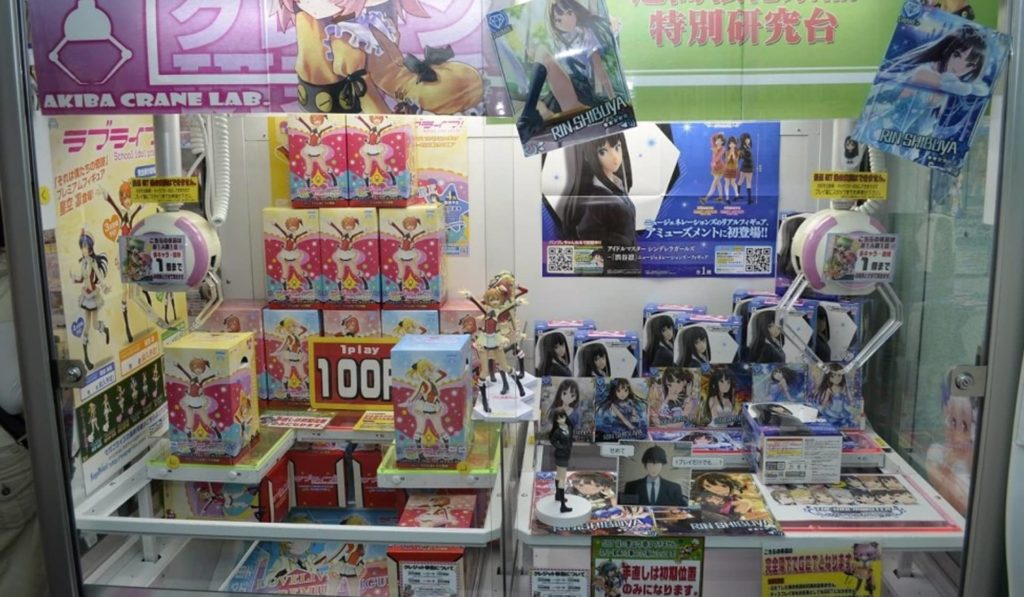
A Prize figure is often the easiest point of entry when you want to start collecting without blowing your budget straight away. Its main advantage is simple: it gives you a first real contact with the object, with the presence of a character on a shelf, and with the very straightforward pleasure of having a figure at home without committing to a major expense from the outset.
That is also why it remains a solid choice for many beginners. This is not about it being somehow inferior. It is about the fact that this kind of figure lets you test your eye and your response to the object.
Its real limit is not embarrassment, and not even the price. A Prize can have a lot of charm, and there is no reason to look down on it. Its weakness lies elsewhere: in a larger collection, it can sometimes lack impact.
As your eye becomes more trained, you may start to feel that some pieces sit a little awkwardly within the whole, that they have less presence, less refinement and less force on a shelf.
In other words, a Prize is often a good first purchase if your goal is to learn. It is less convincing, though, if you already know you want a stronger relationship with the object, or a piece that can remain central over time.

Starting with a Nendoroid
A Nendoroid is often one of the best entry points when you lack space and genuinely enjoy a collection that takes up little room while remaining expressive and fully embracing that identity. Its strengths are its small size, its very strong visual identity, its impressive range of expressions, and the pleasure it can provide even in limited spaces.
Nendoroids work particularly well with certain licenses. For Pokémon, for example, this kind of approach can make a lot of sense. The stylization does not necessarily clash with the universe; it can even reinforce it. Personally, that is exactly why I love them.
But you still have to stay clear-eyed about what you are buying. A Nendoroid is not a faithful miniature version of a character. It is a reinterpretation. If you do not truly like chibi aesthetics, long-term fatigue is a real possibility. The cute side wins people over quickly in the beginning. Over time, it only lasts if this stylization genuinely matches your taste, and is not just a passing impulse.
You also need to accept what this format implies. The parts can be fragile, the accessories are numerous, and a full lineup can very quickly represent a lot of characters. This can be a strength if you like the idea of a lively, modular ensemble. It can also become a trap if you let yourself get pulled into an accumulation you had not really planned or wanted.
A Nendoroid is therefore an excellent first figure in one very specific case: when limited space, the appeal of a compact collection, and a genuine love for chibi aesthetics form a coherent whole in your eyes.
Starting with a Figma
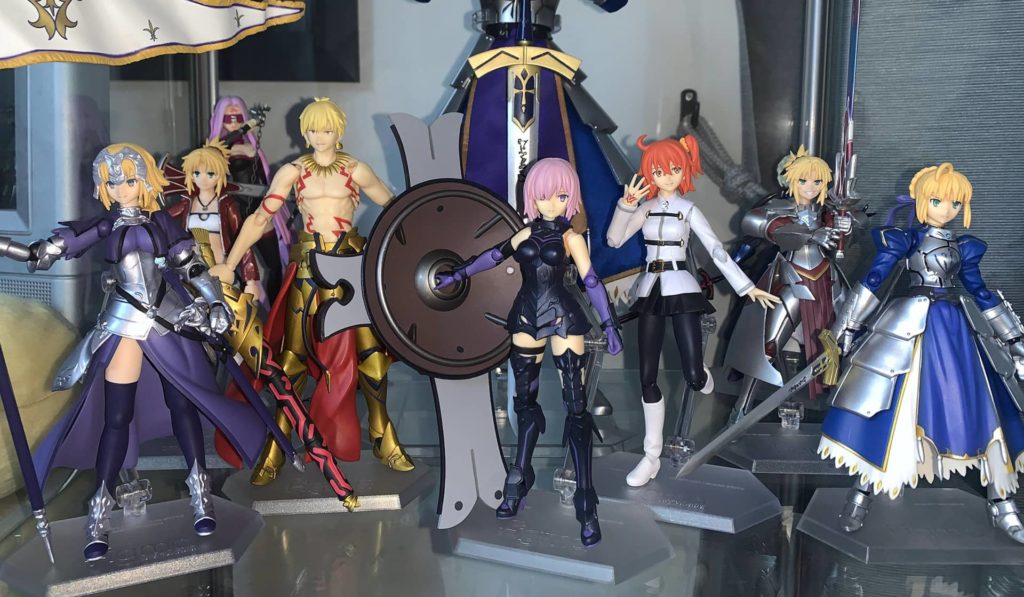
On paper, a Figma is extremely appealing. It promises a lot: posing, freedom, accessories, the ability to recreate scenes, and more. For some collectors, it really is a playground.
However, in my view, as a first purchase, it is often a false good idea.
The problem is not the concept itself. The problem is that many beginners love the idea of a Figma far more than they actually enjoy living with a Figma on a daily basis. Many beginners think the idea is excellent, then discover that handling it becomes tedious, that the joints are fragile, that the accessories end up stored in a box or lost, and that the figure itself is not so easy to display properly on a desk or shelf.
There is also a question of readability. A well-posed and well-staged Figma can be very convincing. But the opposite is also true: if it is poorly presented, the flaws stand out immediately. And if you do not enjoy manipulating it regularly, you risk losing the very thing that made it appealing in the first place.
I therefore tend to see it as a niche format or, at the very least, as a choice that assumes a real taste for pose, movement, and experimentation.
So for a beginner simply looking for a beautiful first piece, it is not necessarily the most logical option. But it should not be ruled out entirely.
Starting with a scale figure
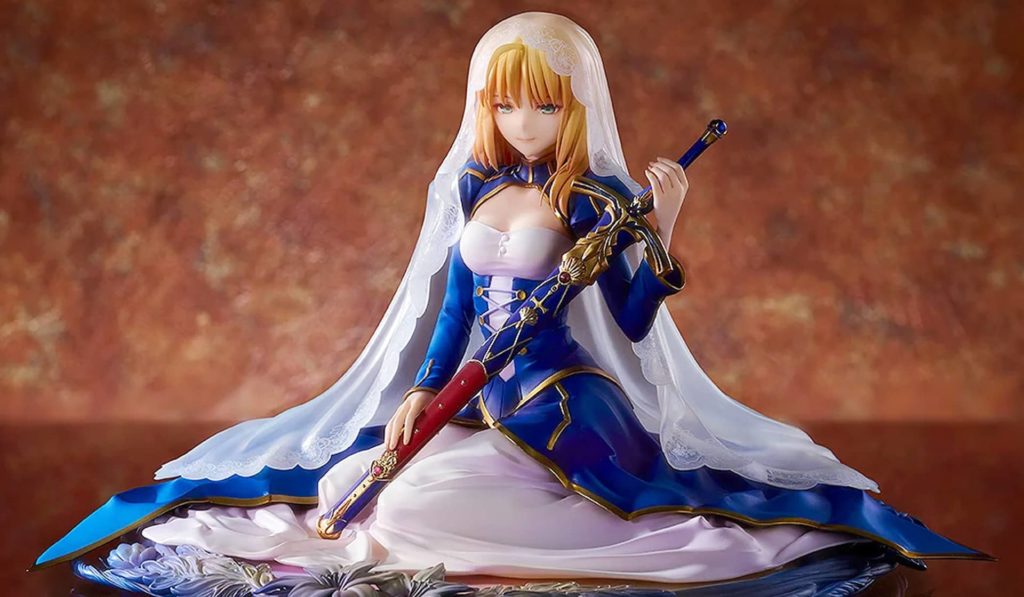
A scale figure is often the most obvious option for people who want a stronger, more refined, and more lasting piece. When successful, it has a completely different presence from a Prize or a Figma. It can become a true anchor point in a collection.
That is exactly why a scale can be an excellent first purchase. But on one condition: you need to already know what you want. Not “it looks nice” or “why not.” You need to really know. You need to deeply love a character, a moment, a pose, an artistic direction. You need enough distance to tell yourself: yes, this is the piece I want to see in my home.
The main risk of regret does not come only from the price. It comes first and foremost from fantasy. Some scale figures are not up to the promise they make. Others arrive months after the order, sometimes so late that your desire has changed in the meantime. Or worse, you forgot about them entirely. You also have to factor in FOMO, which sometimes pushes people to reserve a piece not because it reflects a real desire, but because they are afraid of missing it.
How many times have I forgotten a pre-order? How many times have I bought a figure at full price only to see it drop by half a few months after release?
A scale figure is therefore a very good first figure for someone who already has a specific attachment, an accepted budget, and a genuine desire to curate. It is less suitable for someone who is still trying to find their bearings.
And what about pre-painted resin statues?
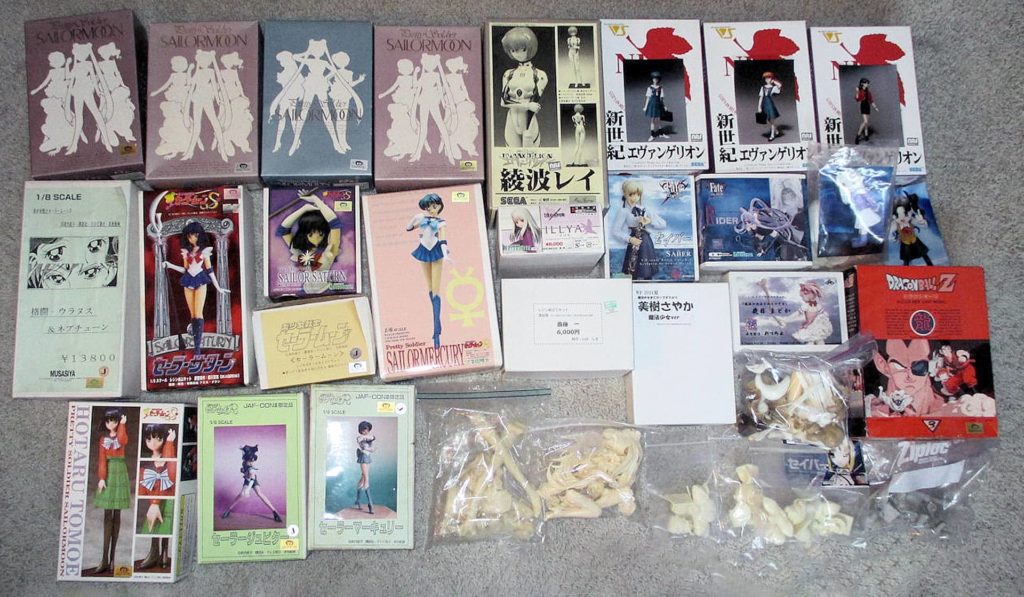
Not talking about them would be almost sacrilegious. I am not referring here to garage kits that you paint yourself, which belong to a completely different logic, but to large pre-painted resin statues, the Tsume type or equivalent: heavy, bulky, expensive, spectacular… and not always as good as their price would suggest.
Some are impressive, and in an already structured collection they can make a strong impact. But as a first purchase, they bring together almost every problem at once: four-digit pricing, often complicated transport, large size, heavy weight, more demanding display conditions, stronger psychological pressure, and the possibility of disappointment if the finish does not match the fantasy created by the promotional visuals.
This is exactly the kind of piece that can be seductive because it seems above everything else, while actually being poorly suited to someone who has not yet learned to understand themselves as a collector.
A pre-painted resin statue is therefore not, in my view, a good first purchase. It is an object of desire that should be treated separately, with different criteria, different expectations, and above all different compromises.
Which format to choose depending on your collector profile
You want to start without pressure
Your budget is tight, and you are not yet fully sure of yourself. You want to see how it feels to have a figure at home, how you display it, whether you truly enjoy looking at it, and whether this desire to collect settles in over time.
In that case, the choice is clear: a Prize is often the best entry point. It lets you test your relationship with the object without immediately introducing a structure that is too heavy or too restrictive.
You have little space and you like kawaii aesthetics
Your space is limited. You do not want to clutter your desk or living room. You like the idea of a compact, expressive, recognizable collection, and you genuinely connect with chibi aesthetics.
There is no real doubt here: a Nendoroid is the best choice for you. It allows true visual density and a strong universe without taking up too much space. But you have to truly like that style, not just think it looks nice.
You already know exactly what you want
A character you adore, a series that matters to you, a scene that fully matches your expectations. You want a piece that matters, a piece that stays with you, a piece you genuinely want to keep because it reflects something precise.
In that case, a scale figure is often the best first purchase. Not because it is objectively better, but because it is coherent with a desire that is already clear and translatable.
You like the idea of posing and handling your figures
You genuinely enjoy modularity, accessories, and variations, and you know you will actually take the time to experiment with your figures. You are not afraid to handle them, test things, and start over.
Then yes, a Figma can make sense. But you need to be honest with yourself and ask the right question: do you really like that kind of use, or only the idea of that kind of use? In collecting, especially at the beginning, that is a major difference.
You are already dreaming about massive showpiece statues
You mostly look at large resin statues, imposing pieces, and you already have the financial means. Then yes, you may be tempted by the thrill of it. But that does not mean it is a good place to begin.
In that case, my advice is not to tell you to go for it. It is rather this: wait a bit, observe, do your research, understand what you really like in those pieces, and avoid making one your first purchase.
A pre-painted resin statue can appear later in a collection. As a starting point, in my view, it lays the wrong kind of foundation.
The most common mistakes when choosing your first figure
Wanting to buy too big, too expensive, too fast
Many beginners start with whatever impresses them most, even though they do not yet have the objective criteria to know whether that impression will last.
Not knowing yourself well enough
You think you like large pieces, when in reality you mostly like the idea of owning a large piece. You think you want articulation, when what you actually want is a beautiful object to contemplate. You think you want premium, when what you truly need is a simple and effective first reference point.
Underestimating the space you actually have
A figure is not just about price or aesthetics. It exists somewhere. It requires space, an environment, perspective, and sometimes an overall coherence. A piece you do not know how to display properly often loses part of its appeal. How many of my figures are still sleeping in their boxes? How many have I never even opened? These are not trivial details. They deserve real thought before buying, but also throughout your whole journey as a collector.
Buying under the pressure of FOMO
Pre-ordering a scale or a resin piece because you are afraid of missing it is one of the best ways to end up, several months later, with a piece you are no longer truly waiting for. You always need to think carefully before buying and before rushing into a pre-order.
Choosing a figure that only appeals to you “in theory”
This is a very common mistake. You pick a format because it seems easy, well-known, appreciated by fans, impressive, or simply fun at first glance. Then you discover that it does not align at all with what truly moves you in daily life. A collection rarely starts well when its first purchase already contradicts the way you want to live with your objects.
My verdict: the best first choice depending on your situation
If I had to answer honestly and directly, I would say this: the safest choice to start with, if you have little space and you genuinely like this aesthetic, is often the Nendoroid. It has a strong identity, it is easy to display, and it allows you to understand quite quickly whether this way of collecting suits you.
The best small-budget choice is the Prize. It remains the best way to test your relationship with figures without introducing a money-driven logic too early. Its limit is that it may lose impact as your eye develops.
The best choice if you already know what you like is the scale figure. Provided you have a clear attachment to a character or a specific piece, it is often the most satisfying format for laying a solid first stone.
A Figma is not a bad format in itself. But for many beginners, it remains the false good idea. It requires a more specific kind of use than people think, and it rarely satisfies those who are simply looking for a strong and straightforward presence on a shelf.
As for pre-painted resin statues, they are not a good first purchase. Not because they have no value, but because they concentrate too many constraints, too much cost, too much fantasy, and too much risk for someone who is just starting out.
In the end, the best first figure is neither the most expensive, nor the most impressive, nor the rarest. It is the one that helps you understand how you truly want to collect.
And that difference can save you from much more than a bad purchase: it can save you from building a collection that does not reflect who you are.
to sum up
Small budget → Prize
Little space + kawaii appeal → Nendoroid
Already clear desire → Scale
Want to pose and handle your figures → Figma
Best avoided as a starting point → Resin
So, are you ready to get started?
Want to avoid the mistakes most beginners make? Get the kit
Nothing could be simpler. Sign up and get the beginner collector’s kit.
It will help you avoid the 20 most common mistakes.
- a pre-purchase checklist
- a short glossary of what is out there
- a simple method for choosing your collecting focus
- a budget sheet to better structure your purchases
No spam. Just useful resources to help you collect with more discernment.