

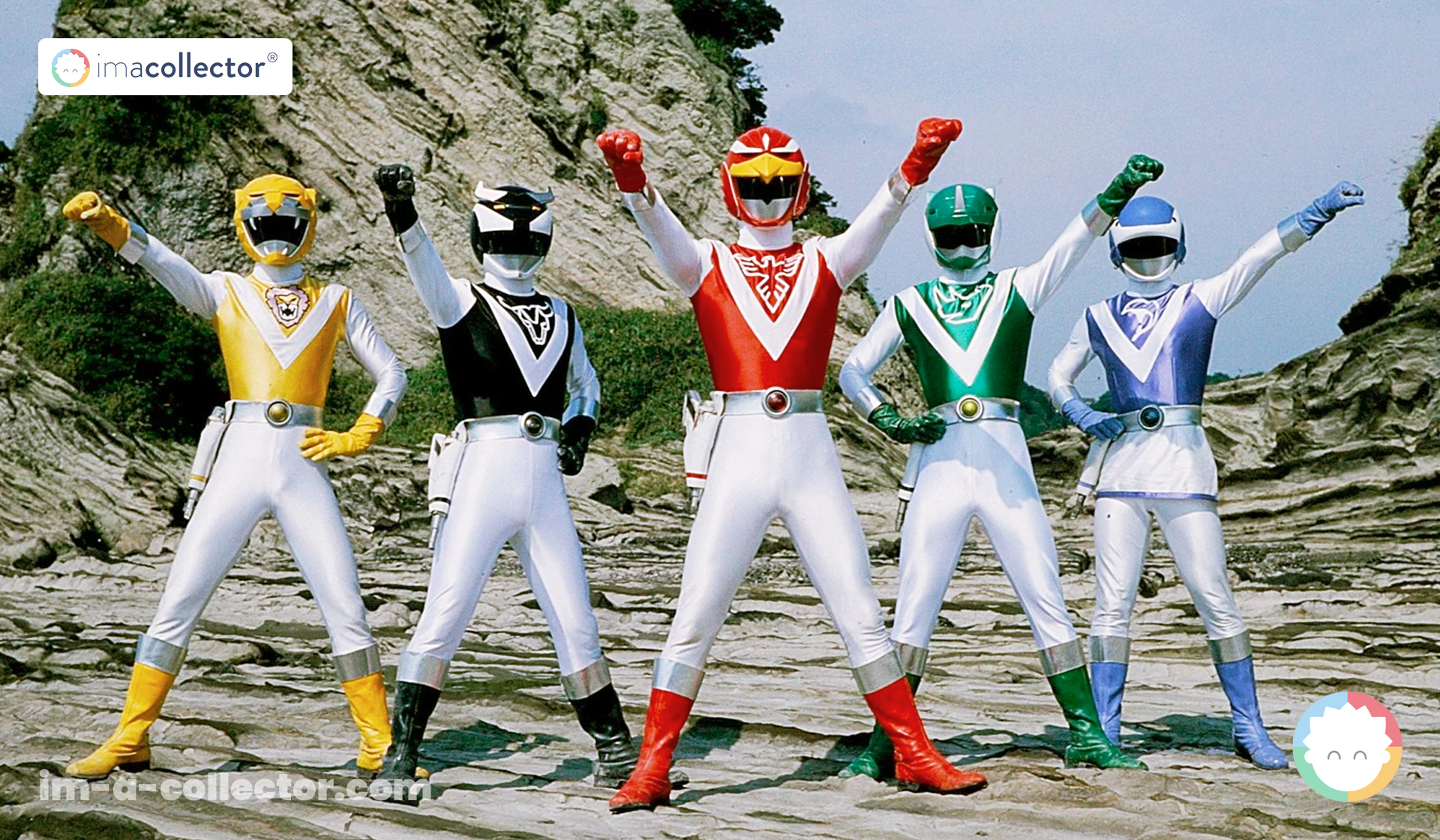
Why did Liveman stay with me when so many other shows from my childhood did not leave the same mark? I am not talking only about the suits, the robots, or the theme song. Watching the series again years later, I realized this Super Sentai already carried something rarer: real weight, a wound at its core, and a story shaped by betrayal, grief, and revenge. This article starts from that childhood memory to revisit Liveman from a different angle and to understand why, even back then, it already felt more grown-up than the others.
Table of contents
- Some series reach us through feeling long before we can explain them in words
- A childhood memory already built on loss
- Blue Dolphin, or affective memory before analysis
- A series that did not speak to me as if I were only a child
- From Club Dorothée to an adult rereading
- What Liveman had, and what many others later lost
- When a memory finally enters the collection
- Revisiting Liveman is not only about remembering
Some series reach us through feeling long before we can explain them in words
For me, Liveman began with music. With a French theme song that pulled me in at once. It felt like a promise of something more than just another children’s show. At the time, I would never have spoken about tone, gravity, or a founding wound. I was simply drawn in by this new series opening up in front of me.
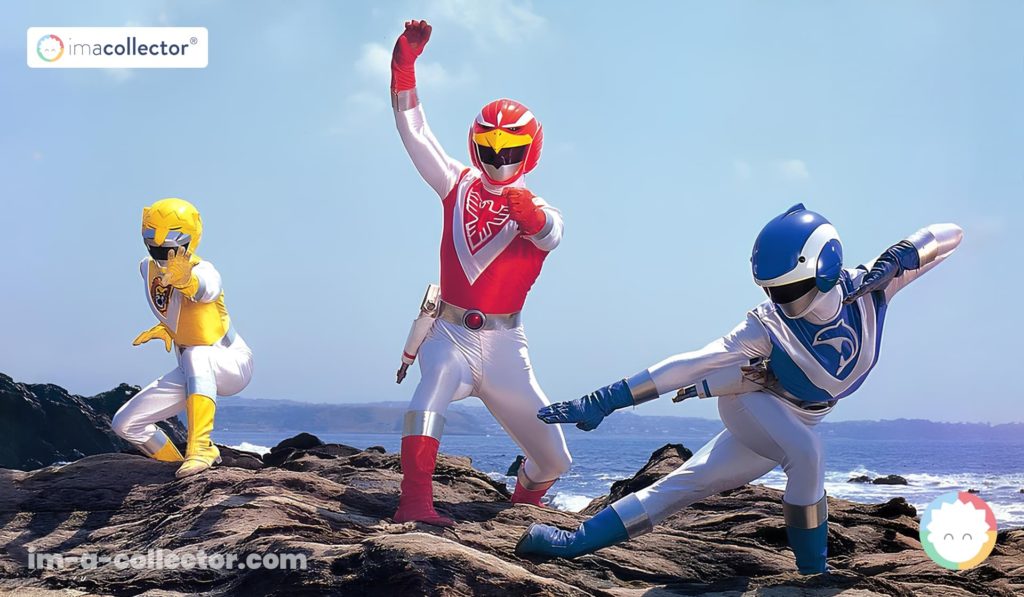
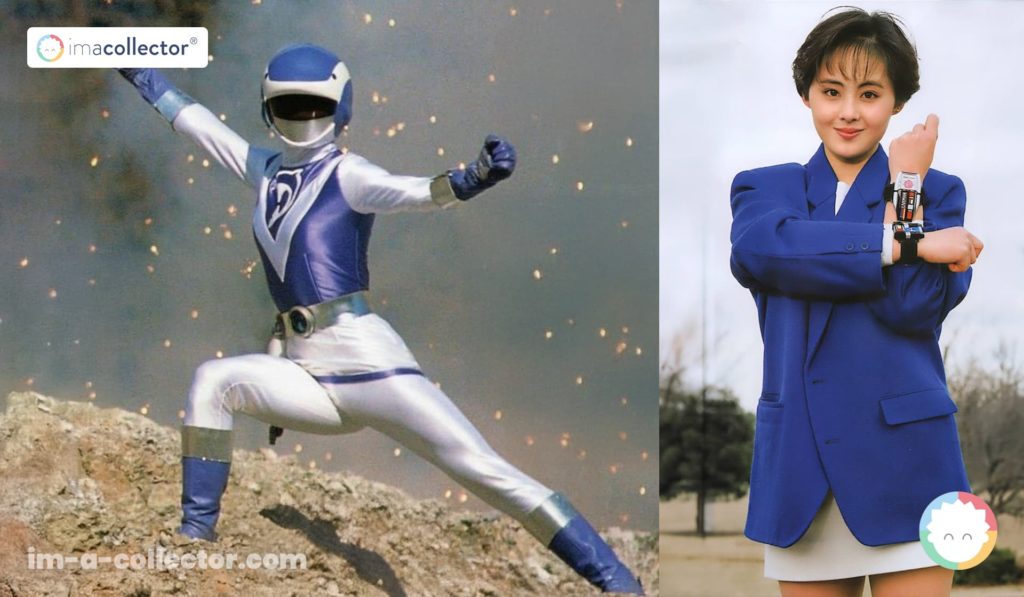
Then there was Megumi, the blue Liveman, known in French as Paléo Dauphin.
She was linked to the dolphin, my favorite animal, and she carried that quiet strength. A caring presence. A kind of steadiness that already struck me as a child and that would stay with me in many of the works I would later grow attached to. In hindsight, that is not a minor detail. Liveman is still noted today as the first Super Sentai season to put a woman in blue at the forefront: Megumi Misaki, better known as Blue Dolphin.
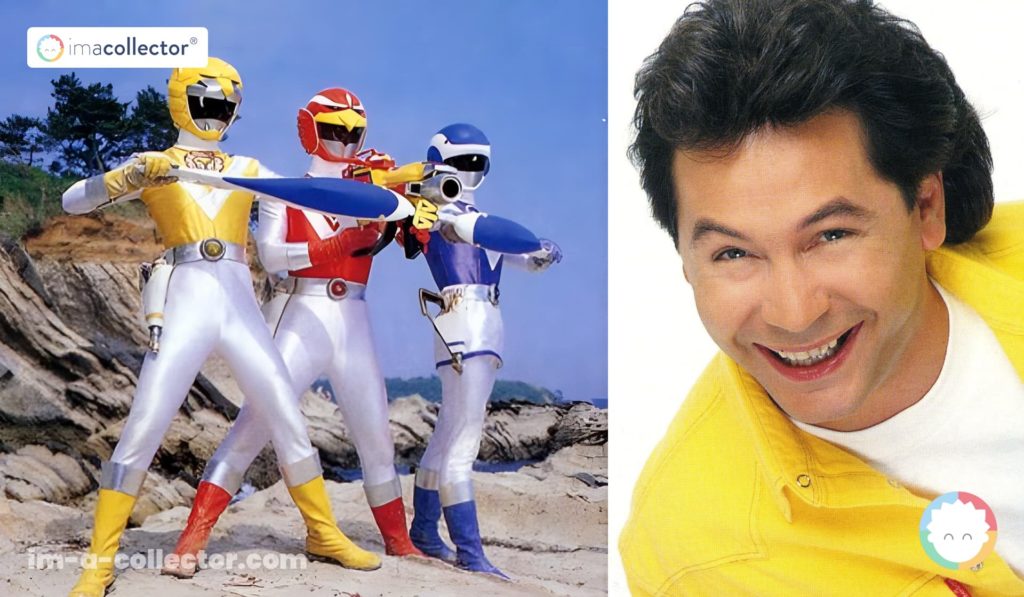
Originally broadcast in Japan from February 27, 1988 to February 18, 1989, the series also holds a distinctive place in franchise history thanks to its initial three-member team and its animal-themed mecha.
But Liveman stayed with me for more than its striking look, its energy, or how instantly recognizable it was. It stayed because the series already carried something more serious than I was able to put into words at the time. Something that moved me before I even understood it.
A childhood memory already built on loss
When we think back on what we watched as children, we often smooth those memories over too much. We remember the suits, the colors, the robots, the special effects. What slips away more easily is everything that lay underneath.
Yet from its opening minutes, Liveman was built around a rupture.
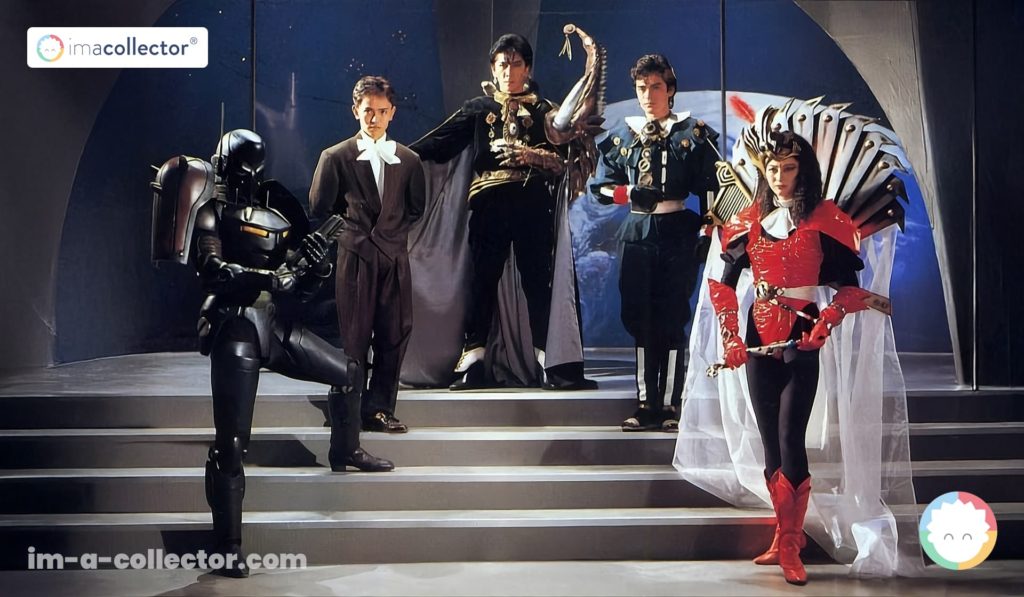
At its core, the series begins with a split between former friends. Three gifted students join Volt, two others are killed, and the three survivors become the team’s original core. That wound shapes the story from the outset. The initial trio is not just a visual oddity within the Sentai universe; it is the direct result of something violently torn apart. The series is born from betrayal and mourning. It begins in loss.
I think part of what marked me so deeply was already there, even if I could not name it at the time. Liveman did more than entertain me. It created an absence. It made me feel that, even before the fighting began, something had already been broken for good.
I sensed that seriousness, even if only vaguely. I was not analyzing it yet, but I could already tell it was there.
Blue Dolphin, or affective memory before analysis
It would be too easy to downplay a child’s attachment to a character by reducing it to something as slight as an animal, the dolphin, a color, blue, or an immediate preference born from the mix of the two.
Blue Dolphin stayed with me because she brought several things together at once. There was the animal, of course. There was also the fact that she was the only woman in the original trio. But above all that, there was a stronger impression: she never felt like a token presence. She had weight. She had gentleness. She knew how to be attentive without fading into the background.
That is often how our deepest childhood memories work. They attach themselves to a figure before they attach themselves to a structure. We love a character before we understand what a series is really saying. And sometimes, as we grow older, we realize that first attachment was already a way into something deeper.
In my case, Megumi never drifted out of that whole. She never became a symbolic detail lost inside a vague nostalgia. She remained a marker. Proof that Liveman was not just a collection of separate elements I happened to like, but a series capable of creating a concrete and lasting attachment.
A series that did not speak to me as if I were only a child
This is probably the most accurate way to sum up what I feel today about Liveman: the series never treated me as if I were just a child.
That does not mean it was made for adults, since they were not the intended audience. Nor does it mean the series escaped the genre’s codes, its excesses, or its lighter moments. But it began from a premise dark enough for something else to emerge. Its story took shape around betrayal, moral violence, and an irreversible loss.
Looking back, that may be what I miss most in many television memories from that era: we forget that some works aimed at younger audiences also carried real thought. Some shows did not feel the need to flatten everything into something overly simple. They did not smooth every emotional edge just to stay easy and agreeable.
Those works trusted something else: a child’s ability to sense that a story can carry more emotional weight without becoming any less compelling.
On that point, my own feeling also overlaps with that of part of the fanbase. In many discussions, Liveman comes up as a darker, more dramatic Sentai, sometimes even as one of the most melancholic entries in the franchise. Fans point to its tragic tone, to episodes marked by real sadness, and to an ending that feels less like a straightforward victory than the close of a difficult ordeal.
It is not absolute proof, but it remains a telling sign: the gravity I see in it today is not just a late invention of my fallible memory.
From Club Dorothée to an adult rereading
In France, the series aired in 1989 on TF1 within Club Dorothée under the title Bioman 3: Liveman. That marketing title says a great deal about how these works reached us at the time: renamed and reframed to fit a French television logic that was trying to extend the Bioman phenomenon.
That matters, because it also explains the nature of my first bond with the series. As a child, I did not understand Liveman as the twelfth entry in Super Sentai history. To me, it arrived as a block of images, music, characters, and energy, folded into the much larger world of Club Dorothée.
The French theme song, sung by Bernard Minet, played a central role in that process. It did not simply translate the work. It reshaped it emotionally. That is how the series entered our collective memory: through music, through rhythm, through that very French way those theme songs had of turning a simple TV show into something that felt unmissable.
That is exactly where my adult rereading becomes interesting. Coming back to Liveman years later, I was able to step outside that nostalgic filter. Not to erase it, but to move beyond it. What I found behind that television memory was a work far more coherent, more serious, and more singular than the 1990s really allowed us to perceive.
What Liveman had, and what many others later lost
I am always wary of easy nostalgic lines like “things were better before.” They are too simple, and too often they are a way of avoiding thought. They replace analysis with a cliché that leads nowhere.
What I can say, though, is this: over time, part of the genre seemed more willing to drift toward something lighter and more openly comic. That does not mean everything that came after Liveman lost its value. That would be just as false, and just as lazy, as saying everything used to be better. Still, Liveman has an initial gravity, a dramatic restraint, and a way of letting a real rupture weigh on the whole story that I feel less often in the Super Sentai series that followed.
That is probably also why the series stayed engraved in me. It belonged to my childhood, of course, but it also taught me that a story could be spectacular without being empty. That you could have suits, robots, and explosions while still carrying something heavier underneath. Something more human.
When a memory finally enters the collection
For a long time, Liveman remained more of a memory than a physical presence for me. None of the toys from the time ever struck me strongly enough for me to buy one and make room for it in my collection. That lasted for years.
I think many collectors know that situation very well. Some works matter enormously, yet nothing around them seems to rise to the level we expect. Merchandise exists, but it lacks the presence and the quality needed to let the work truly enter a collection.
So we wait. The attachment remains, but we refuse to give it a material form until the right one appears. That is exactly what happened to me with Liveman.
I spent a long time looking for figures. I saw them come and go on second-hand sites, but nothing caught my eye, let alone reached me more deeply. None of it felt worthy of what the series meant to me.
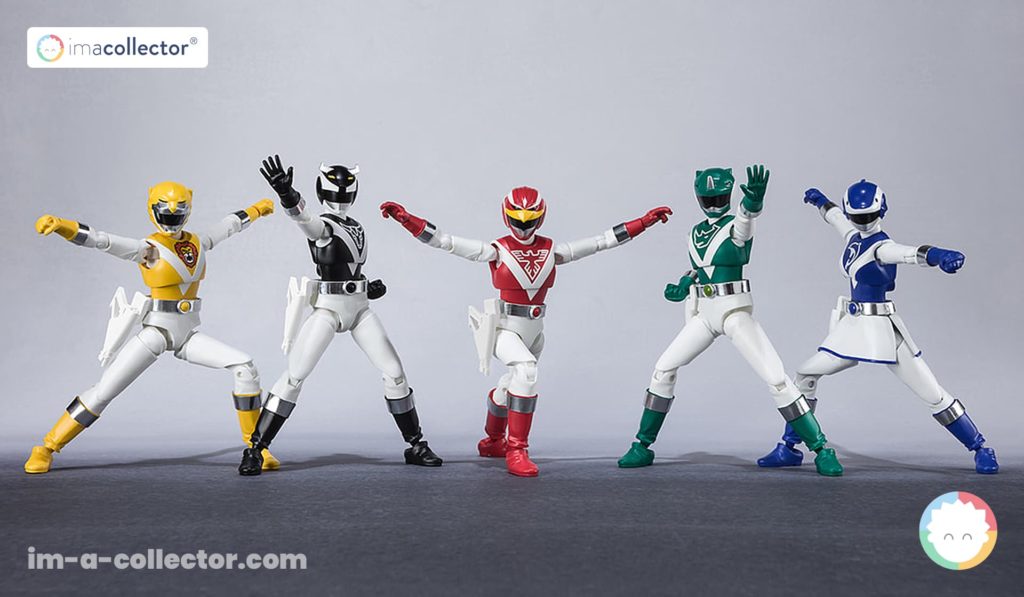
Then, at last, a set appeared with the right level of quality and the right sense of fidelity. I finally bought it during my trip to Japan in 2024. From that moment on, Liveman was no longer just a childhood memory or a series I carried inside me; it entered my collection fully and unmistakably.
That may be what moves me most with certain works. They never disappear completely. More than that, they sometimes wait for years before finding a form strong enough to enter our personal world.
And when that form finally appears, the purchase is no longer only about pleasure; it almost becomes a form of recognition granted to the work itself. A way of saying: yes, this work mattered to me. It deserves its place. And it is still with me.
Revisiting Liveman is not only about remembering
I do not return to Liveman to hide inside nostalgia. I return to it because the series helps me understand what some shows were already doing so well when we were children: they impressed us first, then years later revealed that they carried more than we were able to perceive at the time.
Liveman first stayed with me because of its theme song, its first woman in blue, its suits, and its robots. What truly sets this Sentai apart in my memory is that beneath all of that, there was already a way of telling its story that did not speak to me only as a child.
That is probably why it has stayed with me as a work that held more than it seemed to show at first glance, and that, years later, still speaks to me in a different way.