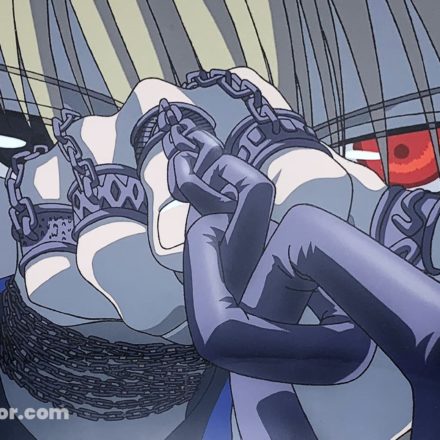


[Analysis] Wild Arms Alter Code: F (PS2 / Media.Vision) Opening – 2003

Revisiting a foundational game always carries an implicit promise: the hope of reconnecting with a moment, a feeling, an emotional gesture that time may have frozen. With Wild Arms Alter Code: F, the remake of the original 1996 title, that expectation is even stronger because much of Wild Arms’ cult status is tied to its opening sequence.
Sommaire
- An opening that invokes memory… without extending it
- A more explicit staging, a less evocative tone
- Functional animation, without a lasting gesture
- An intact theme… carrying the weight alone
- What is lost in reinterpretation
- A competent opening, but no longer a foundational one
- The legacy and the limit of the remake
Released on PlayStation 2 in 2003 and developed by Media.Vision, Wild Arms Alter Code: F reimagines the first Wild Arms with a modernized structure and updated presentation.
The music is there. The theme is recognizable. The intention seems obvious. And yet… something no longer works the same way.
This article focuses exclusively on the opening sequence of Alter Code: F — its animation, staging, and relationship to music not to judge the remake as a whole, but to understand why this new introduction, despite its familiar elements, fails to recreate the foundational impact of the 1996 original.
An opening that invokes memory… without extending it
From the very first seconds, Alter Code: F makes a clear choice: to rely on the emotional legacy of the first Wild Arms. And to do so, the music acts as an immediate trigger.
It directly reminds the player of what they have already experienced. Here, the memory precedes the experience, and that’s enough to alter how the sequence is received.
Where the original opening built atmosphere out of restraint and absence, the remake relies more on recognition than suggestion. We no longer discover. We identify or we compare.


A more explicit staging, a less evocative tone
Visually, Alter Code: F adopts a more descriptive approach. Characters are presented more directly, intentions are clearer, and images leave less room for interpretation.
In the context of a remake, this choice is understandable. It seeks to make visible what was once implied, while giving greater presence to secondary characters.
But in doing so, the sequence loses what gave the original its strength: restraint.
Where the 1996 opening established distance, this one seeks to accompany. Night is no longer a narrative veil; the image becomes explanatory.
Mystery dissipates far too quickly.
Functional animation, without a lasting gesture
Unlike the original opening animated by Madhouse, Alter Code: F does not follow a logic of animation driven by a strong signature. Here, the cutscene fulfills its role without ever seeking to impose a lasting visual vision.
The movements are clean, certainly. The transitions are effective, but no shot truly stands out or imprints itself on memory.
This is not a matter of technical quality.
It is a matter of intention.
An intact theme… carrying the weight alone
The relationship to music is perhaps the most striking aspect of the remake’s opening. The theme retains its emotional power precisely because it activates memory. It still evokes the same spaces: solitude, vastness, wandering.
But this time, it seems to bear the entire mnemonic burden of the sequence alone. Where, in 1996, image and sound mutually built upon each other, accompanying without overshadowing, the music of Alter Code: F acts as a standalone reminder, almost independent of the visuals.
It recalls what Wild Arms was. It no longer announces what it is about to become.

What is lost in reinterpretation
The opening of Alter Code: F highlights a difficult truth: some foundational moments cannot be replayed. Nostalgia can be revisited, but it cannot be reconstructed.
You can reuse the music. You can modernize the visuals. You can clarify the intentions.
But the original shock, the first encounter, does not automatically return, no matter how carefully the elements are reassembled. The remake ends up reinforcing the importance of the 1996 opening rather than extending it.
In that sense, it functions more as an echo than as a threshold.
A competent opening, but no longer a foundational one
Taken on its own, the opening of Wild Arms Alter Code: F is neither failed nor unnecessary. It fulfills its role as an introduction and accompanies the beginning of the game competently.
But when placed beside the 1996 version, a crucial difference emerges: it no longer lays foundations.
Where the original announced a vision of the RPG defined by silence, waiting, and projection, the remake merely recalls its outlines without ever pushing beyond them.
The legacy and the limit of the remake
Alter Code: F inadvertently demonstrates a valuable truth: a cult opening isn’t solely about its music or concept. Quite the opposite. It relies on a fragile balance between image, rhythm, and unspoken elements.
By choosing to make explicit what was once suggested, the remake sacrifices part of what gave the original its enduring force.
This is not a failure : it is a limit. And sometimes, limits reveal more than what a remake chooses to show.
Article produced by imacollector® — an editorial archive dedicated to the memory and heritage of Japanese pop culture.
Content published for informational and documentary purposes. All rights reserved to the respective rights holders.