

Dorothée and the concert of a generation: what our nostalgia celebrates, and what it would rather forget

Dorothée’s return to Paris was not just a nostalgic event. It marked the return of an entire generation. A generation that owes her part of its imagination, its bond with anime, theme songs, merchandise and, above all, a television memory that never really faded. But beneath the excitement, another question emerges: what have we actually done with that legacy since then?
Sommaire
- What Dorothée represents for my generation
- A comeback that could easily have failed
- Dorothée was never just a TV host
- How Club Dorothée shaped the French relationship to anime
- Why this nostalgia hits us so hard
- What this concert also reveals
- French collectors are also children of this system
- What the younger generations force us to question
- Dorothée, or the question left hanging
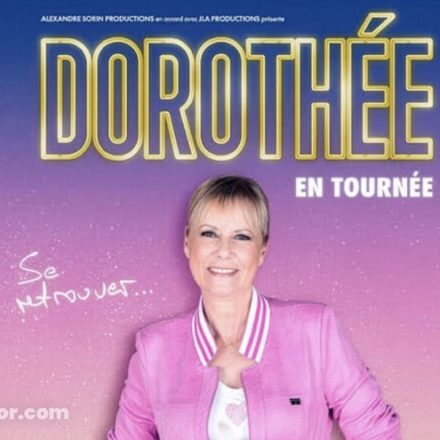
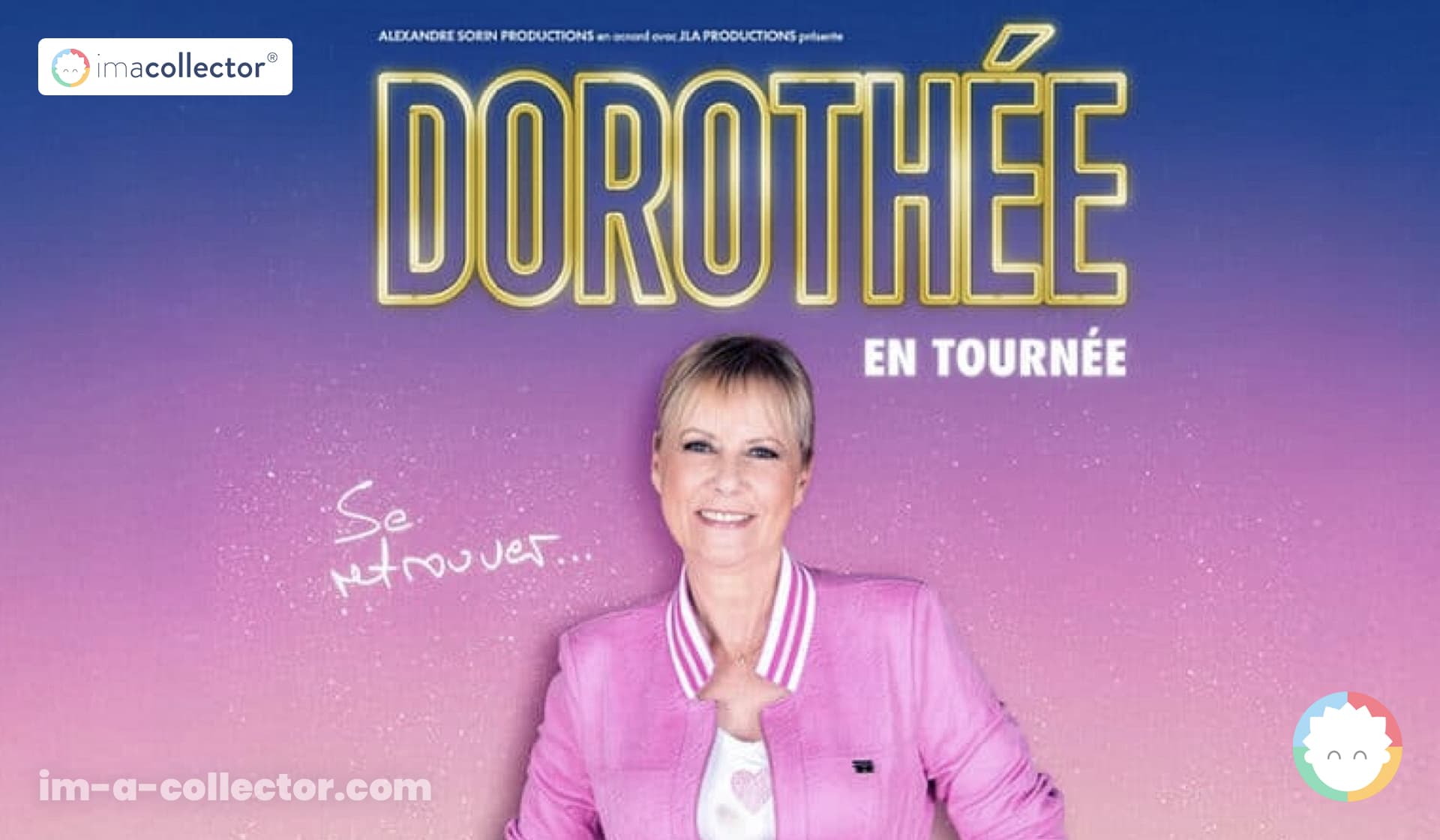
Dorothée’s Paris concert did not just fill a venue. It forced a generation to look at itself. At first, I thought everything was in place for this comeback to fail. Thirty years had passed since the end of Club Dorothée. There was the risk of kitsch. The fear of watching an old, idealised memory crack under the weight of time. And yet, on 4 and 5 April 2026, the Palais des Congrès hosted two shows that proved this was more than a nostalgia hit. The first date sold out in eight minutes. A second was added immediately afterwards. And on stage, despite a few technical hiccups, the point was elsewhere: for more than two and a half hours, an entire room replayed far more than a setlist. It replayed a shared collective memory.
That is exactly why this concert deserves more than a softened recap written by the child in me, finally soothed.
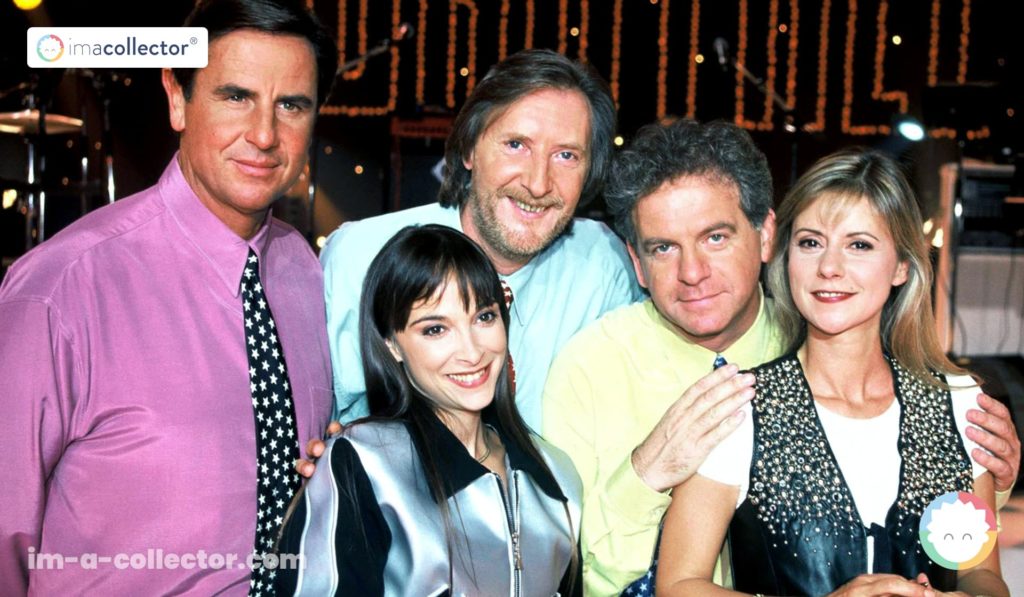
What Dorothée represents for my generation
Dorothée is not just a figure from my youth. For part of the French adult population, she remains one of the clearest faces of a much broader cultural moment: the moment when television brought Japanese anime into ordinary homes, along with their characters, opening songs, theme tunes, merchandise and their powerful emotional hold.
Club Dorothée did not simply air a large number of programmes. It created a common language, a collective memory and, in its own way, part of the ground on which lasting passions were later built, including for many French collectors.
And yet this comeback raises a much deeper question.
If this generation still knows how to remember with such intensity, what has it truly passed on over the past thirty years? That is where the paradox lies. We inherited works, reference points, songs, a shared culture and at times even values tied to connection, generosity and sharing. Forms of human connection that went beyond words or melodies. And yet the world we built as adults looks nothing like an obvious continuation of that promise. France today is still marked by low interpersonal trust and by deep forms of social fragmentation.
So what this concert brought to light was not only the force of our nostalgia. It also suggested that we may have become better at preserving memory than at passing on what that memory actually held.
A comeback that could easily have failed
The success of Dorothée’s return was far from ordinary. This was a highly symbolic comeback, carried by an audience that had grown up, at a time when nostalgia is often packaged and sold like a product, sometimes to the point of exhaustion.
The speed at which tickets sold shows there was genuine demand, the kind that had clearly been building for years. As early as June 2025, the first date, set for 4 April 2026, sold out in eight minutes. The second, announced straight afterwards, was gone within minutes as well. That success followed the special programme Merci Dorothée!, which drew around 4.4 to 4.48 million viewers on TF1 in January 2025. I enjoyed watching it at the time, and I had already written a few words about it back then.
Dorothée’s return to the stage did not come out of nowhere. It reactivated a bond that had already been proven on a massive scale. In other words, the concert did not simply reveal affection for one person. It revealed the lasting existence of a shared world.
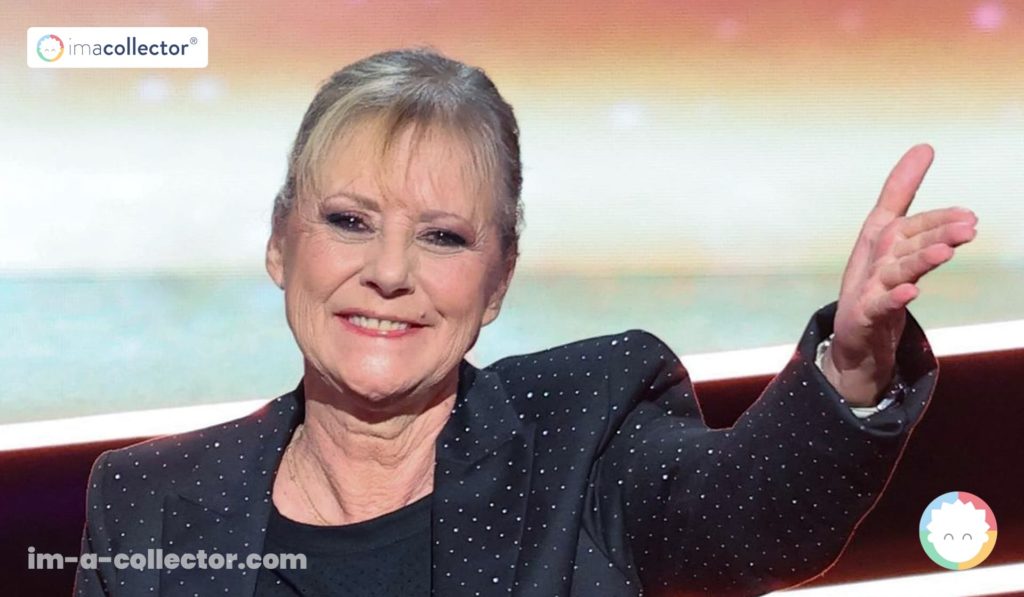
Dorothée was never just a TV host
Reducing Dorothée to the host who lulled our childhood is far too narrow a way of speaking about her. It contains some truth, but it does not go far enough. Dorothée was not simply a reassuring Wednesday presence on television in the 1980s and 1990s. She stood at the visible centre of something much larger: television, songs, tours, merchandising, a sense of belonging, a fan community, and a whole emotional and cultural economy.
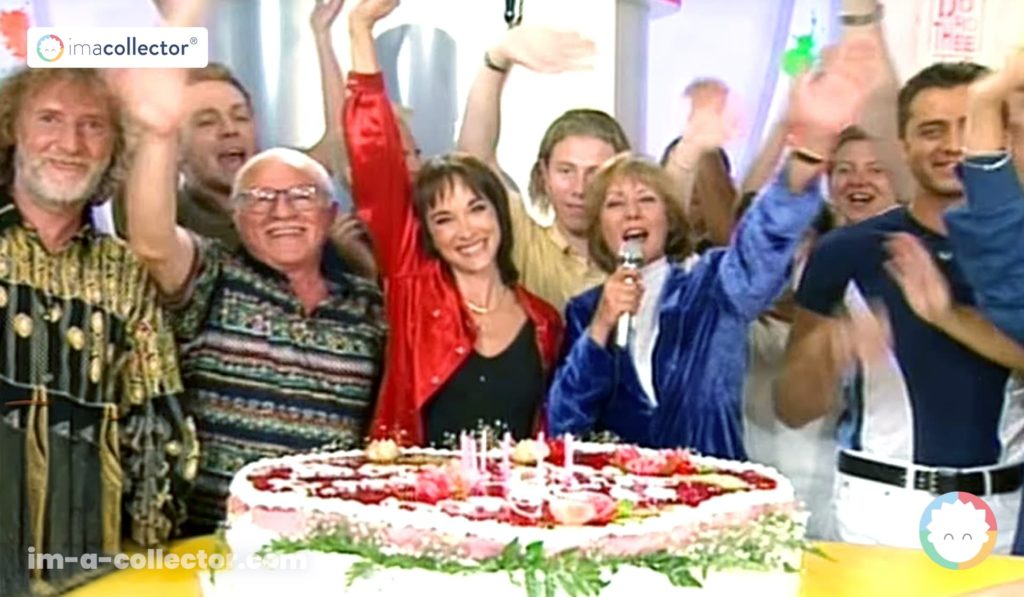
Club Dorothée aired on TF1 from 1987 to 1997, after Récré A2. The phenomenon went far beyond children’s television. Le Monde has noted that the show built a vast family around itself, with membership cards, magazines, merchandise, concerts and as many as 700,000 members at a time when social media did not exist. The Centre d’histoire sociale des mondes contemporains has even listed an academic thesis devoted to its history, further proof that this belongs to French cultural history, not merely to private memory.
Club Dorothée was not just a TV show people watched without thinking. It was an environment in which a generation learned to recognise faces, choruses, characters, rituals, weekly appointments, and a certain way of being together.
And that is the dimension we need to keep in mind.
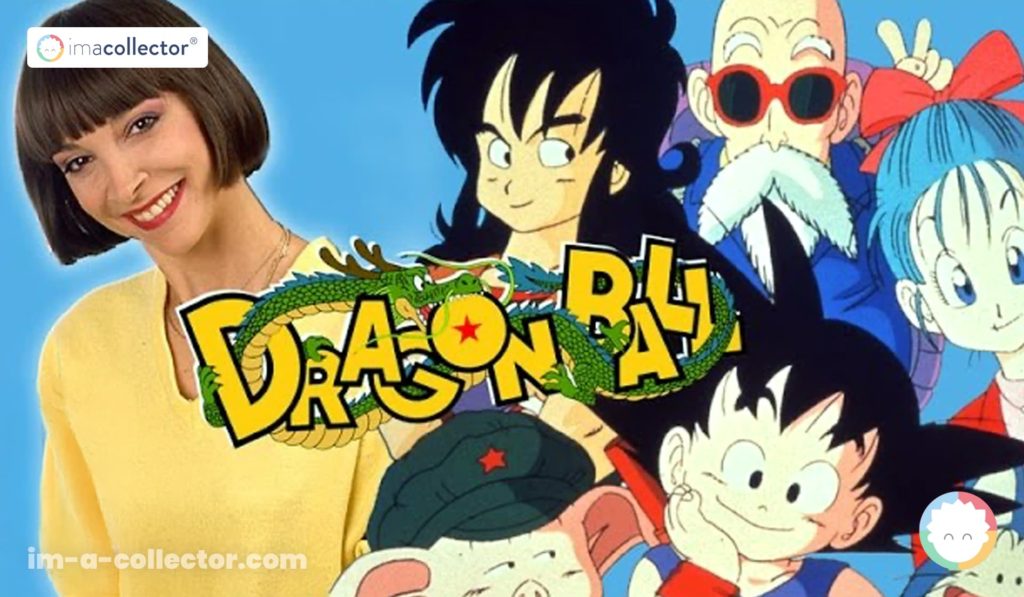
How Club Dorothée shaped the French relationship to anime
As someone who grew up in that era, I often think that Japanese anime would probably have reached France one way or another even without Club Dorothée. But they would likely never have taken on that same place in our hearts. Not in this popular form, so deeply tied to the TV rendezvous, the theme song sung in French, the poster pinned to a wall, the VHS tape recorded at home, and later the piece of merchandise kept because it extends a precise memory from our own lives.
Club Dorothée acted as a huge gateway into Japanese works that later became foundational for millions of French children. It happened within a framework that was often imperfect, sometimes criticised and perhaps shaped by consumerist logic. Even so, the outcome remains the same: for a large share of the French public, the first emotional bond with anime did not begin in a film archive, a festival or a specialist library. It began in the living room.
That point is also crucial if we want to understand collecting.
In France, many anime collectors are not simply collecting franchises. They are collecting entry points into their own personal biography, sensations, first feelings. They become attached to a theme song, an episode, a voice, and sometimes even to a later material form of an old emotion.
That is also why so many collecting paths rest on a hybrid foundation: part French television, part Japan, part personal memory, part adult reconstruction. That structure owes an enormous amount to the Club Dorothée matrix.
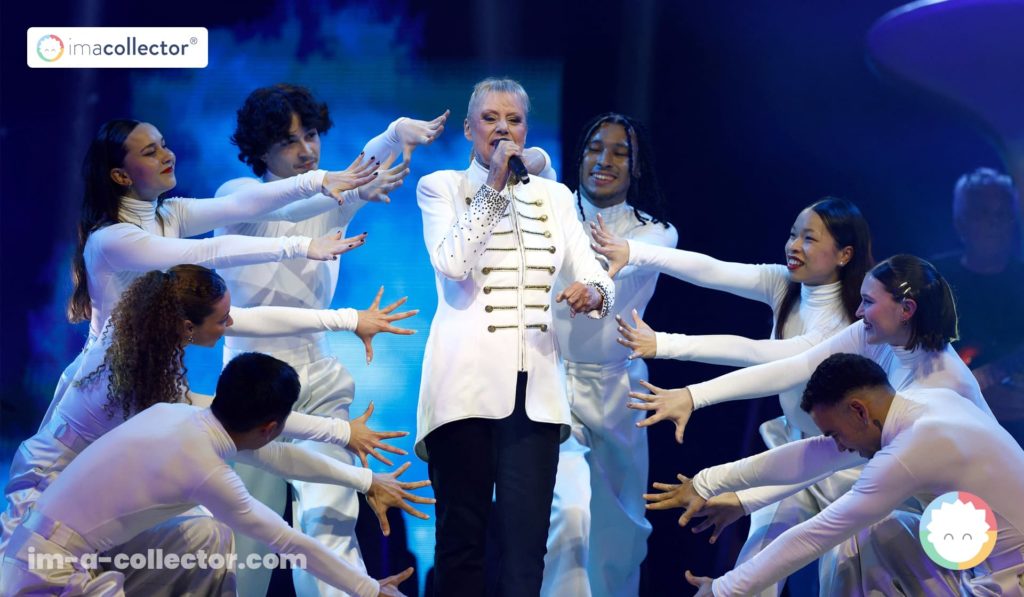
Why this nostalgia hits us so hard
Nostalgia is not simply a taste for the past. Very often, it is a response to the present.
If Dorothée’s concert moved its audience so deeply, it was not simply because she came back to sing her best-known songs. It was because, for a few hours, it rebuilt the feeling of a shared world. A time when millions of people saw the same images, heard the same theme songs and understood one another through instantly shared references.
This matters all the more because French society today shows very clear signs of fragmentation. In 2024, trust in strangers reached only 4.3 out of 10 in mainland France according to INSEE. The Fondation de France noted that in 2023, 12% of French people were living in total isolation and one person in three had either no social network at all or only one.
In that kind of landscape, nostalgia is not trivial at all. On the contrary, it can become one of the few ways of briefly reliving a simple, large-scale sense of connection.
That is probably why this concert went beyond simple regressive pleasure. It gave adults the feeling that they were recovering not only a figure from their youth, but also a lost form of community.
What this concert also reveals
This is probably where my argument will irritate some people. Because the paradox is a harsh one: this generation, my generation, inherited an immense collective imagination, but did not necessarily know how to turn it into a lasting shared culture. Yes, it proved very good at preserving its memories. It was far less successful at passing them on, giving them context, opening them up, and connecting them to anything beyond itself.
To be clear, I looked through a great deal of data, and nothing in it allows me to claim that the Dorothée generation is more selfish. Scientifically, that simply cannot be proven. What the figures do allow us to say is something else, perhaps truer and harsher: we live in a more individualised, more fragmented, more distrustful society, where shared memory often survives better than shared life itself.
The problem is not that my generation loves remembering too much. It is that my generation has turned nostalgia into a refuge rather than a starting point.
It still knows how to gather around what it once knew. It is much less capable of turning that heritage into a bridge: toward others, toward new works, toward a real practice of transmission, toward a culture of curiosity rather than one built only on recognition.
It was not better before. It was simply different.
And that may be what Dorothée’s concert made visible most powerfully of all: the beauty of communion, and also its limit.
French collectors are also children of this system
Collectors are an extension of the Club Dorothée story.
Part of French collecting culture around anime and Japanese pop culture was built not against that television culture, but directly out of it. Even when new forms of derivative products appear on the market—artbooks, cels, genga, reproductions, limited editions and more—there is still, underneath it all, something of that first popular contact we experienced as children.
To my mind, that has produced both the best and the worst.
At its best, it creates a deeply embodied relationship to the object. Not just a market value. A way of seeing material things as a means of holding onto a trace, deepening a work, and extending a memory.
At its worst, collecting can become a sealed echo chamber, closed off to others. A way of endlessly replaying the same attachments and the same totems, sometimes without any real widening of perspective. At that point, the collector believes he is defending a culture when he is really only defending a private territory he does not want others to step into.
Dorothée’s two concerts are a sharp reminder that memory can be a driving force, but it can also turn into a bubble.
What the younger generations force us to question
As I said earlier, telling ourselves that things were better before and that everything is now lost makes no sense, and may simply be wrong.
The available data I found points in that direction. In 2024, for example, 40% of 18 to 30-year-olds said they had signed a petition or taken a public stance online over the previous twelve months. Other indicators show that younger people remain active across several forms of public engagement. The 2025 France Bénévolat barometer also reports growing involvement in associations among younger people, with a four-point increase among 15 to 34-year-olds between 2022 and 2025.
That does not mean younger generations are doing better in every respect. It simply means it is far too easy for adults to turn nostalgia into a form of moral superiority.
The real issue is not whether younger people deserve less than we had. The real issue is whether we have managed to pass on anything other than a cult of our own memories.
On that point, Dorothée’s concert works as an almost cruel revelation. It shows that we still know how to recognise what shaped us, while leaving open the question of whether we ourselves have created anything worth passing on.
Dorothée, or the question left hanging
It would be completely absurd to downplay what this return meant.
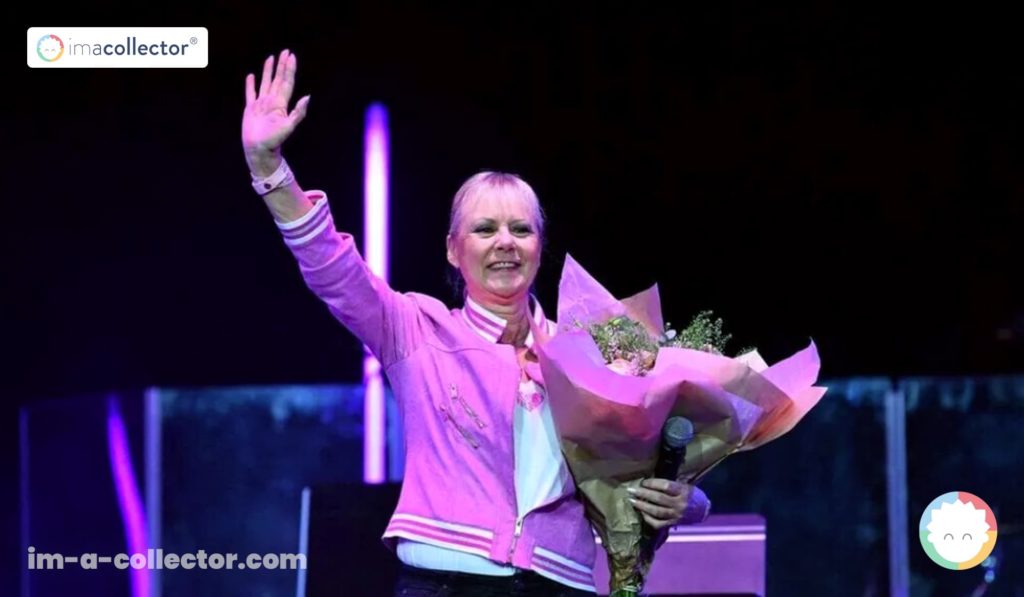
There was real emotion. A sense of communion I have rarely felt at a concert. Something almost unreal in watching a room full of adults sing back a repertoire so deeply tied to a childhood that lies decades behind them.
The moment carried a very real human value. Something almost physical. And precisely because it was real, it deserves more than a simple tribute.
Dorothée’s two Paris concerts in 2026 did not merely confirm the power of an icon. They reminded us what a generation had received: a common language, a shared imagination, an early sensitivity to anime, to theme songs, to the objects that extend works and to the traces we keep from them. For French collectors, that story even sits at the origin of their collections, whether they realise it or not.
But the most important thing still remains.
We still know how to remember.
We still know how to sing together.
We still know how to fill a hall to thank a figure from our youth who stayed with us.
But this concert was also asking a larger question, one that no encore, no chorus and no nostalgia can answer for us: what have we truly passed on since then?
Article produced by imacollector® — an editorial archive dedicated to the memory and heritage of Japanese pop culture.
Content published for informational and documentary purposes. All rights reserved to the respective rights holders.