


Mikasa Ackerman is often reduced to three things: her strength, her silence, and her attachment to Eren. It is a convenient summary, but also a deeply reductive one. In Attack on Titan, Mikasa is not simply one of the series’ most formidable fighters. She is also one of its most painful characters to fully grasp.
Sommaire
- A stolen childhood: the birth of a warrior
- Eren: the impossible love
- The Ackerman clan: inherited power, inescapable curse
- Heritage and power
- Instinctive loyalty
- The Ackerman paradox
- The Azumabito connection: a shattered legacy
- An alternative path
- A potential never realized
- An endless cycle of violence
- Mikasa, Ymir, and the breaking of the cycle
- Mikasa and the tragic heroines of Japanese animation
- Mikasa in the memory of fans and collectors
- Figures and merchandise
- A frozen memory
- Conclusion: Mikasa, an unforgettable heroine
Her story is not simply about survival, loyalty, or combat efficiency. It is about what a life becomes when it is shaped by loss, sustained by violence, and closed off by a love that can only exist through absence. That is exactly what makes Mikasa so striking. In a world built on war, rupture, and sacrifice, she embodies a quieter tragedy than many others, but one no less brutal: the tragedy of continuing forward after everything that once gave meaning to the world has already been broken.
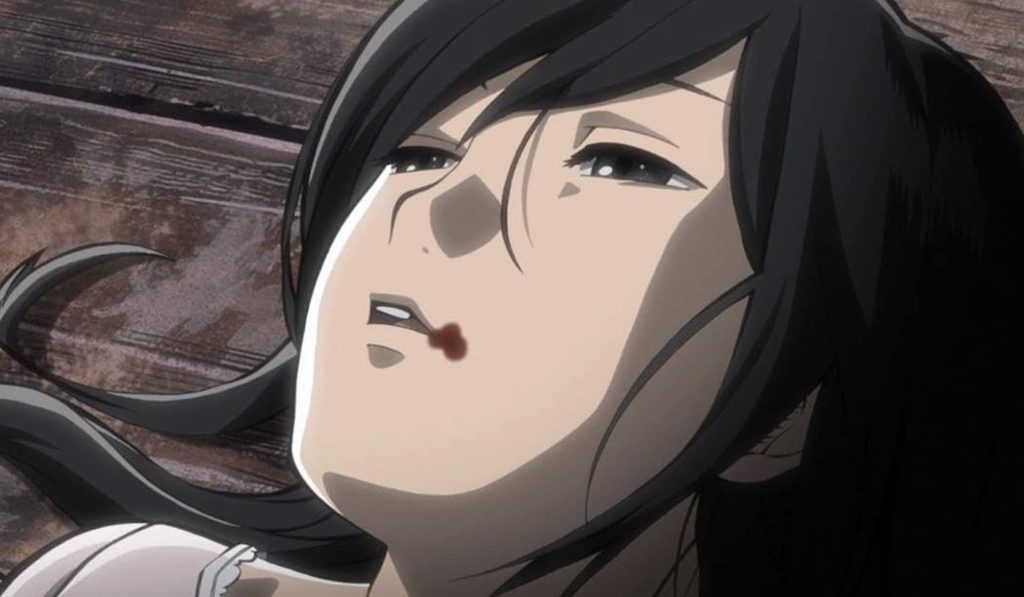
A stolen childhood: the birth of a warrior
Before she became an exceptional soldier, Mikasa was first and foremost a child broken far too early. The murder of her parents is not just an opening trauma; it is the moment that permanently shatters her relationship with the world.
What she learns that day is nothing abstract: violence can erupt in the most intimate of spaces. Home does not protect you. Childhood does not last. Survival sometimes means killing before being killed.
From that moment on, Eren’s intervention means far more than a rescue. It creates an absolute anchor point. Mikasa loses her family at the very moment another presence becomes central to her, almost vital.
From then on, her strength is never simply a personal trait. It becomes a response to fear, to loss, and to the need never to experience helplessness again.
That is precisely what gives Mikasa her particular hardness, because she does not become strong out of any love of fighting. She becomes strong because the world taught her too early that weakness costs everything.
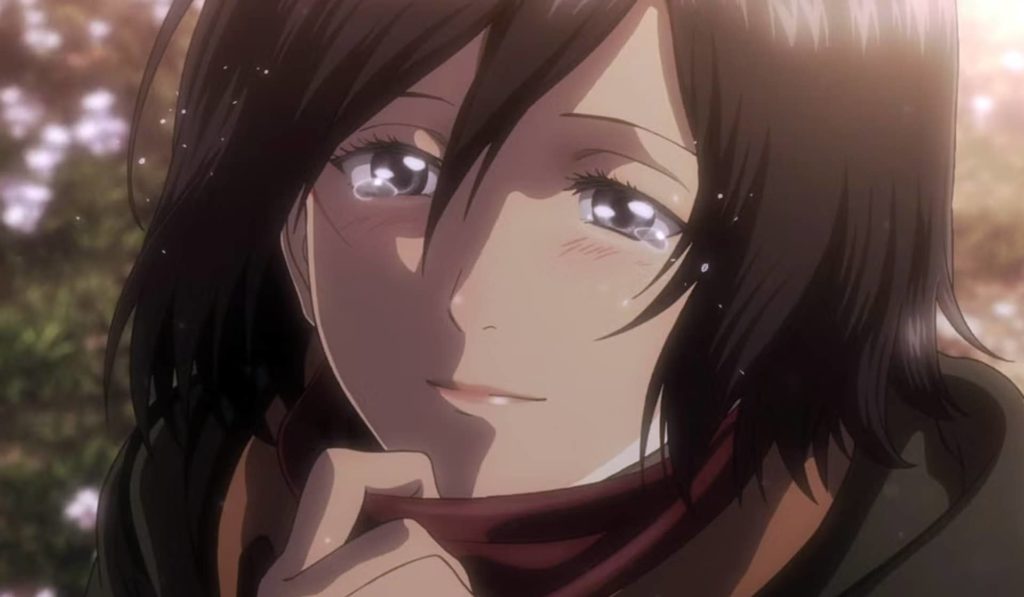
Eren: the impossible love
The bond between Mikasa and Eren lies at the heart of her fate. It cannot be reduced to simple affection or to a conventional romance. It involves several overlapping forces: refuge, attachment, emotional indebtedness, the need to protect, and a love that will never be fully lived.
Mikasa ne suit pas Eren uniquement parce qu’elle l’aime. Elle le suit aussi parce qu’il représente l’origine de son second arrachement au monde : celui qui l’a sauvée, accueillie, replacée quelque part après la destruction.
Her attachment is therefore anything but light. It reaches into the very core of who she is.
That is where tragedy closes in on her. The further Eren drifts away, the more tightly Mikasa remains bound to him. The more opaque, violent, or unreachable he becomes, the more her own life seems pulled back into an impossible tension: staying loyal without truly being able to save him, trying to understand without being able to follow him to the end, loving without ever receiving an equal peace in return.
Mikasa’s tragedy, then, is not simply that she loves Eren. It is that she loves someone whom the story gradually turns into an unreachable breaking point.
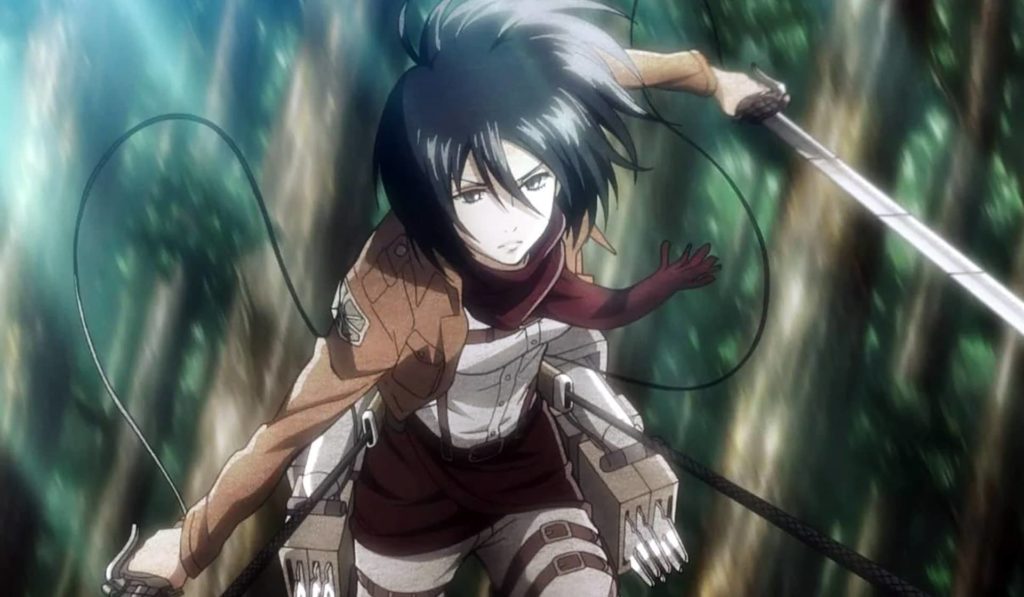
The Ackerman clan: inherited power, inescapable curse
The Ackerman legacy gives Mikasa extraordinary power, but that power is no simple gift. In Attack on Titan, it works like a form of determination written into the body, almost like a fighting memory passed down before it can even be thought.
That is what makes her so unsettling. Mikasa is impressive because of her sheer effectiveness. And yet that effectiveness never grants her freedom. More than that, it locks her into a specific role. The more fearsome she becomes, the more she seems condemned to answer with force in a world that never left her any other language.
Heritage and power
Ackerman power sets Mikasa apart from the other soldiers. It places her on a different level, almost outside the norm.
But this apparent privilege comes at a cost: it binds her to a logic in which power serves above all to survive, protect, and endure. Her strength gives her neither peace nor a way out. It simply makes her capable of moving through horror without ever escaping it.
Instinctive loyalty
This question of Ackerman loyalty runs through one reading of the character. Whether it is seen as instinct, conditioned attachment, or simply devotion pushed to an extreme, it still reinforces the same essential impression: Mikasa often acts like someone whose inner freedom has been damaged by what she carries within her.
That ambiguity matters. It prevents her devotion from being read as a pure virtue. In Mikasa’s case, loyalty is moving, but it is also deeply painful, because at times it takes the form of an inability to let go.
The Ackerman paradox
That is the character’s full paradox: what makes her admirable also helps trap her.
Mikasa is strong, fast, decisive, almost unreal in some combat scenes. Yet that power does nothing to repair the fragility of her fate. She can defeat enemies, but not what binds her to loss. She can move through war, but she will never come out of it unscathed, any more than those she loves.
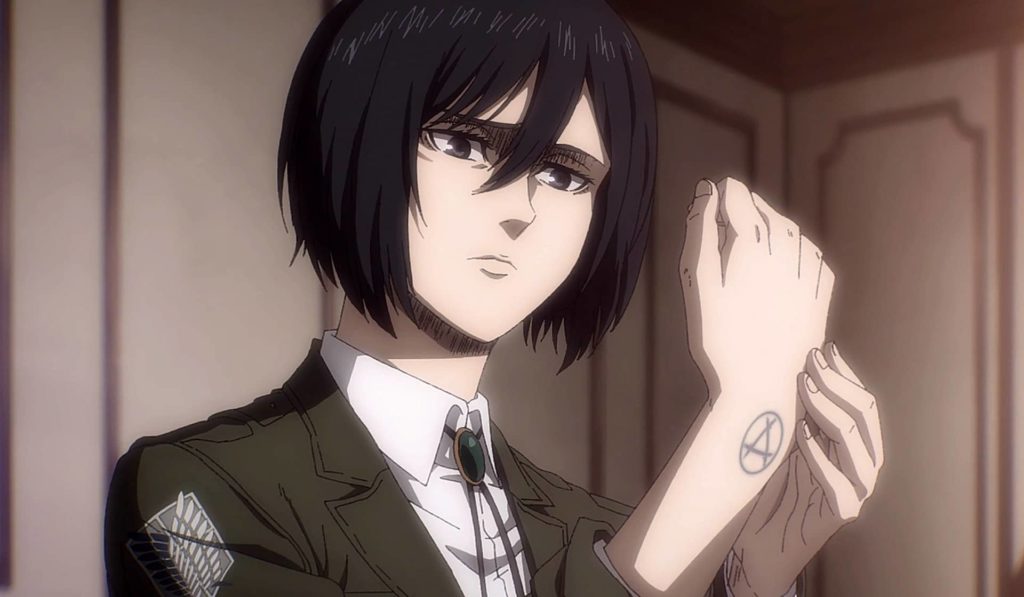
The Azumabito connection: a shattered legacy
Another dimension of Mikasa, more discreet but just as important, lies in her connection to the Azumabito line. That origin adds another layer to her identity: the layer of a character who might have stood for something other than a mere survivor or a weapon of war.
There was a possible opening there, another story, another place in the world. But as is so often the case with Mikasa, that possibility remains incomplete.
An alternative path
Her link to the Azumabito hints at another possible life. Whether as lineage, structure, or a sense of belonging broader than the violence of the present, it might have given Mikasa a different perspective, a way of understanding herself outside combat and outside her bond with Eren.
A potential never realized
That too is part of what makes Mikasa tragic: the story keeps suggesting more in her than it ever truly allows her to live. She has a depth, a dignity, and an intensity that far exceed her immediate function in the narrative.
And yet part of that potential remains blocked, simply because her fate is that of a character to whom the world almost never grants a positive way out.
An endless cycle of violence
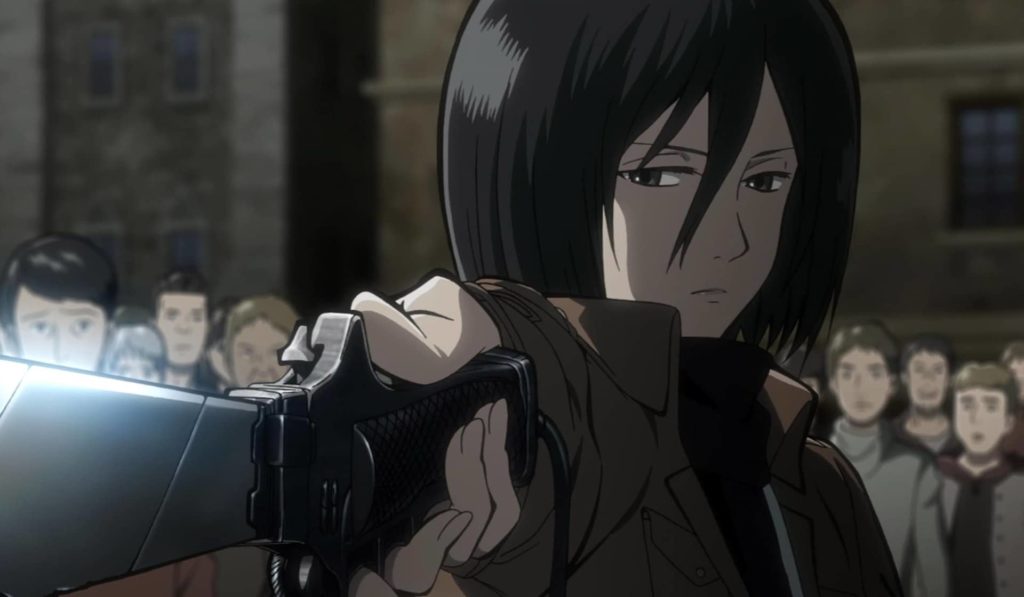
Mikasa belongs to a work in which violence is passed on, repeated, and justified without ever running dry. It is a violence that is seen, felt, and endured. Yet she is not one of its architects. She is one of its most constant victims.
Her path is that of someone trying to save what she can in a world where nearly everything pushes toward destruction. She fights to protect, but she is forced to do so again and again under conditions that strip away a little more of any ordinary life she might have had.
It is not only war that wounds her. It is the duration of that war, its repetition, the fact that no victory ever truly repairs what has been lost.
⚠️ Spoiler Alert ⚠️: Mikasa, Ymir, and the End of the Cycle (learn more)
Mikasa, Ymir, and the breaking of the cycle
The parallel between Mikasa and Ymir gives the character even greater depth in the final part of Shingeki no Kyojin. In both cases, the story is about attachment, suffering, emotional servitude, and a bond that cannot be severed.
For centuries, Ymir Fritz remained trapped in a destructive relationship she was never able to escape. Despite her power, she stays imprisoned by an attachment that condemns her to serve, to suffer, and to prolong a cycle she cannot bring herself to break.
In that sense, Ymir represents the most extreme form of a love turned into confinement: a loyalty pushed to the point of self-erasure.
It is in Mikasa that she finds a mirror, a figure capable of going where she herself never could.
Mikasa is confronted with a similar ordeal. Her bond with Eren goes beyond simple affection: it is bound up with loss, identity, emotional debt, and a love that can no longer be lived except through pain.
By choosing to kill Eren, Mikasa does not come away unscathed. Her act is nothing like a joyful victory. It is a tearing-away, a separation at the highest possible cost, but also the breaking of a bond that neither love nor suffering could continue to justify.
That choice brings the cycle to an end.
It does not reward Mikasa, nor does it erase her pain, but it achieves what Ymir never managed to do: accept loss so that something can finally come to an end.
Mikasa and the tragic heroines of Japanese animation
Mikasa is one of those female characters who leave a lasting mark because they are not built on mere charisma, on a secondary decorative role, or on any hollow feeling of power.
She belongs to a line of heroines whose strength never erases the wound. Characters who remain standing, fight, and keep moving, while their entire presence remains marked by a loss older than themselves.
What sets her apart is her rare combination of restraint and intensity. Mikasa says very little, yet her entire existence feels compressed around a few decisive fractures.
She does not need to be overexplained to leave a mark on the reader or viewer. She leaves one because she carries something else: a contained pain, almost without emphasis, and therefore all the harder to forget.
Mikasa in the memory of fans and collectors
Mikasa has left a lasting mark on the imagination of Attack on Titan. Not just because she is visually iconic, nor because she is one of the series’ most recognizable faces.
Quite simply because she holds together a tension that many characters never reach: an immediately legible strength and a pain that continues to work on the viewer long after the story is over. For collectors, that changes everything.
A character does not endure simply because they are popular. They endure because they continue to carry something beyond their presence on the page or on the screen.
Figures and merchandise
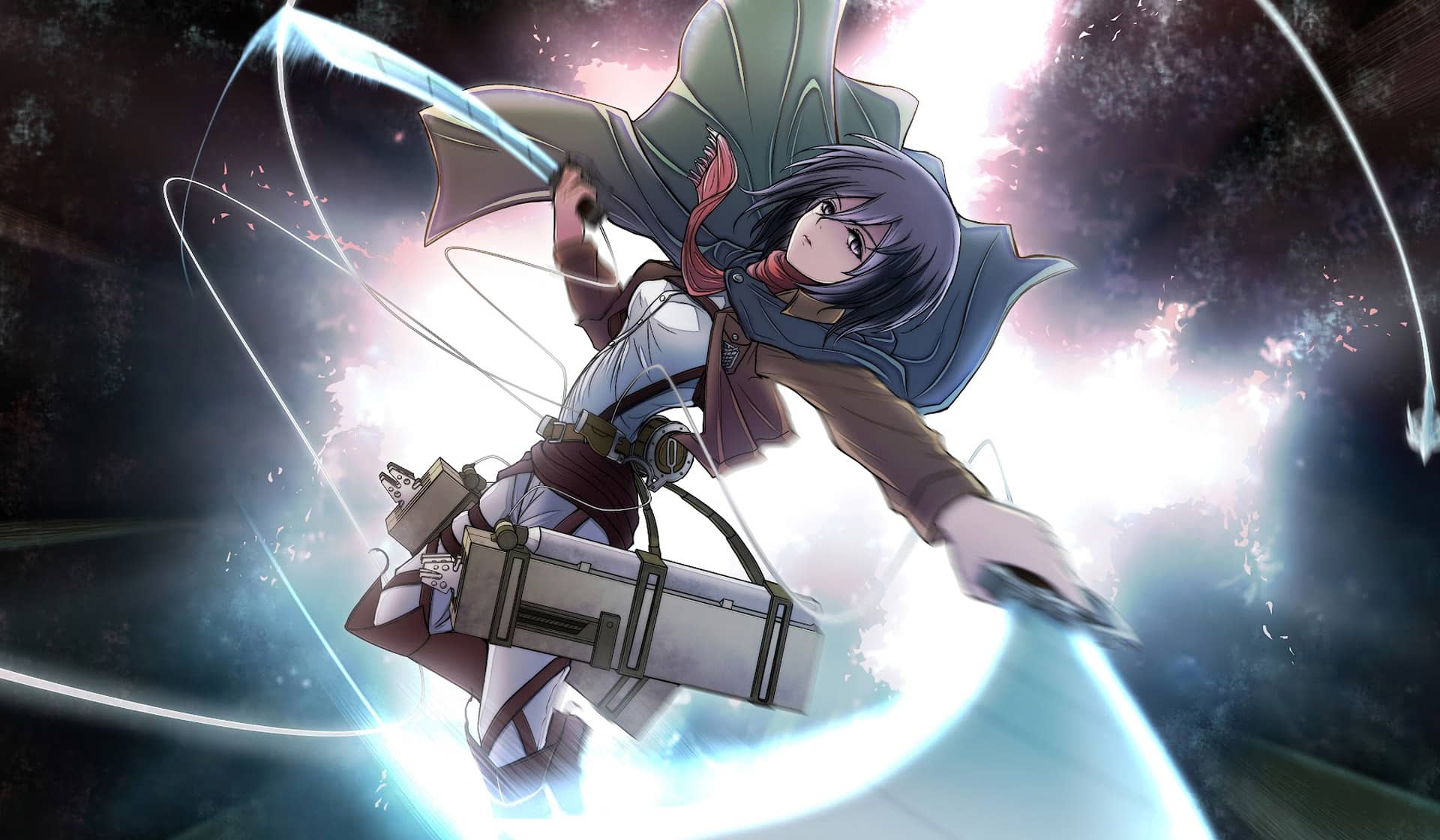
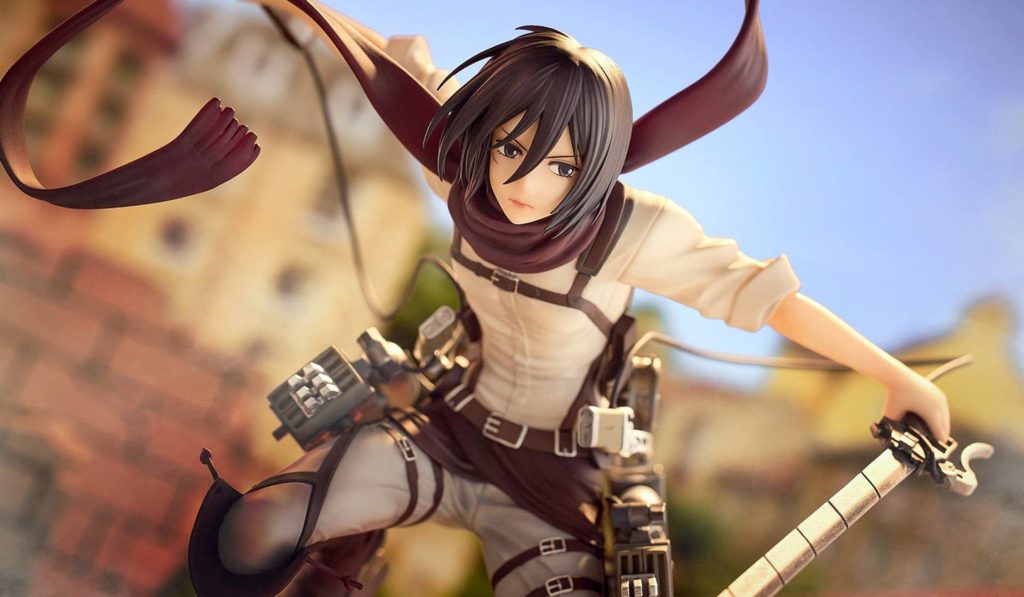
Figures, illustrations, and collectibles centered on Mikasa often emphasize the same recurring facets: the fighter, the tense silhouette, the closed-off gaze, the omni-directional mobility gear. More rarely, they hint at a quieter vulnerability. That is not incidental.
Collecting around Mikasa does not simply document a successful design. It also extends the memory of a character associated with discipline, loss, and a loyalty that can never be fully soothed.
A frozen memory
Owning an object tied to Mikasa is not simply a way of keeping the image of a powerful heroine. It is above all a way of preserving the trace of a character who says something more uncomfortable about Attack on Titan: that strength does not protect against everything, that loyalty can become a prison, and that some figures endure precisely because they were never truly repaired.
From an archival perspective, Mikasa is not merely collectible. She becomes something more than that: memorable.
Conclusion: Mikasa, an unforgettable heroine
Mikasa Ackerman is not a simple symbol of female strength, nor a secondary figure whose popularity rests only on her design, her power, or her action scenes.
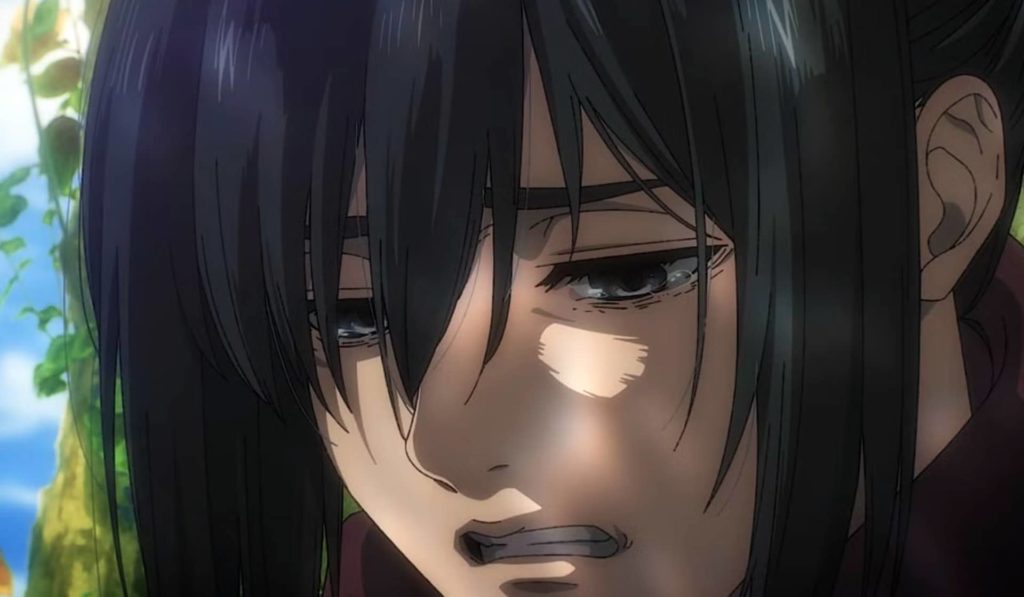
She is one of the tragic hearts of Attack on Titan. Her path is built around a contradiction the series never stops deepening: the stronger she becomes, the less that strength is able to save her from what she is living through.
She survives, fights, protects, endures. But none of it truly distances her from the absence that structures her existence.
That is why she endures. Because she embodies a kind of tragedy many works approach without ever fully reaching: a character strong enough to move through horror, but not strong enough to prevent that horror from leaving an indelible mark.
For fans, Mikasa is one of the defining faces of Attack on Titan. From a more editorial standpoint, she is also one of its most painful characters.
And it is precisely that tension between power, loss, and memory that makes her memorable and so difficult to forget.
Note on the anime adaptation: Mikasa is sometimes criticized for being portrayed as too bland or cold in the anime, especially in the seasons produced by Wit Studio. The manga shows more moments where she acts independently of Eren or owns up to her mistakes. These nuances were lost in the adaptation, reinforcing the perception of a character defined only by her impossible love.