


When I first discovered Shaman King, it wasn’t love at first sight.
The original 2001 anime adaptation left me puzzled. Its improvised ending—released while the manga was still ongoing—felt rushed and disappointing. I came away with the impression of a fragmented universe, despite sensing an underlying richness.
Sommaire
- Shaman King: a world with many faces
- The classic shōnen we expect
- A universe rooted in spirituality
- Three destinies, one message
- Lyserg Diethel: hatred as a prison
- The pain of a broken character
- The chains of vengeance
- The X-Laws: fanaticism as a mirror
- Ren Tao: from hatred to connection
- A Vegeta-like rival
- Growth through Yoh
- The symbol of possible redemption
- Yoh Asakura: detachment and reconciliation
- A frustrating hero at first glance
- A hero true to shamanism
- The ultimate reconciliation: Hao
- The weight of editorial constraints
- Three endings, three interpretations
- A message that endures
- Conclusion: a shōnen that teaches coexistence
It took years before I finally read the ending in French, through the Perfect Edition, to understand that this frustration had less to do with the work itself than with editorial constraints and adaptation choices.
With the right version, everything suddenly falls into place.
What if Shaman King was never truly a story about crowning “the strongest,” but rather a journey toward reconciliation?
Shaman King: a world with many faces
The classic shōnen we expect
Published by Hiroyuki Takei in the late 1990s, Shaman King initially appears to follow the traditional battle shōnen formula: tournaments, escalating power levels, confrontations between heroes and rivals.
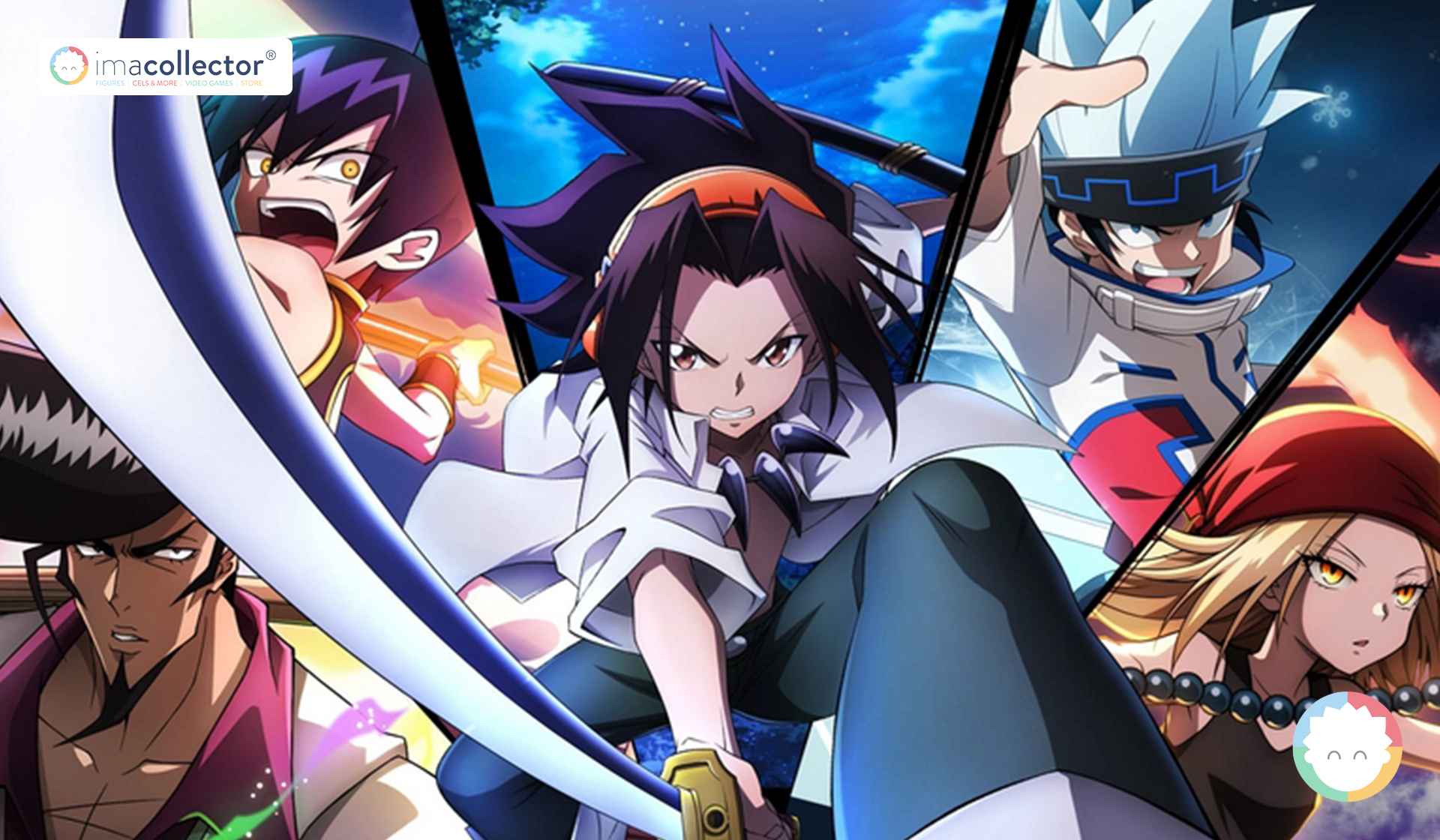
As a teenager when the manga was released in France, all the familiar codes were there—enough to place it alongside Naruto or Dragon Ball: a protagonist (Yoh Asakura), a rival (Ren Tao), an ultimate antagonist (Hao), and plenty of fights.
But very quickly, the series shifts direction.
Instead of asking how to “surpass the strongest,” Shaman King raises a different question: do you really need to defeat someone in order to triumph?
A universe rooted in spirituality
At its core, Shaman King is about shamanism: communicating with spirits, merging with them, and living in balance between worlds.
Rather than focusing purely on power struggles, the series is built on specific values:
- listening: to spirits, to others, to oneself
- transmission: ancestral legacy, especially embodied by Matamune
- pacification: resolving conflict rather than fueling it
This thematic shift explains why many readers—including myself at one point—felt frustrated. We expected a spectacular climax and instead encountered a more introspective, almost meditative resolution.
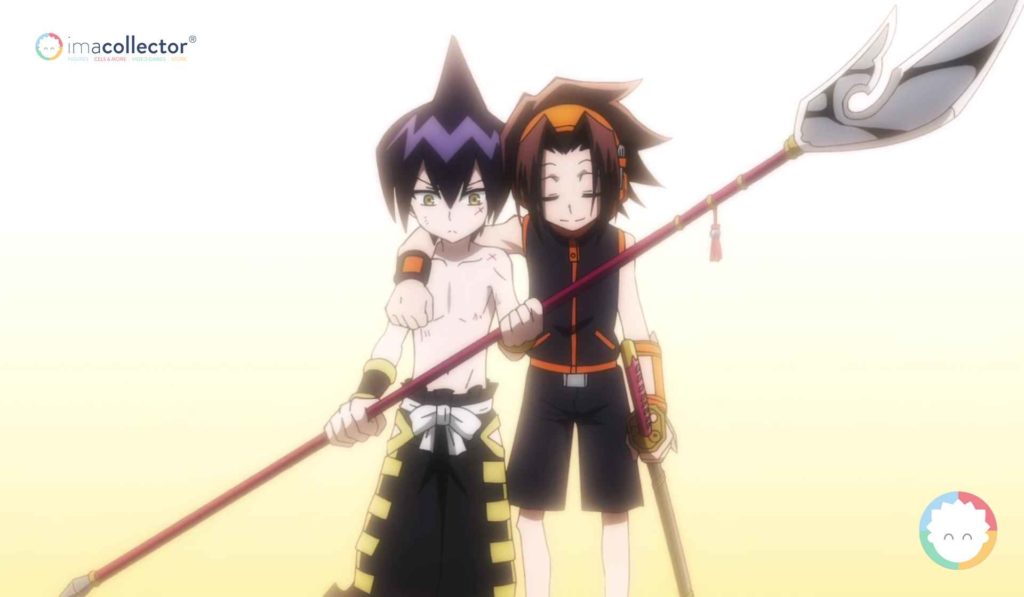
Three destinies, one message
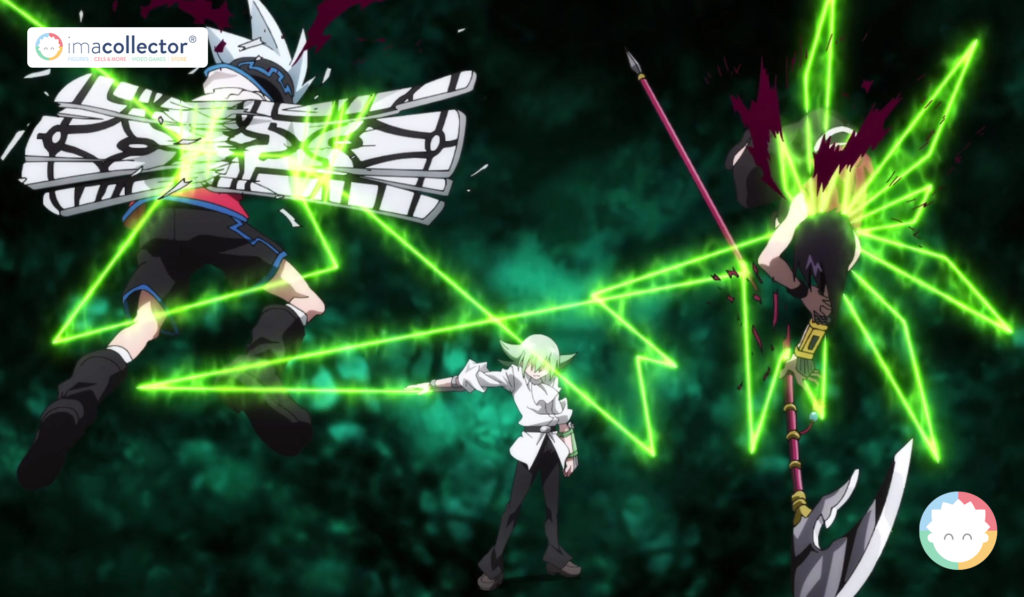
- Lyserg: hatred that imprisons
- Ren: combat that liberates
- Yoh: reconciliation that pacifies
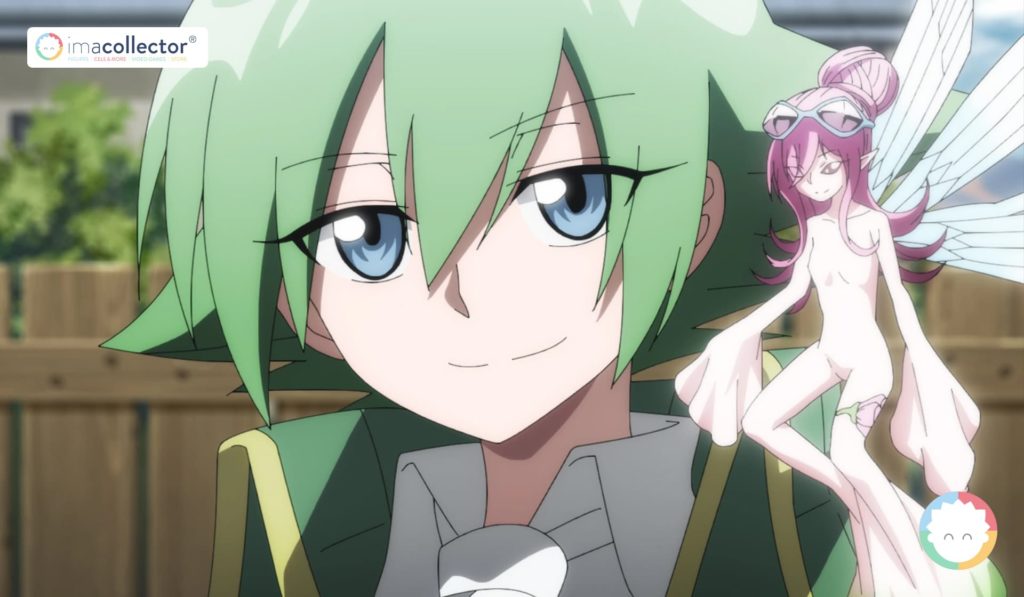
Lyserg Diethel: hatred as a prison
The pain of a broken character
Among the supporting cast, Lyserg Diethel stands out as one of the most striking figures.
His story is tragically simple: Hao murdered his parents, and Lyserg lives solely for revenge.
His hatred becomes both his driving force and his trap.
The chains of vengeance
His weapon, the dowsing chain, says everything. Designed to capture the enemy, it actually symbolizes the invisible bond tying Lyserg to his pain.
Each of his battles is not a release, but a repetition. His quest does not elevate him; it diminishes him, slowly draining it of meaning.
The X-Laws: fanaticism as a mirror
Lyserg eventually joins the X-Laws, a group obsessed with “absolute justice.”
These pseudo-knights embody the ultimate danger of revenge: justifying violence through ideology.
Through Lyserg, Shaman King shows that hatred does not only destroy the enemy—it consumes the one who carries it.
Lyserg represents the first stage: raw hatred, incapable of transformation.
Ren Tao: from hatred to connection
A Vegeta-like rival
Ren initially appears as a classic rival: violent, arrogant, locked into a “might makes right” mindset.
He could easily have been another Vegeta-style archetype.
Growth through Yoh
But Ren evolves throughout the story. By confronting and spending time with Yoh, he discovers another path.
Where he once believed domination was everything, he learns the value of solidarity and reconciliation. Eventually, he fights alongside Yoh, transforming destructive energy into constructive force.
The symbol of possible redemption
Ren proves that hatred can be transcended. Where Lyserg remains trapped, Ren breaks free.
That liberation is what makes him one of the most compelling characters in the series—so much so that, for many readers (myself included), he becomes even more compelling than Yoh.
Ren embodies the second stage: fighting in order to move beyond hatred and transform it into connection—a theme further explored in later works like Shaman King: Red Crimson.

Yoh Asakura: detachment and reconciliation
A frustrating hero at first glance
Let’s be honest: Yoh can be irritating. His constant detachment, his tendency to relativize everything, and his lack of visible passion for battle can be disorienting.
Where we expect fire and rage, he offers calm.
A hero true to shamanism
Yet this detachment is precisely the source of his strength. Yoh is not a warrior: he is a mediator.
He never seeks to dominate, only to understand.
In doing so, he embodies the true essence of shamanism: seeking balance rather than supremacy.
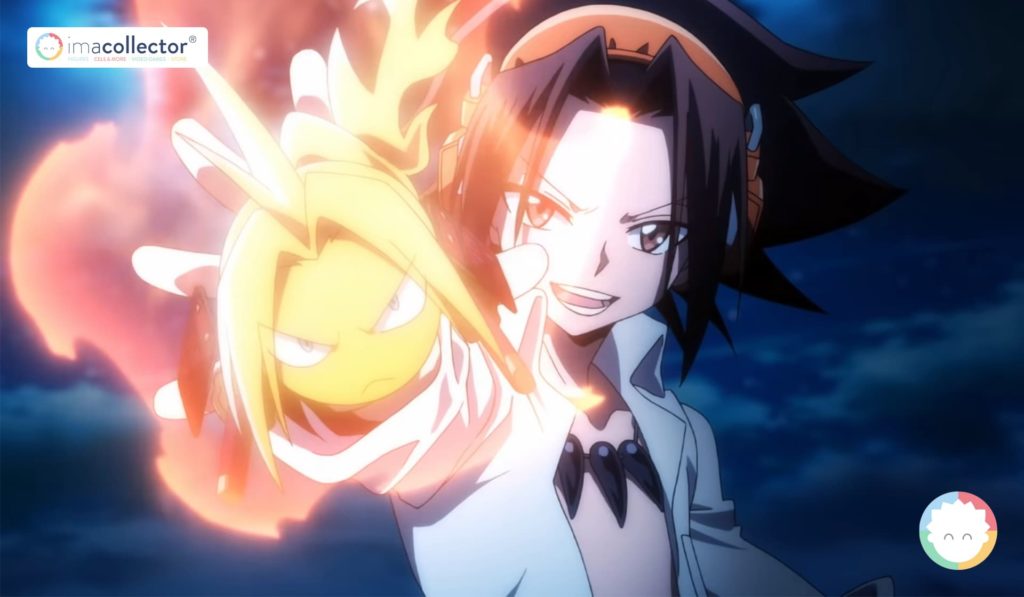
An iconic duo from Shaman King, where understanding the other outweighs domination. © Hiroyuki Takei / Shueisha — Shaman King
The ultimate reconciliation: Hao
The climax of the Perfect Edition perfectly illustrates this vision.
Instead of crushing Hao, his brother, Yoh and his allies choose reconciliation: acknowledging pain, accepting darkness, and pacifying conflict.
In this sense, the true “Shaman King” is no longer the one who defeats the strongest, but the one who unites.
Yoh represents the third stage: moving beyond combat to achieve inner and collective peace.
These three journeys are not isolated. Together, they form a complete narrative arc—as if Hiroyuki Takei intentionally laid out the three possible paths one can take when facing pain and conflict.
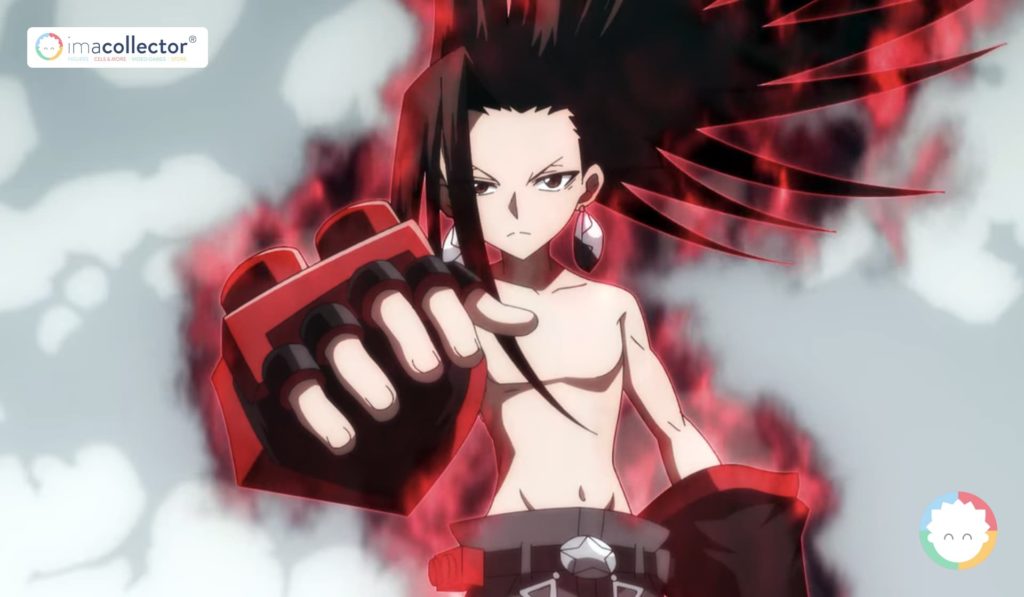
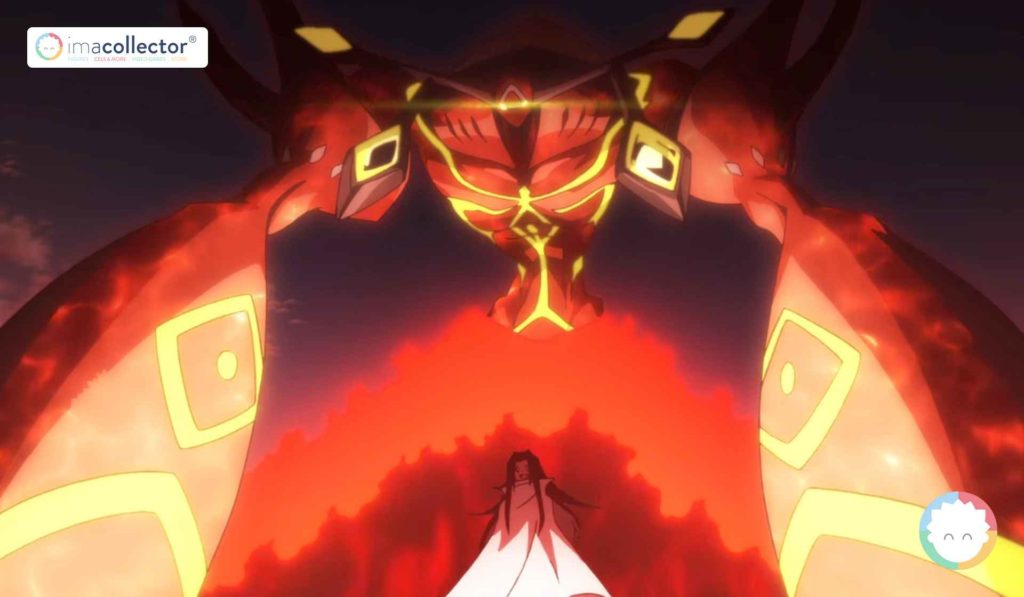
Central antagonist of a shōnen where hatred stems less from cruelty than from lucidity pushed to its extreme. © Hiroyuki Takei / Shueisha — Shaman King
The weight of editorial constraints
Three endings, three interpretations
Much of the reader frustration stems from the series’ editorial history:
- 2001 anime: an invented ending, creating confusion
- Original manga: abruptly halted, rushed conclusion
- Perfect Edition: Takei’s complete vision
A message that endures
Despite these distortions, the core message remains intact: Shaman King is not about domination, but transformation.
Conclusion: a shōnen that teaches coexistence
Revisiting Shaman King, I now better understand what initially frustrated me.
I expected a battle shōnen.
I found a reconciliation shōnen.
Lyserg, Ren, Yoh: three paths, one lesson.
Hatred imprisons us.
Combat can free us.
But only reconciliation brings peace.
Perhaps Shaman King is not a story about learning how to win.
It is a story about learning how to live together—even in the heart of conflict.
Article produced by imacollector® — an editorial archive dedicated to the memory and heritage of Japanese pop culture.
Content published for informational and documentary purposes. All rights reserved to the respective rights holders.