From Captain Tsubasa’s dream to Blue Lock’s ambition: how Japan became a football nation

How did Japan go from a country where football still played a secondary role to a nation firmly established on the international stage? This transformation cannot be explained by Captain Tsubasa alone, nor simply by the creation of the J.League.

The answer spans more than a century, shaped by the development of competitions, the professionalisation of clubs, youth training and the country’s changing sporting ambitions. Manga evolved alongside this transformation: Captain Tsubasa gave form to a dream in the 1980s; Giant Killing explored the inner workings of professional football; Ao Ashi entered the world of youth academies; and Blue Lock pushed the questions of individual ambition and Japan’s ability to compete with the world’s strongest nations to an extreme.

This ten-part series traces the evolution of football in Japan and examines how manga and anime accompanied its rise in popularity.

Japanese football: key dates

1873 – British officer Archibald L. Douglas introduces football to Japanese naval cadets

1921 – Founding of the Japan Football Association

1965 – Launch of the Japan Soccer League, the country’s first national league

1968 – Bronze medal at the Mexico City Olympic Games

1981 – Captain Tsubasa begins serialization in Weekly Shōnen Jump

1993 – Launch of the professional J.League

2011 – Nadeshiko Japan wins the FIFA Women’s World Cup

The JFA records the founding of the association in 1921, the launch of the Japan Soccer League in 1965, Japan’s Olympic bronze medal in 1968, the opening of the J.League on 15 May 1993 and Nadeshiko Japan’s world title in 2011. Captain Tsubasa, meanwhile, began serialization in Weekly Shōnen Jump in 1981.

Between these milestones, the status of football in Japan changed profoundly. This series looks back at each stage of that transformation and at the ways fiction anticipated, accompanied and, at times, reinterpreted it.

The ten chapters in this series

Japanese football before Captain Tsubasa: why the sport struggled to win over Japan

Long before the J.League, Japan already had a national association, a nationwide competition and even an Olympic medal. Yet football remained in baseball’s shadow for decades. This opening chapter goes back to the origins of the sport in Japan to understand what was still missing before it could become a genuine mass phenomenon.

Why Captain Tsubasa changed the way Japan saw football

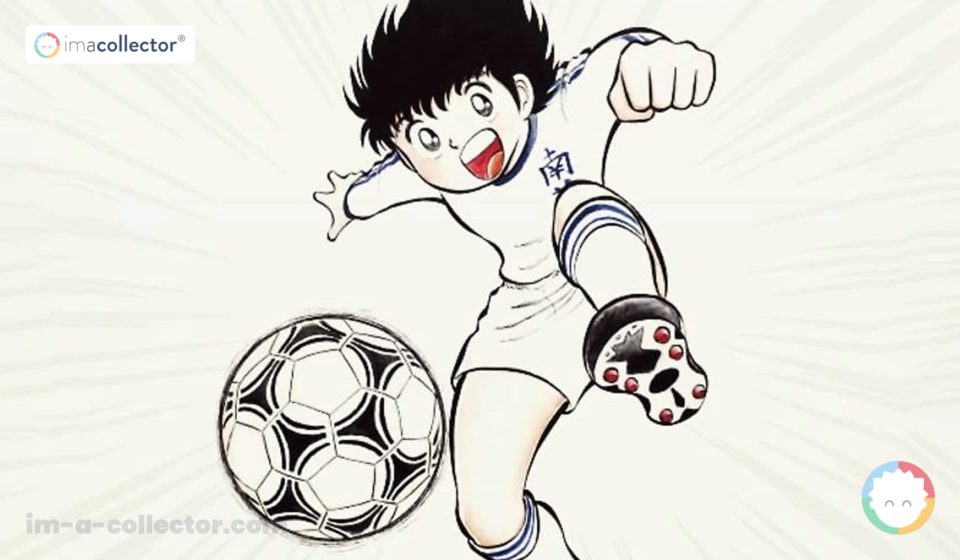
In 1981, Yōichi Takahashi imagined a child who did not simply dream of playing football, but of becoming a professional and one day facing the best players in the world. Captain Tsubasa did not create Japanese football, but it gave a new generation a powerful way to imagine it. More than forty years later, the FIFA Museum itself acknowledges the work’s cultural importance and its influence on generations of players.

When the dream becomes a career: how manga portrayed the professionalisation of Japanese football

With the birth of the J.League in 1993, becoming a professional footballer gradually stopped being an abstract ambition. Whistle!, Hungry Heart and Giant Killing began portraying a different side of the sport: selection, competition, clubs, coaches, organisational structures and professional careers.

Ao Ashi: how Japan trains its future professional footballers

Once professional football had become a genuine career, another question emerged: how is a professional player actually developed? Through its fictional academy, Ao Ashi explores the world of J-Youth football, tactical education, selection processes and the different pathways that can take young Japanese players to the highest level. Shogakukan itself describes the series as a work that chose to shine a light on the previously underrepresented world of “J-Youth”.

(coming soon) Inazuma Eleven: when football becomes a playground

With Inazuma Eleven, football moves almost entirely away from realism and becomes a world of fiction, spectacular techniques and collective adventure. Across video games, manga and anime, the franchise shows above all how firmly football had become established in Japanese popular culture: it could now be reinvented without first needing to be explained or legitimised. Where Captain Tsubasa still had to inspire a generation to dream of becoming footballers, Inazuma Eleven could simply turn football into a playground.

(coming soon) Nadeshiko Japan: how women’s football gave Japan its first world title

In 2011, Nadeshiko Japan won the Women’s World Cup. It was Japanese football’s first world title in a FIFA competition and fundamentally changed the place of women’s football in the country’s sporting history. This chapter will examine that achievement, how it was built and what it reveals about the Japanese model.

(coming soon) Blue Lock: why Japan now dreams of winning the World Cup

Behind its extreme portrayal of ego and competition, Blue Lock questions individuality, the psychology of Japanese players and the country’s ability to produce footballers capable of making the difference at the highest level. Nor does this ambition belong only to fiction: since 2005, the JFA has officially stated its goal of seeing Japan win the World Cup by 2050.

(coming soon) When anime supports the national team: why Japan now embraces its popular culture

Manga and anime are no longer simply works about football existing alongside sporting institutions. They now appear in campaigns, collaborations, kits, events and communication initiatives connected to Japanese football. In 2026, the Japan Football Association even developed a training programme called FUTURE CAMP inspired by BLUE LOCK. The relationship between football and popular culture is now openly embraced by the very institutions that organise the sport in Japan.

(coming soon) The players who grew up with Captain Tsubasa

How many professional players once wanted to be like Tsubasa Ozora? This chapter will draw on documented accounts from footballers who grew up with the series to understand how fiction can help shape a vocation. The FIFA Museum notably cites Hidetoshi Nakata among the players who linked Captain Tsubasa to their passion for football. Beyond individual stories, a generational pattern also emerges: the children who watched Tsubasa dream of playing abroad eventually became part of the first generations of Japanese players to establish lasting careers in international professional football.

(coming soon) Has football become part of Japan’s cultural heritage?

A medal preserved in a museum, the J.League archives, manga exhibited by the FIFA Museum, shirts combining the national team with Captain Tsubasa, generations of players and supporters: Japanese football now tells more than a sporting story. This final chapter will examine how football, manga, anime, objects, memories and institutions are building a shared cultural memory. The Japan Football Museum already preserves the major milestones of this history, while the FIFA Museum now gives Captain Tsubasa a place within global football culture.

From dream to pitch: what manga tells us about Japanese football

Work What it says about Japanese football
Captain Tsubasa The dream, the popularisation of football and international ambition
Whistle! / Hungry Heart Selection, progression and the possibility of making football a career
Giant Killing Professional clubs, coaches, tactics and organisational structures
Ao Ashi Youth development, academies and tactical education
Blue Lock Individuality, goalscorers and the ambition to become the best football nation in the world

Each of these manga tells a football story. Taken together, they also reveal how Japan’s image of itself as a football nation has evolved over time.

In Captain Tsubasa, an international professional career still belongs to the realm of dreams. A few decades later, Ao Ashi can build its story around the concrete workings of a J.League academy, while Blue Lock no longer asks whether Japan can produce professional players at all: its starting point is the desire to create a team capable of becoming world champions.

Fiction alone cannot explain the evolution of Japanese football. It does, however, provide a particularly revealing record of how the country’s ambitions have changed over time.

Understanding Japanese football

Did Captain Tsubasa really change Japanese football?

Captain Tsubasa did not create Japanese football, nor can it alone explain the sport’s development. When the manga began in 1981, Japan already had a national association, a domestic league and an Olympic medal. Its influence was primarily cultural: the series made football appealing and gave many children a hero they could identify with. A number of professional players later spoke about its influence, and the FIFA Museum now officially recognises its cultural significance.

The Japan Professional Football League was established in 1991, and the first J.League season began on 15 May 1993. It succeeded the Japan Soccer League, founded in 1965 and made up largely of teams affiliated with major companies. The transition to the J.League gradually transformed the clubs, their local identity, their visibility and the career prospects available to Japanese players.

There is no single pathway. Japanese football relies on school teams, clubs and their youth academies, as well as various development and talent-identification programmes run by the Japan Football Association. The JFA currently organises competitions and development structures from U-12 to U-18 level, while the J-Youth systems operated by professional clubs offer another route towards elite football. It is this latter pathway that Ao Ashi places at the centre of its story.

The three works almost correspond to three stages in the evolution of Japanese football. Captain Tsubasa begins with the dream: becoming a footballer and taking on the world. Ao Ashi focuses on the training required to turn a young player into a professional. Blue Lock starts from an already structured Japanese football system and asks a different question: what kind of individual ambition is needed to win at the highest level?
They contributed on a cultural level, but it would be misleading to credit manga alone for Japan’s progress. The creation of the J.League, the work of the JFA, youth development systems, the international experience gained by players and coaches, and the growth of the clubs were all decisive. Manga played a different role: it created stories, figures and ambitions that could accompany this transformation. Its historical significance lies precisely in this meeting point between sporting development and the collective imagination.

How this series was researched

This series is based on research combining the history of Japanese football with the history of how it has been represented in popular culture.

Whenever possible, priority is given to Japanese and institutional sources: Japan Football Association archives, J.League documents, publications from Japanese publishers, interviews with manga artists, players and coaches, specialist Japanese media, research on sports history and museum resources.

Each chapter aims to distinguish documented facts, personal accounts and editorial analysis. My aim is not to claim that manga alone transformed Japanese football, but to understand how institutions, sporting results, youth development, media and popular culture gradually came together to shape a shared vision of the game.

Because ultimately, the history of Japanese football is not simply the story of how a country learned to play the game better.

It is also the story of how Japan first learned to dream about football, how it made that dream possible, and how it eventually began to believe it could win.

Scroll