

Manga and video game shops looted in France: behind the shattered windows, decades of passion

When I was a kid, Paris was where you went to find things you simply couldn’t get anywhere else. The first time I visited, I had a list of addresses in my pocket: manga and video game shops. Some had already closed down; others introduced me to things I hadn’t even known existed. That’s part of how my collection took shape.
Table of contents
- On October 17, these shops became targets
- Behind the shop windows were people’s lives
- Don’t confuse protesters with looters
- Momie: forty years of bringing comics and manga to life
- When owning matters more than understanding
- When an object is worth only what it can fetch
- What specialist shops have passed on to us
- Protecting culture also means protecting those who keep it alive
- Sources
Over the years, the way I collect has changed, and so have the addresses of my favourite shops. The internet has made things available in seconds that once took months to track down. But I’ve never quite lost the pleasure of stepping into a shop without knowing what I’ll find. Much later, Boulevard Voltaire and the surrounding streets in Paris became somewhere I would happily return to: manga, retro games, figures… They bring back that feeling from a time when discovering something was as much a part of collecting as buying it.
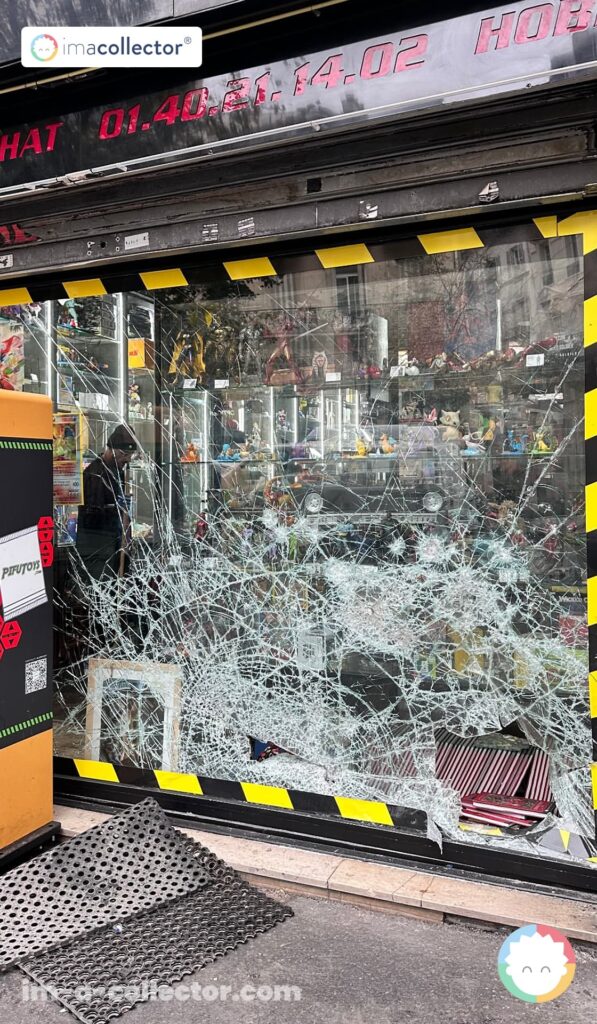
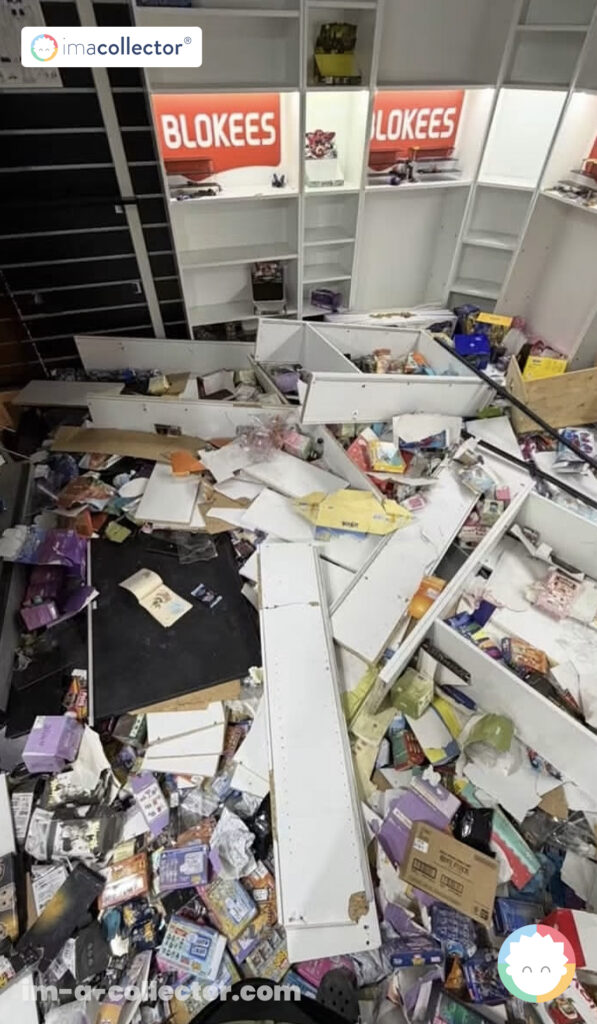
On October 17, these shops became targets
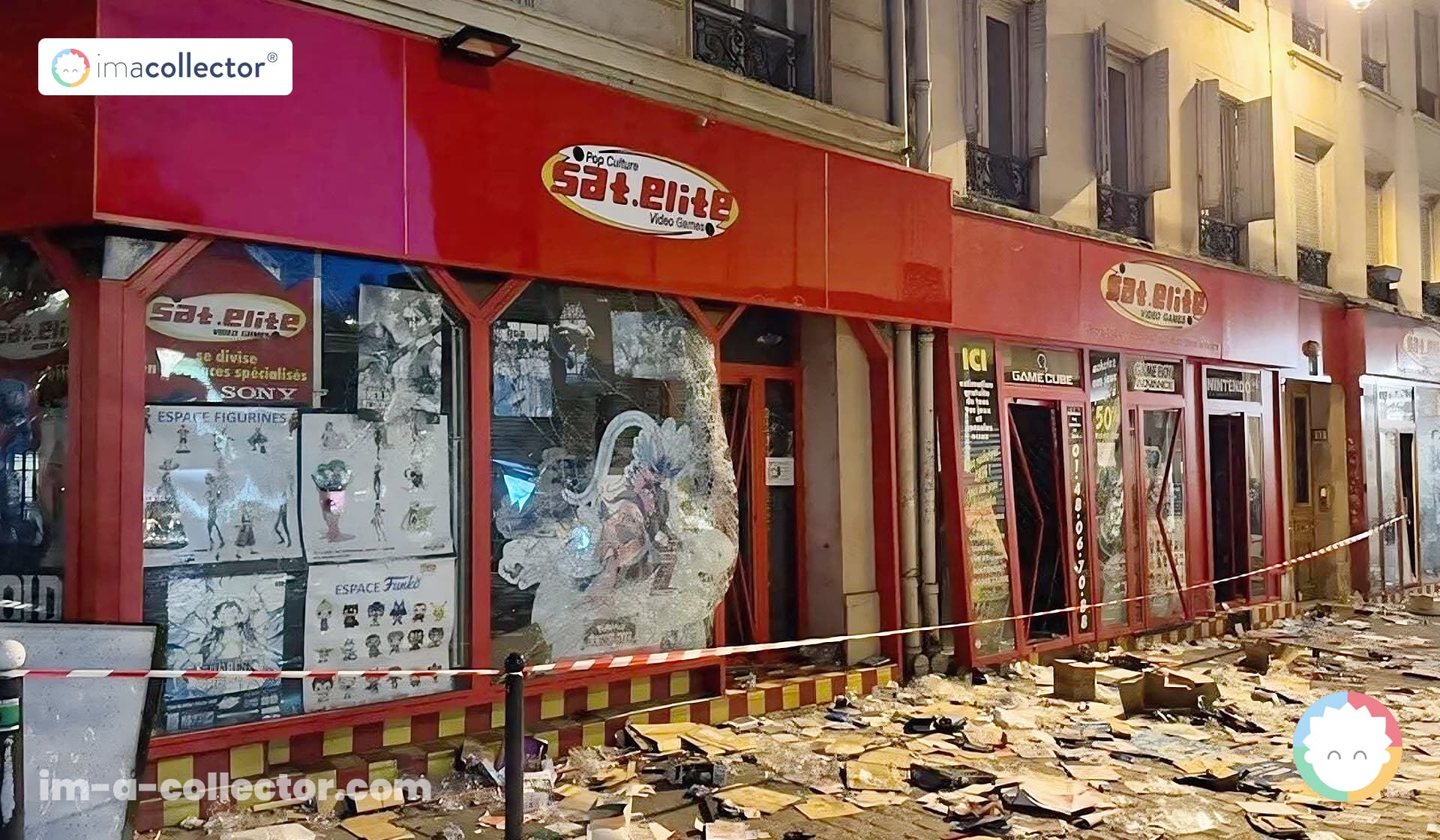
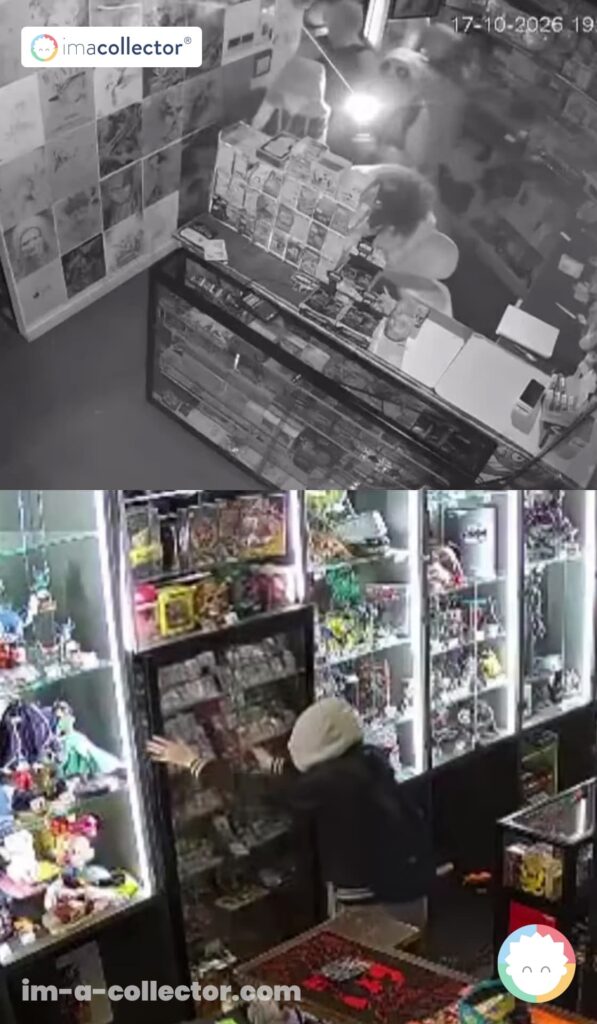
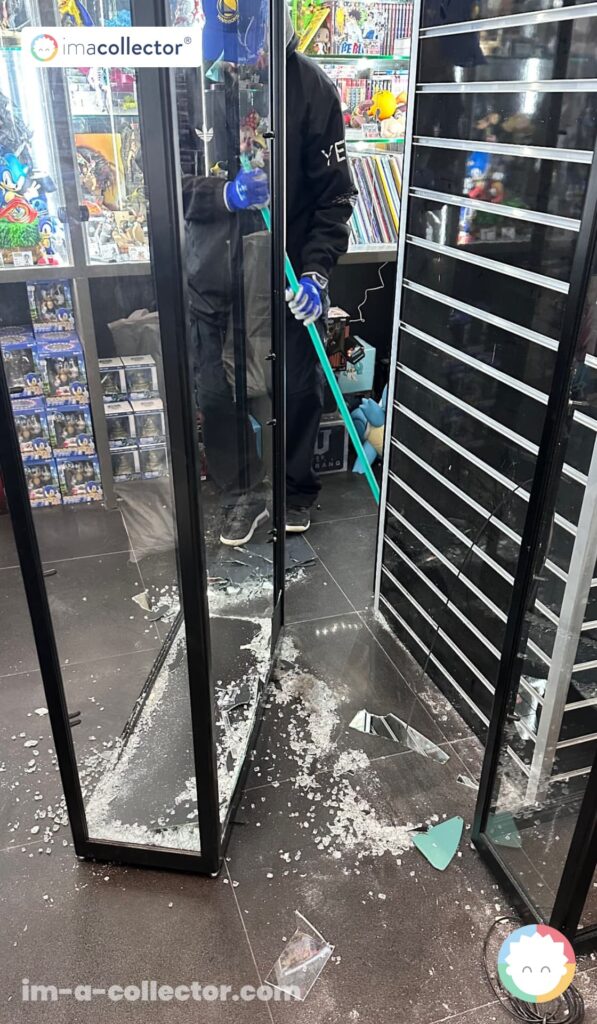
That’s also why the images from October 17 saddened me so much. Manga Story, Hobby One, One Repar and Sat Elite were among the specialist shops on Boulevard Voltaire that were looted, their windows smashed and their shelves stripped bare. The following morning, Le Parisien was still describing Pokémon cards left in puddles and dozens of discarded figure boxes scattered across the pavement.
Watching the footage play over and over, the first thought is of the missing items and what they were worth. But personally, that’s not what troubles me most. A manga can be ordered again, a console replaced and a shop window repaired. What is far harder to rebuild are the years spent keeping a business alive, building a customer base, getting to know the regulars and continuing to share a passion in a sector where so many independent shops have already disappeared.
Laurent, a partner at Manga Story, captures the weight of all this better than any financial estimate could. He entered the business at 17 and is now 48. Standing in front of his emptied shop, he told Le Parisien that ‘this is where the story ends.’ Behind those words lie 31 years of working life, thrown into doubt by just a few hours of looting.
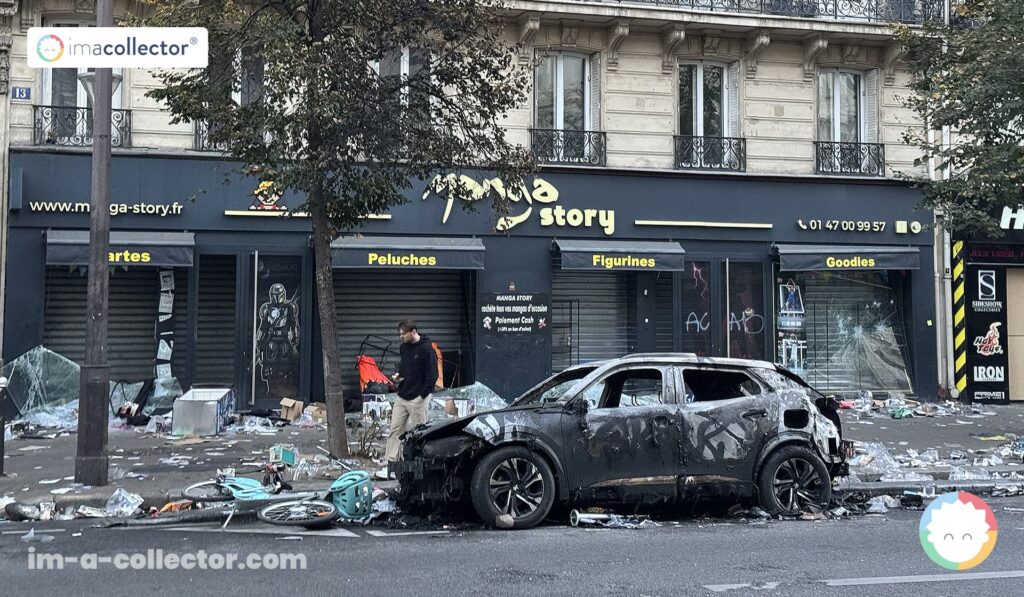
Behind the shop windows were people’s lives
We’ve been seeing images of urban violence for years. But behind Manga Story and Hobby One are people who have spent part of their lives selling the very things that others, myself included, have spent years seeking out, collecting and sometimes keeping for decades.
Antoine works at Manga Story and lives directly above the shop. He told Le Monde that he heard blows so powerful they shook the walls of his flat, saw masked men carrying weapons including baseball bats, and was threatened when he tried to see what was happening. He ended up spending several hours in the dark, unable to intervene as his workplace was looted.
He believes some of those involved knew exactly what they were after, particularly Pokémon cards and other collectibles that can fetch substantial sums. He estimates the losses at more than one million euros. But beyond that figure, what matters is what these events say about our relationship with these objects: for those few hours, every story, passion and memory attached to them was eclipsed by their market value alone.
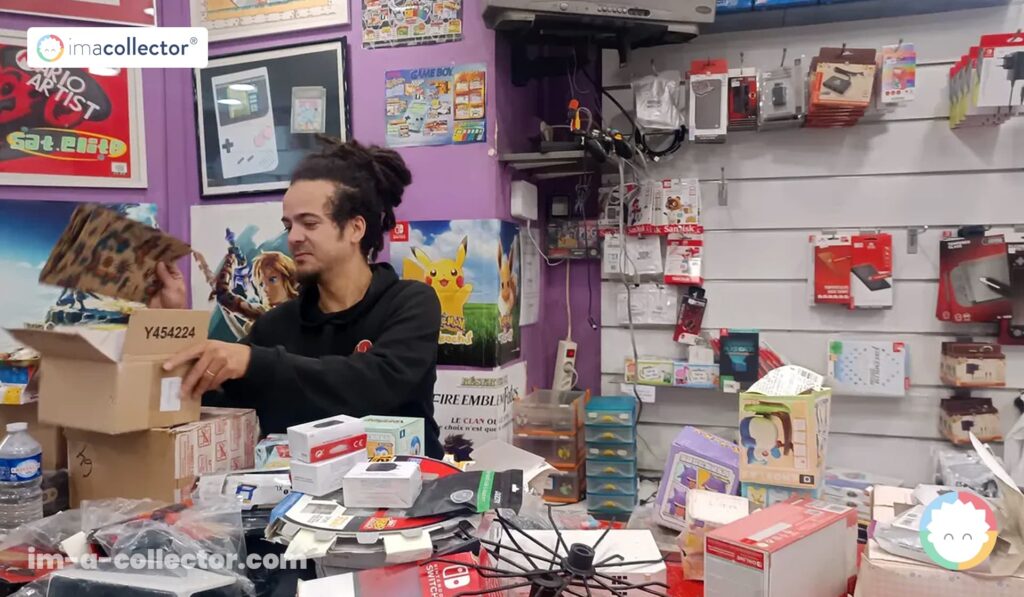
Don’t confuse protesters with looters
This is also what bothers me about the way these events have been discussed by the media and politicians. The authorities have attributed some of the clashes to politically motivated groups, particularly from the far left.
Yet the Paris police prefecture itself distinguishes a phase of the day marked, in its account, by the mass arrival of individuals whose sole aim was ‘to commit theft and looting.’
In Grenoble, of the 58 people taken into police custody in the aftermath, Le Dauphiné Libéré reported that most had no previous criminal record and that the largest group had been arrested in connection with looting as they left vandalised shops.
In Toulouse, Xavier, who manages a shop on Rue Saint-Rome near a Micromania store that was also broken into, said one of his colleagues was nearly assaulted when she went to the scene. His own shop was looted, with initial losses estimated at between €40,000 and €50,000. ‘There’s no cause behind it. It’s smashing things for the sake of smashing them, and looting for the sake of looting,’ he said.
There is no political demand in walking away with a console or a box of Pokémon cards. To me, that’s theft. And when someone has to be threatened or hit to make it happen, that’s senseless violence.
A looter is not an activist. They have simply taken advantage of a demonstration to act.
Momie: forty years of bringing comics and manga to life
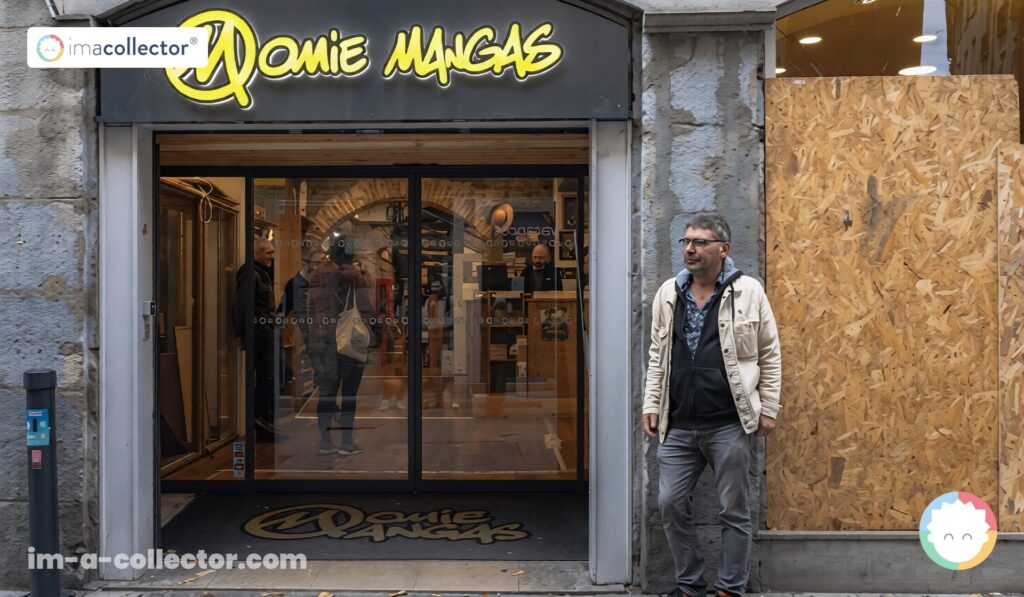
Momie Mangas in Grenoble was also hit. Few fans of manga, figures or comics will be unfamiliar with the name. Patrick Corbet and Christophe Salomon opened Momie Folie in 1985. Both in their twenties and passionate about comics, they started out with a small second-hand bookshop in central Grenoble. Forty years later, Momie has around twenty bookshops and more than a hundred employees. On October 18, Patrick Corbet stood outside the Grenoble shop damaged in the looting, speaking with elected officials who had come to assess the destruction.
Forty years. Back in 1985, the world we know today looked completely different. Manga had yet to fill entire walls of French bookshops, and Japanese franchises were far from the cultural phenomenon that now brings several generations together.
Momie has lived through that whole transformation. The chain has seen habits change, readers grow older, new generations arrive and manga gradually move from a niche interest to one of the pillars of French publishing. Patrick Corbet recently described those four decades as an adventure built above all on passion and the people they met along the way.
Building something like that takes time. Years to earn readers’ loyalty, understand their tastes, take chances on unfamiliar titles, hire staff, open other shops, weather difficult periods and adapt to new ways of buying. That is how a business acquires a history of its own.
It’s hard to accept that it takes forty years to build a place and its atmosphere, and only a few minutes to wreck it.
When owning matters more than understanding
What disheartens me even more is how stealing, exploiting chaos or attacking someone who is trying to protect their shop can become so ordinary to some people that they do it together, sometimes in front of a crowd of phones recording it all.
I couldn’t begin to explain what drives someone to behave that way. But I also think it would be naive never to question a society in which quick money, conspicuous success, what we own and, above all, what we show off carry so much weight, both on social media and in our collective mindset.
We spend an extraordinary amount of time displaying the value of what we own. A pair of trainers, a watch, a car, a rare Pokémon card… When everything becomes a question of price, status and resale potential, it seems reasonable to ask what value we still place on things that took years to build.
Seeing someone go as far as hitting a shopkeeper to walk away with a few boxes of figures, some video games or, more absurdly still, a few rolls of toilet paper leaves me with the feeling that something has broken deep within our society.
When an object is worth only what it can fetch
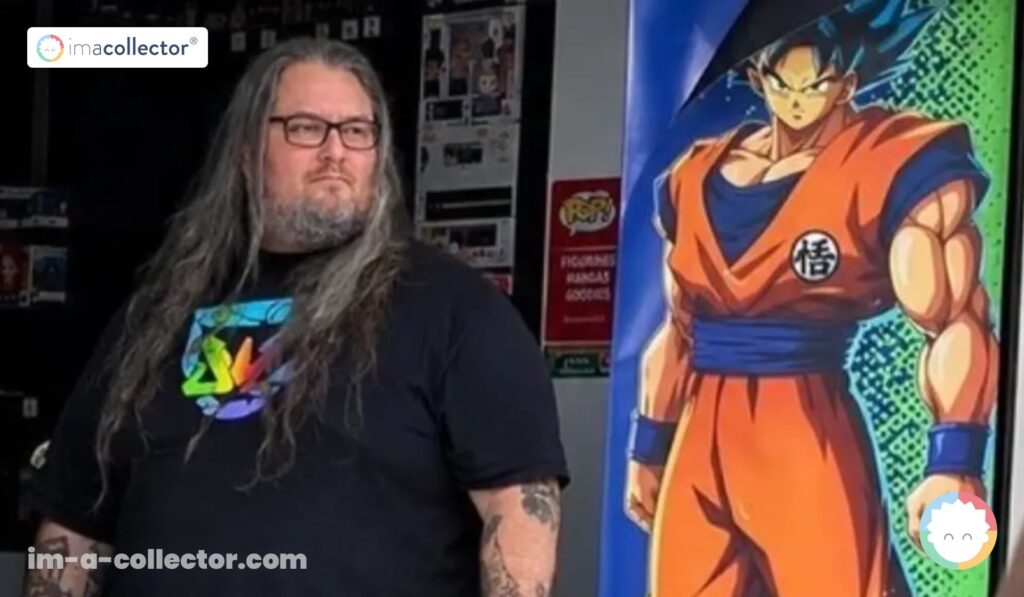
This matters to me all the more because I’ve been collecting for most of my life. An object’s value has never been only about its price. I’ve bought things worth next to nothing that mean a great deal to me. And I’ve sometimes spent years searching for a piece, less because of its price than because of the story it would add to my collection.
Much of what I’m trying to do with imacollector comes from that same impulse: to find out who created an object, why it exists, the circumstances in which it was produced, and what it can tell us about the work, artist or period it came from. When I look at an original animation drawing, I want to know who made it and which moment in the production it belongs to. With a game, I’m interested in the context of its release; with a figure or an artbook, in the people who conceived and made it.
Perhaps that’s why some of the images from October 17 are so hard to watch as a collector. There is so little respect for what an object represents, the heritage it carries and the story it tells. The object itself hasn’t changed. What has changed is how people see it.
Of course, Manga Story, Momie and Hobby One are businesses. They exist to sell things. But I still want to believe there is a strong bond between specialist shops and collectors. That relationship rarely ends with money changing hands: the advice and the passion are still part of it.
What specialist shops have passed on to us
Some of my best discoveries came from shopkeepers who told me about a series I’d never heard of, an artbook I hadn’t come looking for or an object I would have overlooked without their advice. That was exactly what I hoped to find when I wandered around Paris with my list of addresses in my pocket.
Back then, finding a new shop was part of the adventure. Collecting involved an element of chance that has almost vanished today. You didn’t necessarily know what you’d find. You always hoped the person behind the counter might bring out something you’d never seen before.
Today I can order almost anything directly from Japan, compare prices, track auctions and identify an item in seconds. It’s infinitely more convenient, and I’d be a hypocrite to claim I want to turn back the clock.
Even so, I still walk into these shops, because building a collection is about more than ticking missing items off a list.
It’s also about the places where you found those things, the people you talked about them with and the memories that become attached to them. That’s probably why, when I see these destroyed shop windows, I think of that first list of addresses.
These shops also played an important part in the spread of Japanese pop culture. Long before social media, specialist marketplaces and the option of ordering directly from Japan, booksellers, importers and specialist retailers were among the people who introduced us to it. Some were working in this world long before manga, Japanese animation and video games earned the recognition they enjoy today.
They did more than sell things. In their own way, they helped create generations of readers, gamers and collectors.
Protecting culture also means protecting those who keep it alive
I write a great deal about cultural heritage on imacollector: works, artists, drawings and objects, how we preserve them, and why their stories need to be passed on rather than reduced to market prices.
The events of October 17 reminded me that this heritage also lives in the places where we first discovered these things. In a bookshop opened in Grenoble in 1985, a Paris shop that’s been there for decades, or simply that one address where somebody once laid something unfamiliar on the counter in front of us.
I don’t know what the future holds for all the businesses that were hit. My thoughts are first and foremost with those who spent twenty, thirty or forty years keeping these places alive and must now find the will to start again.
Next time I go to Paris, I’ll probably do what I’ve done for years: walk past the shops, look in the windows and step inside to see what’s changed. I may not need anything, and I may leave empty-handed. But that doesn’t really matter. If I still enjoy doing this after so many years, it’s because these places mean more to me than the objects on their shelves.
Perhaps that’s what these images have reminded me of most forcefully: we talk a great deal about preserving the works and objects that tell the story of our culture, but sometimes forget the people who helped us discover them.
Protecting culture also means protecting those who keep it alive.
Sources
Le Parisien, Paul Abran, October 18, 2026 — ‘This is where the story ends’: managers of ‘geek’ shops looted during the October 17 violence in Paris fear they cannot go on. leparisien.fr
Le Monde, Lorraine de Foucher and Soren Seelow, October 18, 2026 — Paris shops left devastated after the violence and looting of October 17: ‘People were filming themselves. It was a free-for-all.’ Le Monde.fr
Le Parisien, October 18, 2026 — Looting and destruction: images of a battered Paris waking up the day after October 17
Le Dauphiné Libéré, October 18, 2026 — Women, first-time offenders… Who are the suspects taken into custody after the riots?
La Dépêche du Midi, October 18, 2026 — ‘I’m disgusted. They were smashing things just to smash them’: shopkeeper in shock after finding his store looted on Rue Saint-Rome in Toulouse
Le Dauphiné Libéré, October 18, 2026 — Grenoble: widespread political condemnation, with LFI facing accusations
Le Dauphiné Libéré, September 9, 2025 — ‘One hell of an adventure!’: Grenoble-area bookseller Momie has been selling comics for 40 years, from Grenoble to Saint-Malo
Présences Grenoble, May 26, 2023 — Gregory Gabriel, director of Momie Folie: ‘Human contact remains essential’