


In-depth feature From Captain Tsubasa’s dream to Blue Lock’s ambition: how Japan became a football nation — episode 2 of 8
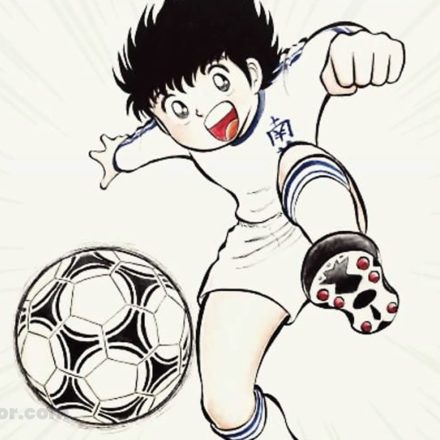
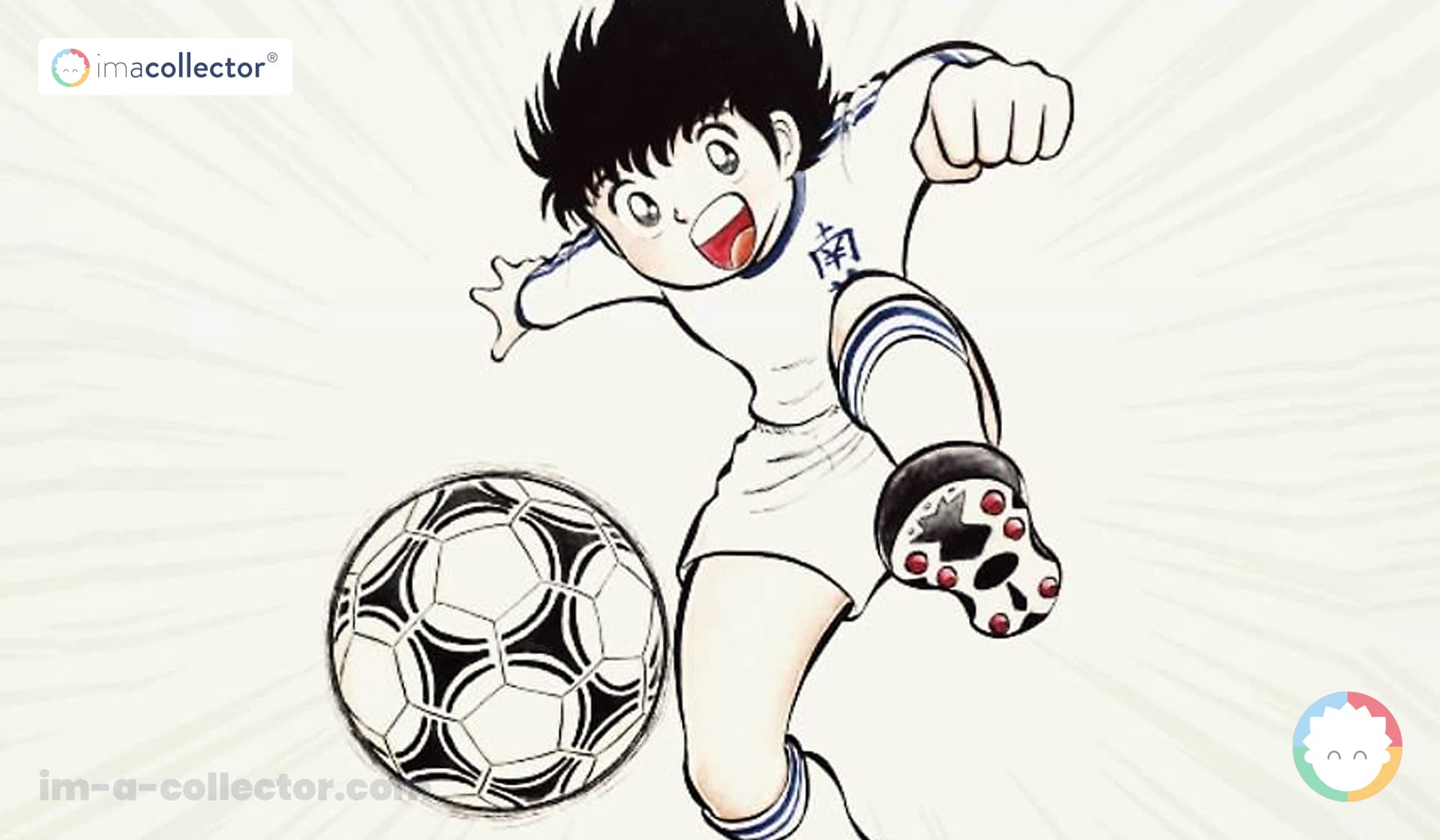
By the early 1980s, football in Japan already had a solid structure. It had its own federation, organised competitions, a national league and company-backed clubs. Japan had even won an Olympic medal. The foundations were firmly in place. And yet, in schoolyards, the media and the collective imagination, football still remained far behind baseball… Then Captain Tsubasa arrived.
Sommaire
- Japanese football is still waiting for its defining story
- A manga artist discovers a kind of football Japan has yet to see
- Why Captain Tsubasa succeeded where others had not
- A story that reaches millions of homes every week
- An influence that statistics alone cannot measure
- When the dream crosses Japan’s borders
- Conclusion
In the years that follow, the number of players registered with the Japan Football Association rises sharply. Countless children try to shoot like Tsubasa, save like Wakabayashi or impose their strength like Hyuga. Years later, several professional players will cite the manga as one of the works that fuelled their passion for football.
It would be too easy, however, to claim that Captain Tsubasa single-handedly changed the course of Japanese football. A closer look reveals a more interesting reality. Yoichi Takahashi did not introduce football to Japan. He simply arrived at the precise moment when a sport that was already established, yet still struggling for popularity, needed a story that could speak to children.
Understanding the impact of Captain Tsubasa therefore means looking beyond manga sales or the influence of its anime adaptation. It means asking why fiction can sometimes give a sport something that institutions, competitions and results alone cannot always create: a recognisable face, a cast of heroes and, above all, a shared memory.
Japanese football is still waiting for its defining story
When Captain Tsubasa begins its run in Weekly Shōnen Jump in 1981, football in Japan is no longer a niche sport. Competitions are held across the country, while universities and companies have their own teams. The Japan Soccer League has already existed for more than fifteen years, and the standard of play is genuinely improving.
Yet football is still struggling to establish itself within popular culture. Stadium crowds remain relatively small, television coverage is limited and even the league’s leading players are largely unknown to the wider public. Baseball, by contrast, already benefits from an ecosystem in which competitions, television, the press and manga continually reinforce one another.
That distinction is important. Football already exists in Japan as an organised sport, but it has yet to become part of a shared collective imagination.
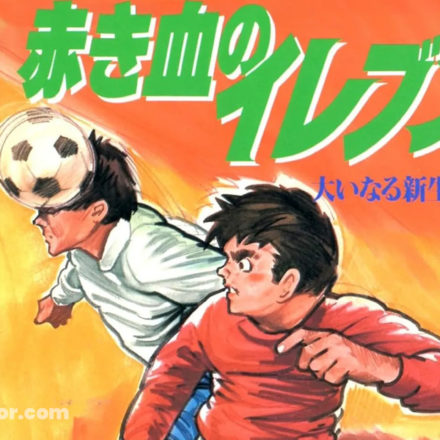
Before Captain Tsubasa, Akakichi no Eleven had already shown that a football story could find an audience. First published in 1970 and later adapted into an animated television series, it contributed to an early wave of interest in the sport. Its influence was real, but more limited in scope and less enduring than that of Yoichi Takahashi’s work.
At that point, Japanese football still lacks a work capable of giving it a familiar face for an entire generation. It is against this backdrop that a young manga artist discovers, almost by chance, a tournament that will completely change the way he sees the sport.
Captain Tsubasa was not the first football manga
Captain Tsubasa often dominates any discussion of football manga history. Yet several series had already paved the way during the 1970s.
The most significant predecessor is Akakichi no Eleven (1970), written by Ikki Kajiwara and originally illustrated by Mitsuyoshi Sonoda. Inspired by the success of Urawa Minami High School, the manga was quickly adapted into a 52-episode television series, generally regarded as Japan’s first football anime.
However, it did not benefit from the publishing power of Weekly Shōnen Jump or the international reach that would later allow Captain Tsubasa to achieve an entirely different scale. This is why Captain Tsubasa cannot be examined in isolation. Its success owes as much to the strengths of the work itself as to the moment at which it appeared.

A manga artist discovers a kind of football Japan has yet to see
When Yoichi Takahashi discovers the 1978 World Cup in Argentina, he is far from being a football expert. Like many young Japanese people of his generation, he has grown up in a culture dominated by baseball.
The tournament in Argentina reveals a completely different side of the sport. The stadiums are full, millions of viewers follow the matches and every game seems to carry a meaning far beyond the competition itself.
In several interviews, Takahashi would later explain how deeply he had been struck by this atmosphere, so different from that surrounding Japanese football at the time. The experience would have a profound influence on his project.
Rather than focusing on Japan Soccer League clubs or company teams, he imagines a child whose dream reaches far beyond the domestic championship: to win the World Cup with Japan one day.
That choice is far from insignificant. In 1981, the Japanese national team has never qualified for a World Cup. Tsubasa’s goal therefore belongs more to fiction than to realistic ambition. Yet it is precisely this distance from reality that gives the series its power. While Japanese football reflects what already exists, Captain Tsubasa shows what might one day be possible.
Why the 1978 World Cup was a turning point
In several interviews, Yoichi Takahashi has explained that the 1978 World Cup was the true starting point of his interest in football.
It was not one particular team that left an impression on him, but the spectacle as a whole: the atmosphere inside the stadiums, the intensity of the matches and the popular passion surrounding the tournament. At the time, nothing comparable yet existed in Japan.
By choosing to portray this vision of football rather than the reality of the Japan Soccer League, Takahashi created a work that looked towards the future rather than reflecting its own time. A visionary work.
Why Captain Tsubasa succeeded where others had not
If Captain Tsubasa was neither the first football manga nor the first to depict school competitions, why did it leave such a powerful impression on readers of its time?
The answer lies in a combination of narrative choices that I will try to explain. Choices that quickly set the series apart from the works that came before it.
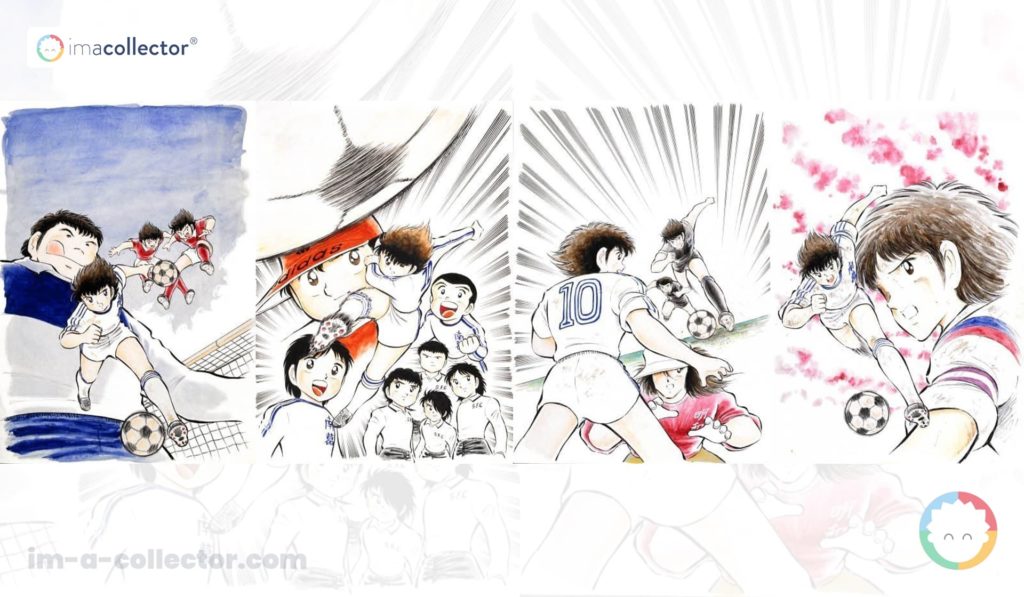
The first concerns its main character. From the outset, Tsubasa Ozora is an exceptional player. Yet talent alone does not define him. His absolute devotion to the ball, the friendships he forms, the rivals he faces and the stages he passes through allow readers to follow his development, rather than simply watching the adventures of an already accomplished champion.
Around Tsubasa, Yoichi Takahashi also creates a cast of characters rarely seen in sports manga at the time. Genzo Wakabayashi, Kojiro Hyuga, Taro Misaki, Jun Misugi and Hikaru Matsuyama are not disposable opponents who vanish after a match or two. Each has a personal history, individual ambitions and a distinct understanding of football. Their rivalries become as important to the story as the matches themselves.
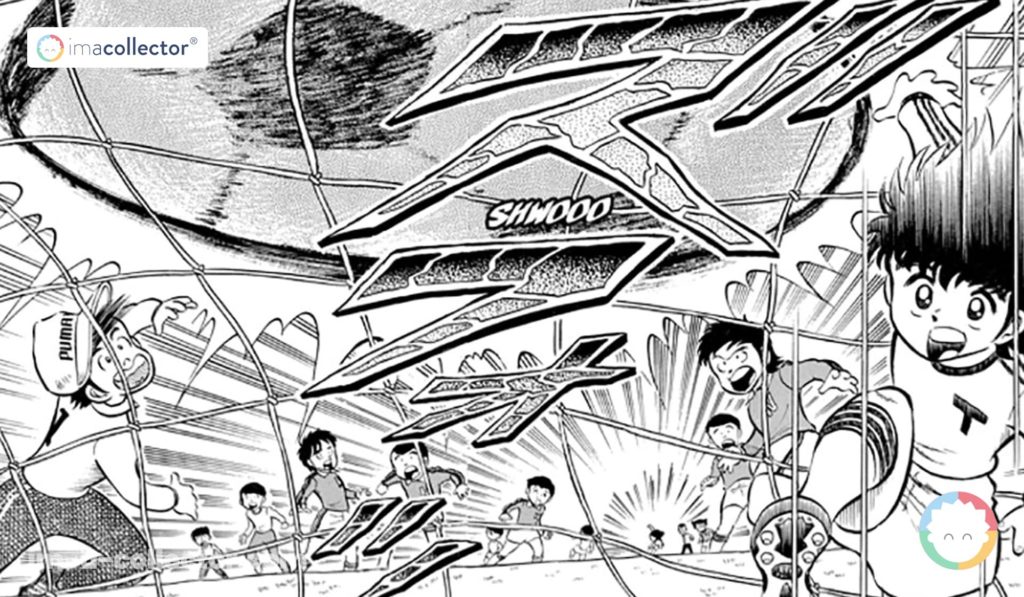
Finally, Takahashi deliberately moves away from realism. The pitches seem endless, shots sometimes defy the laws of physics and certain techniques become instantly recognisable. Years later, some audiences would laugh at these choices. Yet they remain one of the defining features of Captain Tsubasa. The aim is not to reproduce a Japan Soccer League match with complete accuracy, but to convey the intensity, emotion and sense of power a child can experience while playing football.
This approach fundamentally changes the nature of the story. Readers are no longer following a simple sequence of matches. They are accompanying an adventure that grows alongside its characters. School competitions gradually lead to national tournaments and then international teams, until the World Cup becomes the natural horizon of the entire series.
Why the unrealistic techniques were never a problem
Kojiro Hyuga’s shots, Genzo Wakabayashi’s saves and the seemingly endless pitches have often become subjects of humour, particularly outside Japan.
Yet these choices follow a narrative logic rather than a commitment to realism. In several interviews, Yoichi Takahashi has explained that he wanted to convey the emotions he felt while watching the 1978 World Cup, rather than reproduce a football match with complete accuracy. The spectacular techniques give each player a distinct identity and allow readers to recognise their style immediately, much like a hero in a battle manga or a character in an adventure novel.
In retrospect, these exaggerations probably helped make the series instantly recognisable, far beyond the audience of dedicated football fans.
A story that reaches millions of homes every week
You know as well as I do that a work does not become a social phenomenon simply because it is good. It also has to find its audience.
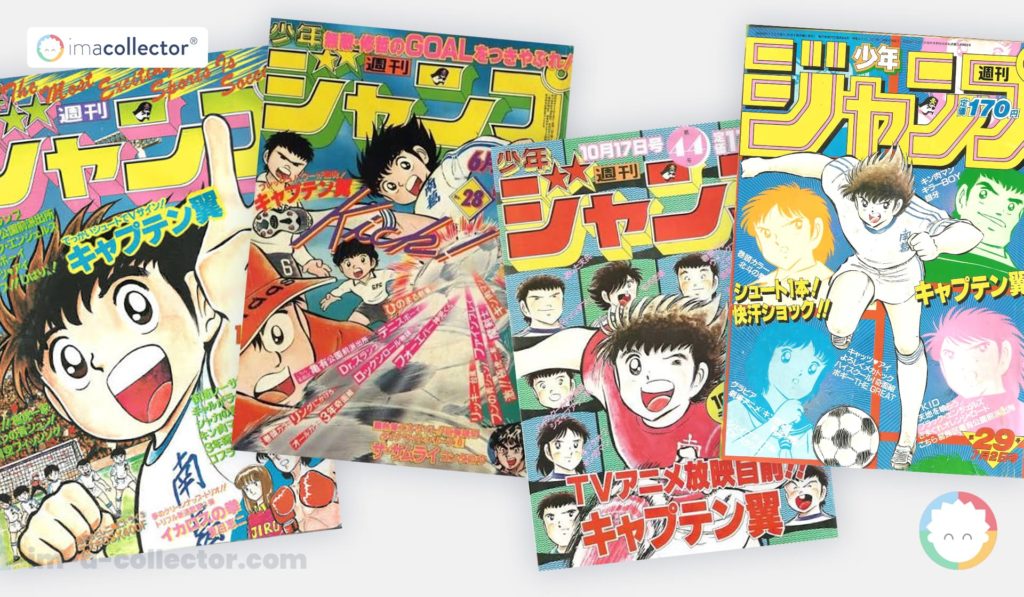
In 1981, Captain Tsubasa is published in Weekly Shōnen Jump, the magazine that overwhelmingly dominates Japan’s manga market at the time. Every week, several million readers discover the latest adventures of their favourite heroes. For many children, buying the newest issue is part of everyday life.
That publishing power continues to make itself felt over time. Captain Tsubasa does not remain a short-lived magazine success. It becomes one of the major sports franchises in Japanese manga, supported by numerous sequels, new editions and adaptations. The official website now reports more than 90 million copies in circulation worldwide and publication in over 50 countries and regions. Yet those figures do not tell the whole story. What matters most is that football no longer appears simply as a sport played at school or in clubs. It becomes a story that people follow, collect, continue and pass on.
This reach will profoundly change football’s place within popular culture.
With Captain Tsubasa, football manga above all moves to a new scale. The series no longer speaks only to readers who already follow the sport. It reaches a far wider audience because it appears alongside the most popular manga of its time.
Week after week, Tsubasa’s adventures find their way into school playgrounds. Children discuss the manga’s matches as much as the games played over the weekend. Much like Dragon Ball a few years later, its signature moves are recreated during breaks, its characters become shared points of reference and football begins to shape children’s play far beyond the actual pitch.
The animated television adaptation expands the phenomenon even further from 1983 onwards. Readers can now watch Tsubasa on television, while new audiences discover his world for the first time. Within a few years, football moves beyond the pages of the manga and becomes a lasting part of everyday life for an entire generation.
This does not mean that Captain Tsubasa single-handedly transformed Japanese football. It does show, however, that for the first time the sport gained a level of visibility comparable to that long enjoyed by baseball through the media, manga and television.
Why Weekly Shōnen Jump changed everything
The success of Captain Tsubasa cannot be separated from the way it was published. In the early 1980s, Weekly Shōnen Jump was the most powerful magazine in Japanese manga. Its audience consisted mainly of young readers, precisely at the age when passions, role models and sporting imaginations begin to take shape.
This exposure gives Captain Tsubasa a level of visibility no previous football manga had enjoyed. And it is worth remembering that the internet did not exist at the time. Every new chapter could be read by millions of young Japanese readers at almost the same moment, creating a weekly ritual and a shared topic of conversation across the country. What followed would confirm that the series had become far more than a magazine phenomenon.
Captain Tsubasa establishes itself as one of the enduring landmarks of Japanese sports manga, supported by its sequels, new editions, animated adaptations and international distribution. The manga’s success cannot, of course, be explained by this factor alone.
But without Weekly Shōnen Jump, it is unlikely that Captain Tsubasa would have reached an entire generation with the same intensity.
An influence that statistics alone cannot measure
By the time Captain Tsubasa finds its audience, Japanese football is already undergoing a transformation. The Japan Football Association is continuing its organisational work, school competitions are expanding and player registrations are increasing. Concrete plans for a professional league, however, emerge later. The institutional discussions that will eventually lead to the J.League take shape mainly from 1988 onwards.
The figures also reflect this momentum. According to Japan Football Association data, the total number of registered players rises from 309,731 in 1980 to 372,140 in 1981, then to 566,545 in 1985 and 643,002 in 1986. Growth is also visible in school and junior categories, confirming that football is no longer developing only within companies and universities. It is spreading further into schools, local clubs and children’s playing fields. This trend continues through to the launch of the J.League in 1993, a decisive stage in the professionalisation of Japanese football.
These figures alone do not prove that Captain Tsubasa caused the increase in registered players. What they show is that the manga arrived at exactly the right moment. The series did not replace the work of the JFA, schools, clubs, coaches or volunteers. It simply gave this transformation an imaginative power that institutions could not create on their own.
The influence of Captain Tsubasa was therefore not the sole cause of football’s changing status in Japan, but a cultural force that accompanied a movement already under way.
From the 1990s onwards, the children who grew up with Captain Tsubasa begin reaching the age of academy training and professional football. Hidetoshi Nakata is one of the clearest examples. The FIFA Museum includes him among the leading players who have credited the manga with helping to inspire their passion for the game. Other Japanese internationals have also spoken about the series’ cultural importance, although such accounts need to be sourced individually rather than combined into a general list.
This kind of testimony shows how a cultural reference can accompany very different personal journeys. It does not prove that the manga was the sole source of a player’s vocation, but it reveals the place it holds in the memories of certain professionals.
This is probably where the legacy of this remarkable manga can be measured most clearly: not only through statistics, but in the memories of those who grew up with it.
Did Captain Tsubasa really cause player registrations to soar?
This is one of the claims most frequently repeated whenever the series is discussed. This is one of the claims most frequently repeated whenever the series is discussed. JFA statistics show a sharp rise in registrations during the 1980s, but they cannot, on their own, establish a causal link with the manga’s success.
The data clearly show a steady increase in football participation throughout the 1980s and 1990s. But this development also coincides with the expansion of school competitions, investment by the JFA, improvements in infrastructure, growing media coverage of international football and the creation of the J.League.
Rather than describing a direct cause-and-effect relationship, most researchers prefer to speak of convergence. Captain Tsubasa accompanied a transformation that was already under way and gave it unprecedented visibility among younger audiences.
When the dream crosses Japan’s borders
In the early 1980s, nothing suggests that Captain Tsubasa will become a global phenomenon. The manga tells the story of a young Japanese player in a country where football still exists largely in baseball’s shadow. At first glance, its success appears inseparable from the Japanese context.
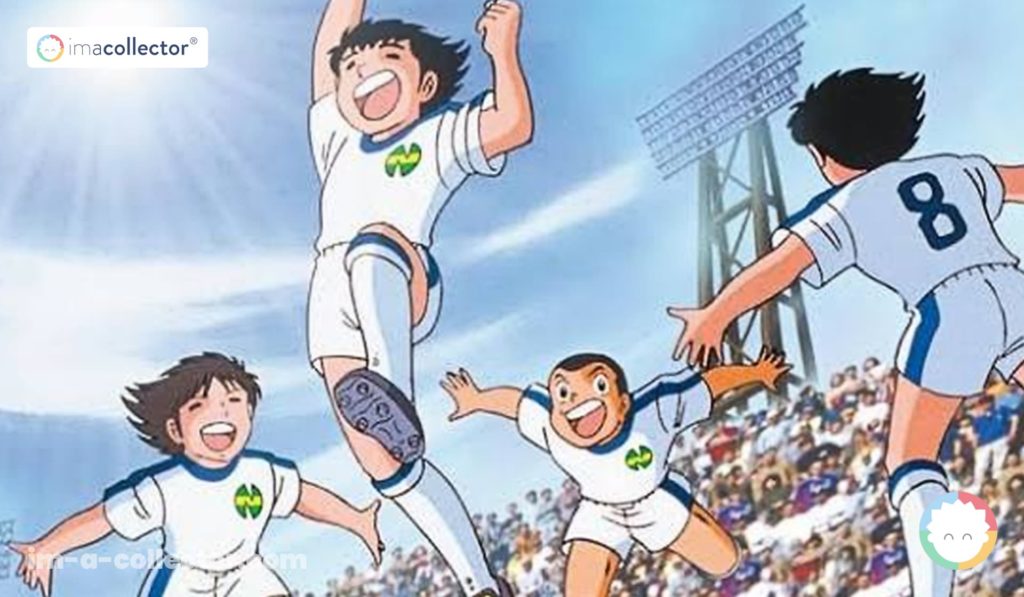
The following decades tell a very different story. Translated into dozens of languages and distributed in many countries as both a manga and an animated series, Captain Tsubasa becomes part of the childhood of millions of readers and viewers far beyond Japan
In France, several generations discover the series under the title Olive et Tom. In Spain, Italy, Latin America and the Middle East, it becomes one of the first Japanese football works to achieve such widespread recognition.
This international reception has another distinctive feature. Unlike Japan, these countries already possess deeply rooted football cultures. Stadiums are full, professional clubs occupy a central place in everyday life and children grow up admiring their own champions. Yet they too see themselves in Tsubasa Ozora.
This ability to transcend its original context probably explains the work’s remarkable longevity.
Because ultimately, Captain Tsubasa is not simply a story about Japanese football. It is about a player’s childhood, the discovery of a passion, the process of learning, rivalries, defeats and the desire to improve. These themes belong as much to a child in Tokyo as to one in Barcelona, Rome, Buenos Aires or Paris.
The accounts of leading international players point in the same direction. The FIFA Museum names Andrés Iniesta and Lionel Messi among the players influenced by the work, while Zinédine Zidane has also frequently been associated with the generation shaped by Captain Tsubasa. None of them grew up within Japanese football. Yet all illustrate how the series could take root in countries with already powerful sporting cultures.
That is probably where the true uniqueness of Captain Tsubasa lies. The manga does not export a specifically Japanese sporting culture. It tells a universal experience.
Why Captain Tsubasa speaks to children around the world
Unlike many sports stories deeply rooted in a particular national context, Captain Tsubasa is built around universal themes: dreams, friendship, rivalry, effort, improvement and the desire to surpass oneself. Football is less an end in itself than a shared language.
It allows readers from very different cultures to share the same emotions, wherever in the world they happen to grow up.
This is probably one reason why, more than forty years after its creation, the manga continues to be cited by professional players across several continents.

Conclusion
Captain Tsubasa did not create Japanese football. By the time Yoichi Takahashi published the first adventures of Tsubasa Ozora, the sport already had several decades of history in the country. Without that groundwork, the manga would probably never have resonated so strongly.
Its influence operated on a different level. At a time when Japanese football was still struggling to find a place in the collective imagination, Captain Tsubasa gave it heroes, a horizon and a story. It turned a sport that remained relatively discreet into an adventure shared by millions of children. That change cannot be measured only through sales or player registrations. Its reach goes much further, living on in the memories of a generation of players, coaches and supporters who, years later, still associate their first steps with a ball with the pages of this manga.
That may be the most important lesson of this story.
Institutions build the foundations of a sport. Competitions write its history. But sometimes, a work of fiction gives it a face.
More than forty years after its creation, Captain Tsubasa remains one of the rare works capable of connecting a Japanese child from the 1980s with a European supporter, a South American player or a present-day collector. Not because the series single-handedly changed the destiny of football, but because it profoundly shaped the way several generations imagined the sport.
But once the dream has taken hold, another question eventually emerges. What happens to football manga when Japan begins to professionalise its league, develop players in new ways and approach the sport with greater maturity?
After Captain Tsubasa, football no longer needs only to be dreamed about. This is where another story begins: that of manga such as Whistle!, Giant Killing and, later, Blue Lock. These works no longer accompany only the birth of a sporting imagination, but the gradual transformation of Japanese football into a modern sporting culture.
And perhaps this is where pop culture reveals its full power: it does not replace reality, but sometimes gives it a memory.
Article produced by imacollector® — an editorial archive dedicated to the memory and heritage of Japanese pop culture.
Content published for informational and documentary purposes. All rights reserved to the respective rights holders.