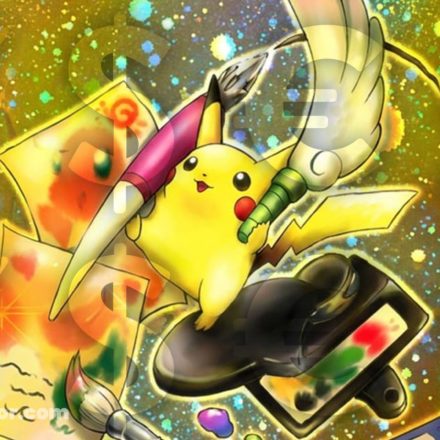


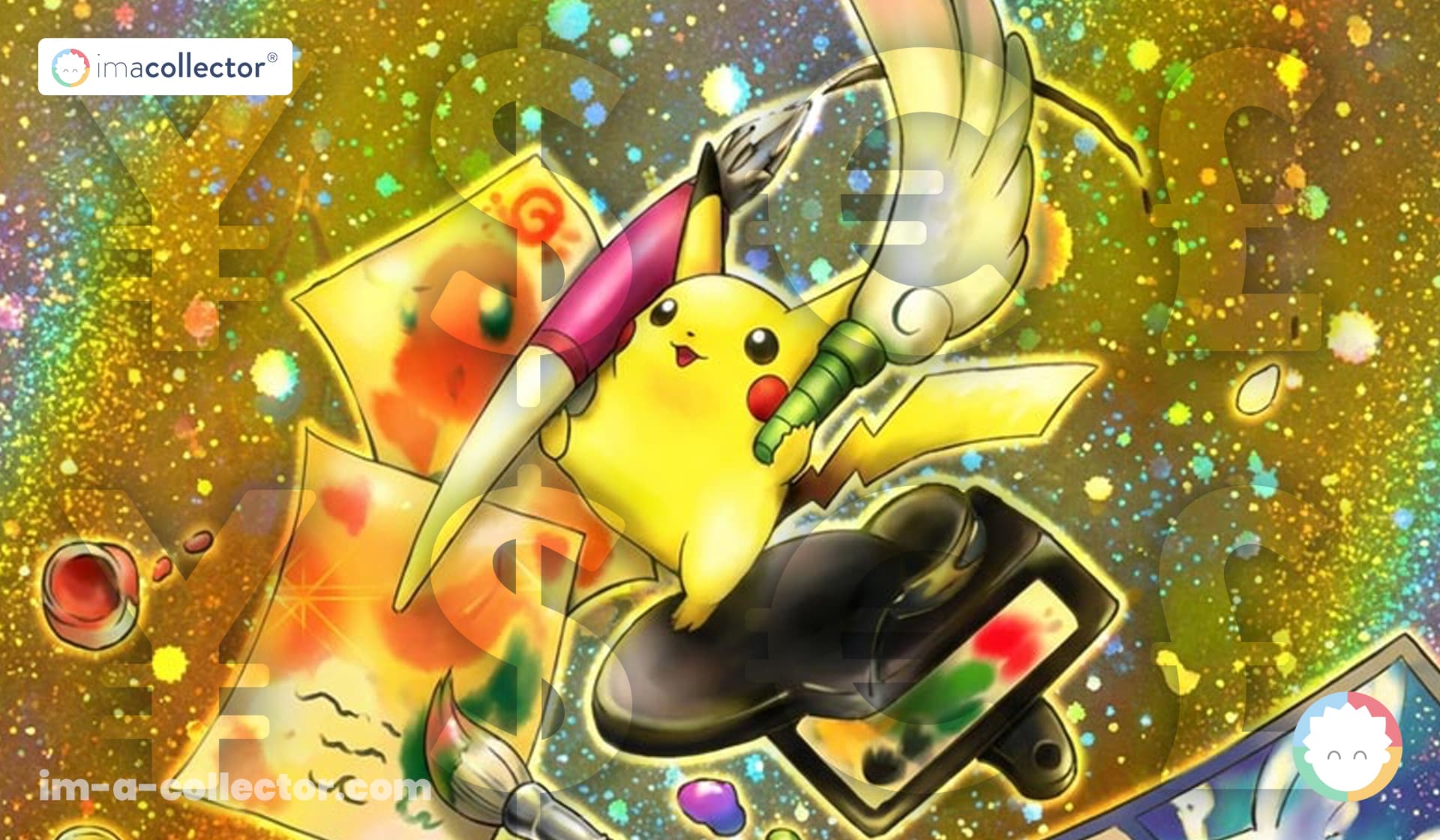
Why are we willing to spend fortunes on Pokémon, but far less on protecting the species that inspired it?

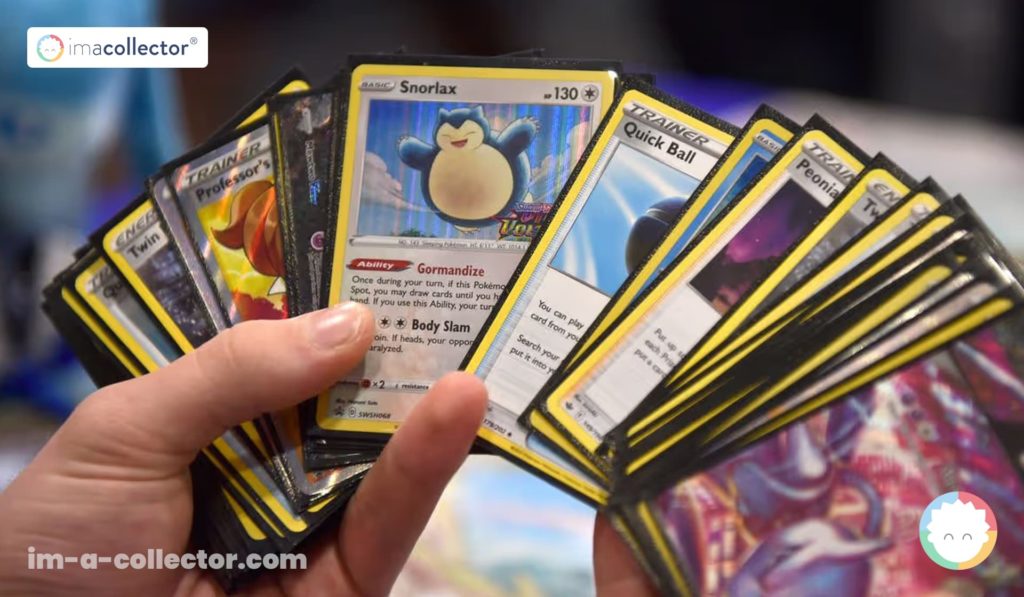
Today, a single Pokémon card can sell for tens of thousands of euros. Some are graded, insured, stored in vaults, tracked like genuine collectible assets and even stolen from private homes. At the same time, animal species that have inspired popular culture are disappearing amid deafening silence and widespread indifference. This contrast points to something far deeper than a criticism of collectors. Why can an imaginary creature sometimes inspire more attachment than the living world it came from? And what does this paradox reveal about our relationship with heritage? For thirty years, Pokémon has taught us to observe, identify and collect imaginary creatures. Could the same mechanism also help us pay closer attention to the living world?
Sommaire
The pika, the animal left in Pikachu’s shadow
Since first appearing in 1996, Pikachu has become one of the most famous characters in the world. Its popularity extends far beyond video games. Pikachu is everywhere: in animated series, films, official competitions, advertising campaigns, museums, merchandise and, of course, Pokémon cards, some of which rank among the most sought-after collectibles in their category.
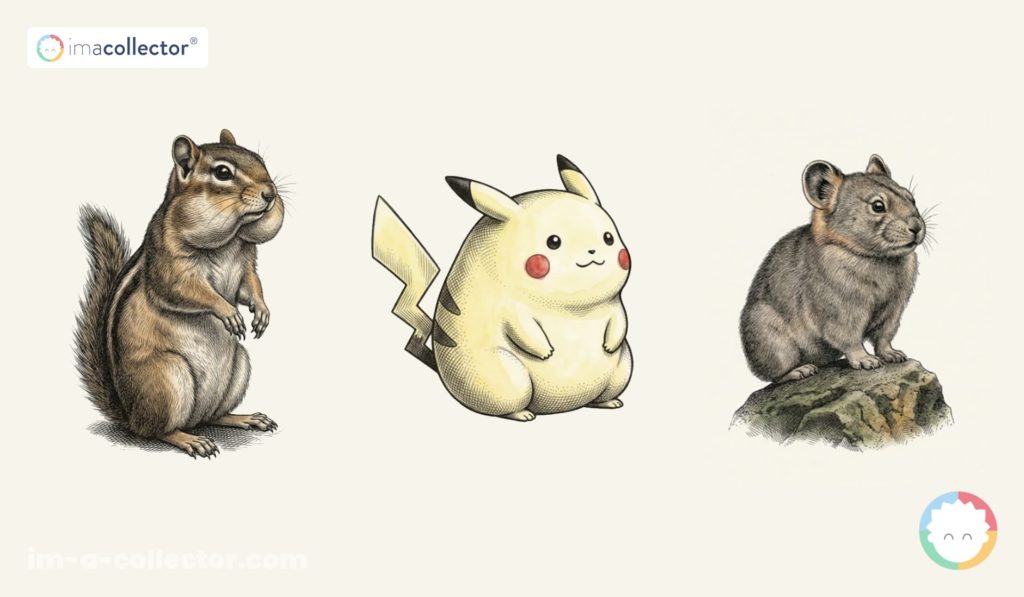
The pika, by contrast, remains largely unknown to the general public. This small mammal from the family Ochotonidae lives in mountainous regions of Asia and North America. Its compact body, rounded ears and even its name have led many fans to describe it as one of Pikachu’s main inspirations.
Atsuko Nishida, who created Pikachu’s original design, has explained that she imagined its cheeks after thinking about a squirrel storing food. Other features suggest rodents or various small mammals. Like many fictional characters, Pikachu was probably shaped by a combination of references rather than as a faithful copy of a single species.
Why are we so drawn to cute creatures?
Why do Pikachu, Totoro and Kirby have oversized eyes, round heads and simplified faces? Since Konrad Lorenz’s research, several scholars have argued that these features activate instinctive responses of protection and attachment in humans, known as Kindchenschema, or the “baby schema”. This is clearly not the only reason for their success, but it helps make these characters immediately endearing.
The pika is therefore not Pikachu’s exact model. Millions of people recognise Pikachu instantly. Many can imitate its cry, name its attacks or estimate the value of certain cards. Yet very few could identify a pika, locate its habitat or explain the role it plays in its ecosystem.
Pokémon is far from an isolated case. Many creators draw on the living world when building their universes. Animals, plants, landscapes and natural phenomena become characters, monsters or fantastical creatures that eventually take their place in our collective memory.
My question is not whether Pikachu resembles a pika. I simply want to understand why millions of people form an emotional bond with an imaginary creature while often knowing almost nothing about the living world that feeds this imagination.
Fiction creates memories before it creates collectors
When a child encounters Pikachu for the first time, they meet a character. At that point, the collectible object is still a long way off.
This partly explains the longevity of so many Japanese popular culture franchises. Before becoming collectible cards, figures or video games, these worlds first built a relationship with their audiences. Merchandise is usually a consequence of that bond.
Cognitive science has long examined this phenomenon. Stories make information easier to remember, engage our emotions more deeply and encourage empathy. In media psychology, researchers also use the term parasocial relationships to describe the emotional bonds we develop with fictional characters or media figures. Although these relationships are not reciprocal, they can have a lasting influence on our memories, behaviour and even our purchasing decisions.
Can we love a character as we love a person?
In psychology, a parasocial relationship describes the emotional bond a person develops with a fictional character or media personality. These relationships can influence our emotions, memories and even some purchasing behaviours. They partly explain why the death of a character or the end of a series can feel like a genuine loss.
The Pokémon franchise brings all of these mechanisms together. Each creature has a name, a personality, a cry, an evolution, distinctive abilities and a place within a coherent universe. The Pokédex gives it a story, a habitat, feeding habits and behaviours that sometimes echo those of real species.
Players therefore remember more than an illustration: they remember a character that gradually becomes tied to their own personal memories.
A collector, meanwhile, is rarely looking for an object alone. They are often trying to recover an emotion they once felt. A card traded in the school playground, a console received as a childhood gift or an episode watched with a parent gradually acquires a value far beyond its original purpose. The object becomes the physical vessel for a positive memory.
This mechanism is not unique to Pokémon. Animation cels, original drawings, consoles, film posters and figures all follow the same logic. Rarity accounts for part of their value. The attachment they inspire accounts for everything else.
Why do we collect?
Psychologists identify several motivations: preserving a memory, shaping one’s identity, belonging to a community or simply enjoying the satisfaction of completing a set. Financial value often comes later. For many collectors, the object is first and foremost the physical carrier of a personal story.
A pika has no storyline, no soundtrack and not even a hero to tell its story. It becomes visible to the wider public only when someone takes the time to observe it, study it and pass that knowledge on. Without that work, it remains one species among thousands.
Fiction performs precisely this work of mediation. It selects a few characteristics, gives them a face, a voice, a story and a place in our memory. It turns a source of inspiration into a character.
That may be its greatest strength. Fiction does not replace the living world; it gives us a reason to care about it.
What if pop culture could also carry the heritage of the living world?
Pokémon is often described as a commercial phenomenon. It is easier to forget that it was born from observing nature.
As a child, Satoshi Tajiri spent hours exploring the fields and woods around Machida, on the outskirts of Tokyo. He caught insects, observed and classified them, then traded them with his friends. His passion even earned him the nickname “Dr. Bug”. Over the years, those open spaces disappeared under urban development. The places where he once played became roads, car parks and housing estates.
Why does Pokémon feel like a bestiary?
Pokémon are not inspired by animals alone. Some draw on plants, fungi, minerals, objects, natural phenomena, legends or yōkai. The franchise forms a hybrid bestiary in which observation of the living world meets Japanese beliefs and imagination.
Pokémon was partly a response to that disappearance. In several interviews, Tajiri explained that he wanted to recreate this sense of discovery through video games. Exploring an unfamiliar region, encountering a creature no one had caught before, completing a Pokédex or trading with another player were meant to recapture the excitement he felt when lifting a stone or crossing a rice field in search of a new insect.
The Pokémon franchise is more than a collection of imaginary creatures. At its origin, the series sought to pass on a way of looking at nature. Observing, exploring, identifying, collecting… These practices existed long before video games. They have been part of the naturalist’s work for centuries.
What if Pokémon succeeded where museums sometimes struggle?
For decades, millions of children have learned to recognise, classify and remember more than 1,000 imaginary creatures. Few cultural works have done as much to nurture an interest in observation and classification. The question, then, is less whether Pokémon is realistic than whether the same mechanism could also help transmit more knowledge about the living world.
Preserving the works… and what inspired them
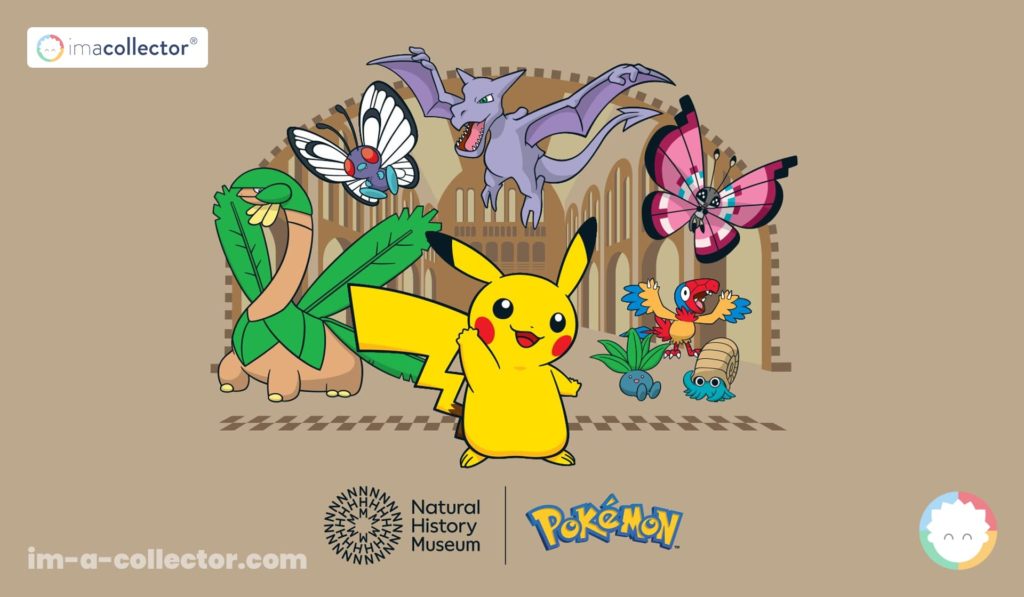
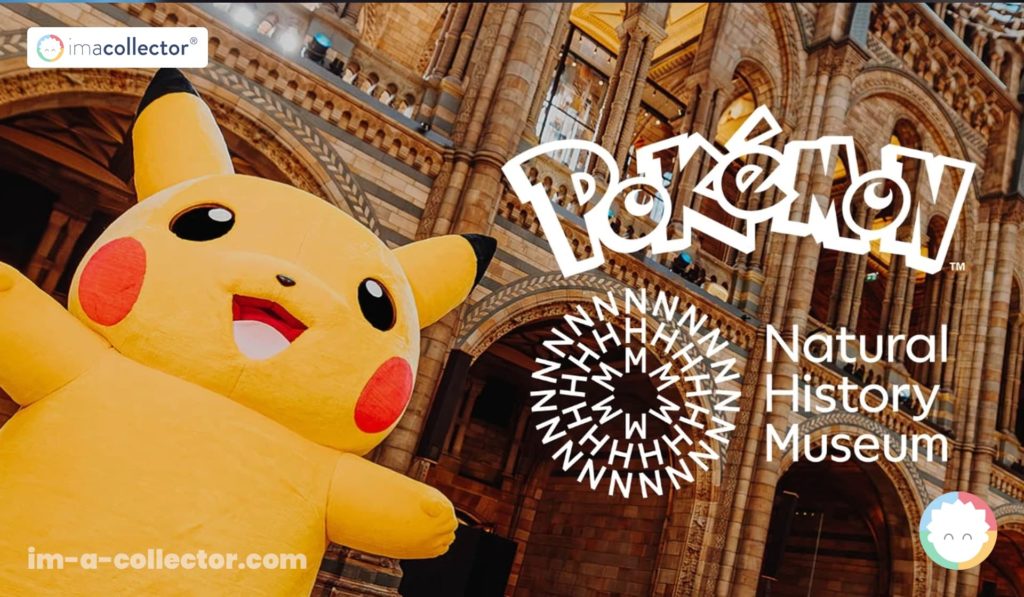
This connection with the living world still surfaces from time to time today. The Pokémon Company has taken part in several awareness campaigns in Japan, working in particular with natural history museums, aquariums and educational programmes focused on biodiversity. The franchise can therefore still act as a bridge between fiction and the real world.
Yet these initiatives remain limited compared with Pokémon’s global reach. Hundreds of millions of people know Pikachu. Far fewer know that Satoshi Tajiri wanted to convey the pleasure of exploring nature, or that Pokémon was partly born from memories of open spaces gradually transformed by urbanisation.
Japanese popular culture owes part of its richness to the animals, landscapes, plants, legends and natural phenomena that have long fed its creators’ imaginations.
What do we do with that legacy? We collect cards, preserve original drawings, restore consoles, authenticate objects and document works.
This work matters. It preserves part of our cultural heritage and passes on the stories of the people who built it.
Before Pokémon, Kodama and other fictional creatures, there were real animals, insects, forests, mountains and landscapes. Without them, part of this imagination would probably never have existed.
To me, this paradox reveals a society in which economic value too often outweighs heritage value. We readily invest in what can be owned, collected or resold, yet far less in what does not belong to us: the species, landscapes and ecosystems that inspired these works in the first place.
Preserving the memory of pop culture should therefore go beyond protecting what it has produced. It should also lead us to better understand and preserve what made those works possible. Works teach us how to look at the world. It is up to us to decide whether we only want to collect them or also protect what they taught us to love.
Sources and resources
Creator Profile, The Creators of Pikachu (Pokémon)
TIME, The Ultimate Game Freak (1999)
TIME, How Pokémon Conquered America (2024)
Konrad Lorenz, Kindchenschema Liebers & Schramm
Liebers & Schramm, Parasocial Interactions and Relationships with Media Characters
Susan Pearce, On Collecting
Russell Belk, travaux sur le collectionnisme
UICN Red List
Article produced by imacollector® — an editorial archive dedicated to the memory and heritage of Japanese pop culture.
Content published for informational and documentary purposes. All rights reserved to the respective rights holders.