

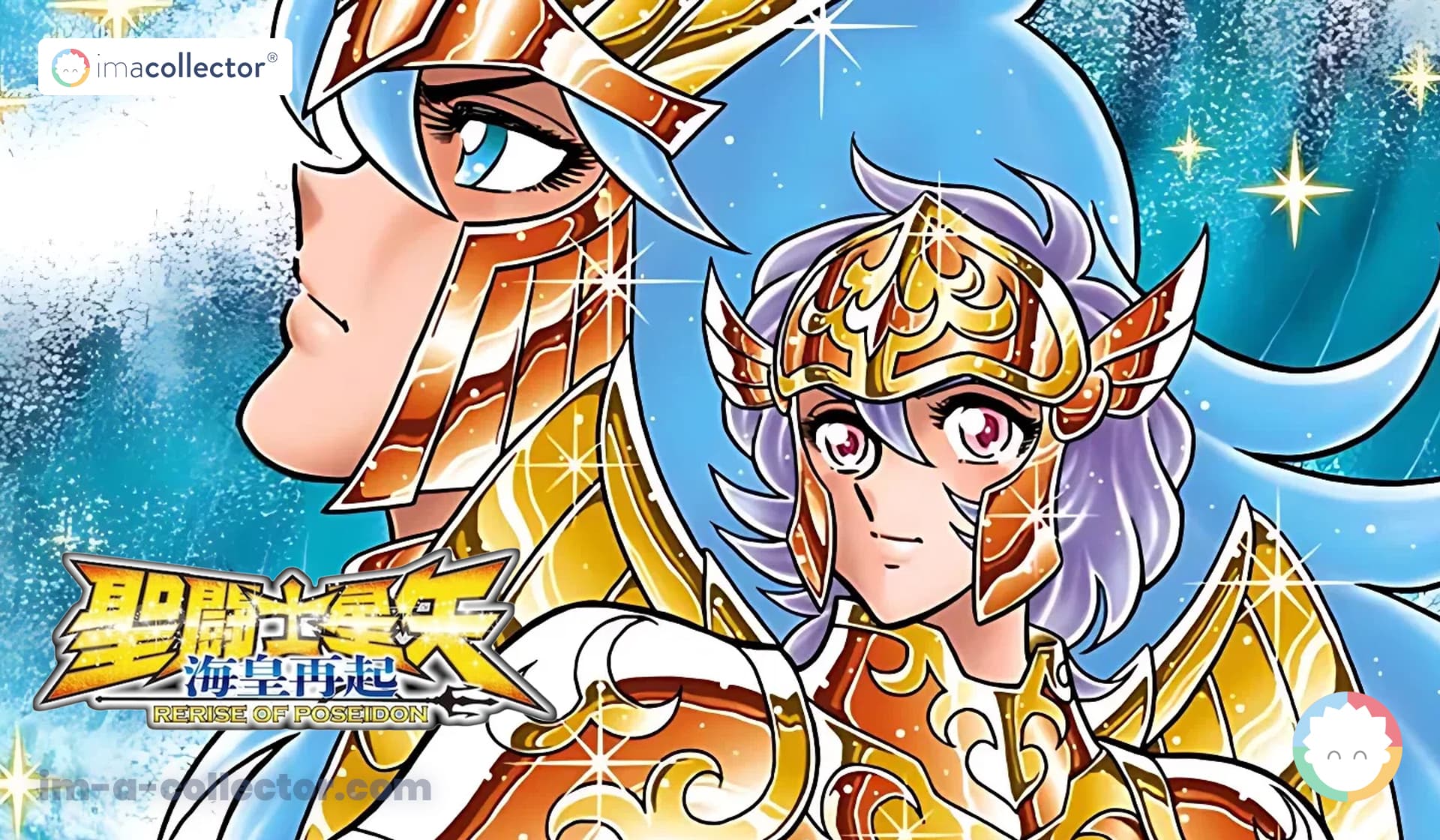
Saint Seiya is probably the series that first shaped my love of Japanese animation. I discovered it as a child through Club Dorothée, its opening themes and its figures, before the Hades saga and the arrival of the Myth Cloth line reignited that passion years later. I never really left this universe behind. I kept buying the manga and original artwork, following its various sequels and watching what the franchise was becoming. But over the years, something gradually faded for me. New series, shifts in visual style and the growing number of spin-offs sometimes took me further away from what had first drawn me to Saint Seiya, especially the visual identity shaped by the anime and artists such as Shingo Araki, Michi Himeno and Eisaku Inoue. So I opened Rerise of Poseidon with equal parts curiosity and caution. I certainly did not expect the Marina Generals to be the ones who would make me want to dive back into Saint Seiya.
Table of contents
Why return to the Marinas?
Bringing the Marinas back did not strike me as an obvious choice. Saint Seiya has already made extensive use of dead characters, former enemies and figures thought to have disappeared. Inevitably, that device had lost some of its ability to surprise.
But the Sea Generals have another particularity: we know exactly what they look like, yet we know almost nothing about their backgrounds.
Kanon and Isaac have stories of their own. With Baian, Io, Krishna, Kasa and even Sorrento, things are more complicated. In the original manga, they appear, immediately establish themselves through their techniques or personalities, and most of them then die fighting the Bronze Saints. Their role is fulfilled, with varying degrees of success, without Kurumada ever trying to give them much more room.
Tsunakan Suda has discussed this himself when looking back on the creation of Rerise of Poseidon. In his view, this very direct approach was one of the strengths of the original manga: Kurumada did not need pages of psychology to make his opponents distinctive. Pace came before biography.
By moving them to the other side, however, Suda inevitably faces a different problem. These characters can no longer simply appear on the page, launch one or two attacks and disappear a few chapters later. Their own journeys now have to matter.
I particularly liked the way the story revisits Kanon’s betrayal. Every Marina fought, and some even died, while the man leading them was manipulating events from the shadows and had caused the conflict in the first place. That changes how they relate to what they went through and to their own history. Here, they do not return with their loyalty intact and a few new attacks. They return carrying the weight of a battle that may never have meant what they believed it did.
I especially enjoyed what happens around Kanon, Isaac and Kasa, as well as some more unexpected connections with characters such as Shaka. These details finally give some depth to Marinas who had previously been easy to overlook.
While researching the manga, I learned that Suda’s original project was not even about the Marinas. The idea evolved after a reported discussion with Kurumada Pro: Poseidon and his Generals remained one of the few major groups in Saint Seiya that had never truly received a story of their own.
There was therefore plenty of unexplored space around characters who have been familiar for nearly forty years. Rerise of Poseidon brings back figures we know well enough for their return to feel meaningful, yet who were developed so little that there is still something left to learn about them.
Finding Kurumada again without quite finding the original series
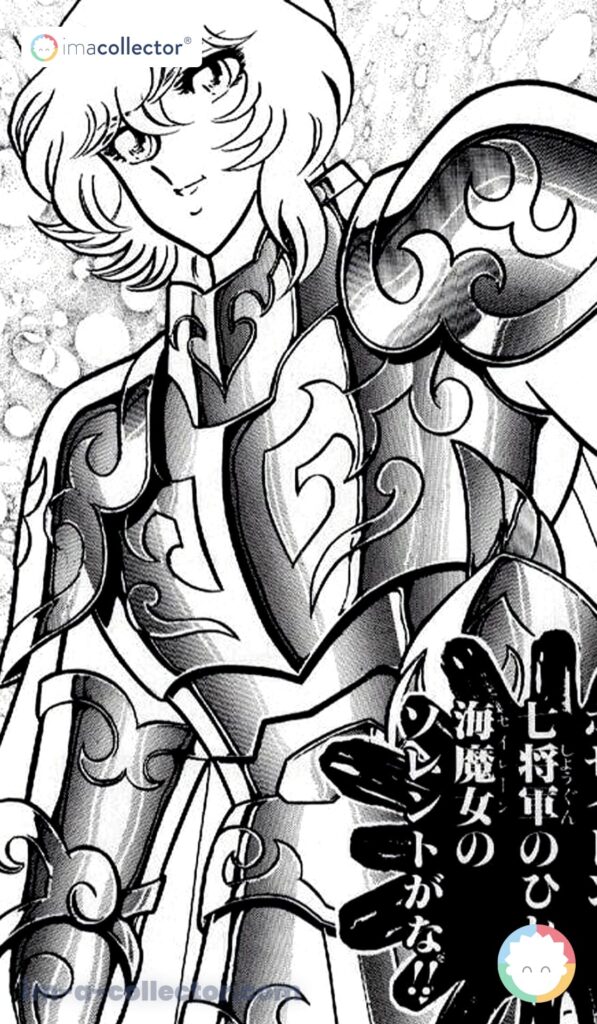
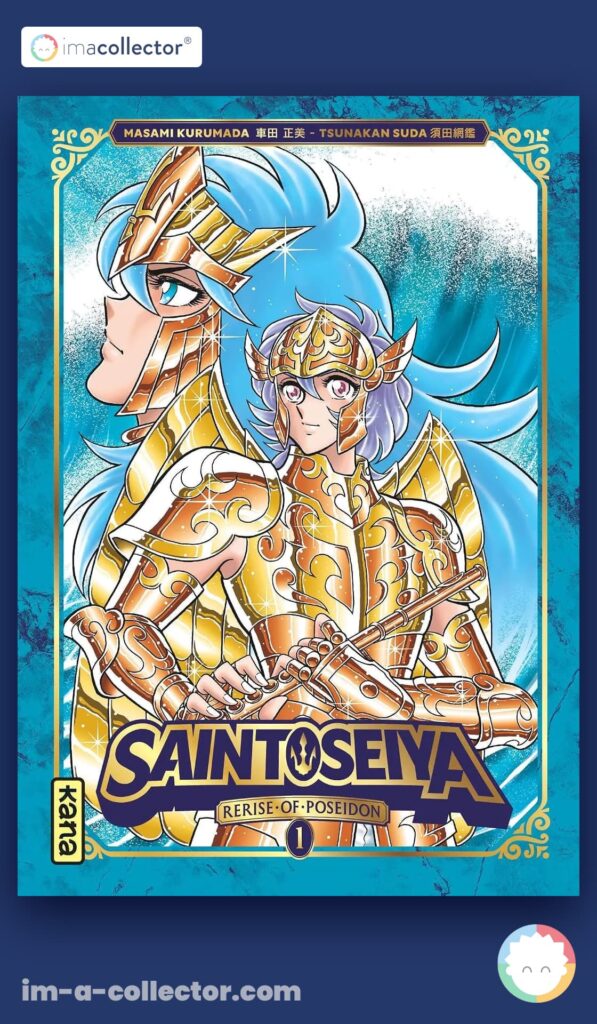
The first thing that struck me about Rerise of Poseidon was the artwork. Tsunakan Suda does not try to create a visual break with the original manga. Some panels, poses, facial constructions and even small touches of humour can feel like Kurumada again, only with cleaner lines and a slightly more contemporary finish.
I immediately understood why some readers describe it as “Kurumada 2.0”. That resemblance comes up regularly in reactions to the manga, sometimes to the point that people confuse Suda’s illustrations with Kurumada’s.
I felt the same way while reading it. There is genuine nostalgia in seeing this panel construction again and this very particular way of bringing Saint Seiya to life on the page. After some later interpretations, especially Saint Seiya: Episode.G, I had almost forgotten how enjoyable that kind of simplicity could be.
I have never expected a spin-off to imitate Kurumada’s style. The Lost Canvas and Saintia Shō each have a visual identity of their own, and that has never particularly bothered me. Saint Seiya: Episode.G is a much more complicated case for me: Megumu Okada pushes the density of the artwork, ornamentation and his own interpretation of the characters so far that I sometimes struggle to recognise the visual world of Saint Seiya. I understand the artistic choice, but it is simply much further removed from my own relationship with the series.
Suda seems to take almost the opposite approach. His artwork does not try to emphasise that a new author has taken over Saint Seiya. Instead, it seems designed to make the transition from Kurumada’s work to his own as seamless as possible. At times, it works remarkably well, with one fairly obvious trade-off: I find Tsunakan Suda’s personal style much harder to identify.
I also struggled to recognise some characters immediately, particularly Baian and Kasa. I will need to compare their faces with the original manga again to see whether Suda has genuinely changed them or whether my memory of these characters has simply been shaped more strongly by the anime over the years.
Once again, my own relationship with Saint Seiya complicates the way I read this new entry. The Saint Seiya I carry in my memory is not only Kurumada’s. It is also the anime, Shingo Araki, Michi Himeno and animators such as Eisaku Inoue, all of whom profoundly shaped its visual identity. Returning to Kurumada’s manga therefore brings a sense of nostalgia without matching exactly the series that became fixed in my memory.
Rerise of Poseidon sits somewhere between the two: close enough to Kurumada to make me feel as though I am returning to a familiar world, but technically polished enough not to feel like a caricatured reproduction of his linework.
More new armour… and inevitably more Myth Cloth figures?
When the Arch-Scales appeared, I immediately felt a sense of déjà vu, along with a drop in enthusiasm.
I collected Myth Cloth figures for years, to the point of owning two of each: one figure wearing the armour and another copy to display the Object form. I loved that collection. It even helped rekindle my passion for Saint Seiya when the line arrived in the early 2000s, just as the Hades saga finally brought the series back into the spotlight.
But collecting Saint Seiya eventually became a financial sinkhole. The same characters returned in different versions, the armour evolved, the product lines were renewed, and new designs regularly offered yet another reason to buy new figures, or worse, new versions of figures we already owned. At some point, I began to wonder whether certain developments in the franchise still served its universe or had simply become a particularly elaborate and effective way of keeping collectors buying indefinitely.
I am far from the only person to make that connection immediately. In discussions about Rerise, some fans openly joke that the Arch-Scales exist to “sell Myth Cloth figures”, sometimes adding in the same sentence that they would happily buy them. That contradiction neatly sums up Saint Seiya’s long relationship with merchandise: you can understand the mechanism perfectly and still find the armour desirable.
For once, though, there is a much more interesting answer than fan speculation.
Tsunakan Suda has explained that, from the earliest stages of the project, he wanted to introduce elements that could potentially become Bandai toys. Before the Arch-Scales, he had imagined “Heavy Scales”, heavier and more powerful armour intended for battles on land. I think the idea works extremely well, since the Marinas leave their underwater sanctuary in this spin-off and the explanation is perfectly logical. But as the story evolved and the Marinas became its protagonists, the concept evolved with it. The Arch-Scales became ancient forms of the Scales, awakened by Poseidon’s blood.
Suda has also explained that he deliberately avoided turning them into new God Cloths, so as not to encroach on a concept already firmly established in Saint Seiya. These armours therefore have their own justification within Poseidon’s mythology, even though their potential to become figures was part of his thinking from the beginning. They are not God Cloths, and I am grateful for that.
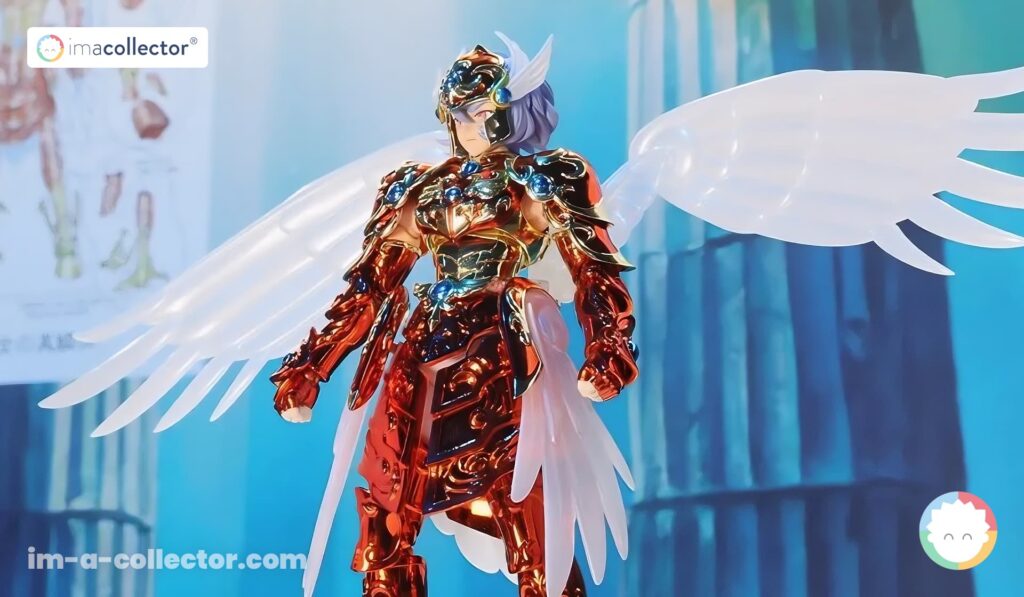
Another point seems worth highlighting: the designs were sent to Bandai Spirits before the first chapter was even published. Suda describes concrete discussions about adapting them into three dimensions, down to the choice of transparent parts, paint and the number of components required. Then, in 2023, Bandai displayed a Saint Cloth Myth EX prototype of Sorrento in his Arch-Scale at Tamashii Nation. The prototype is very real, even if three years later it has still not led to the full line that some fans are probably waiting for eagerly.
I find that transparency almost reassuring. It confirms the commercial dimension of the franchise, but the Arch-Scales do not feel like an afterthought invented simply to sell a few more figures. Suda is thinking about the manga, the design of the armour and its possible existence as a physical object at the same time.
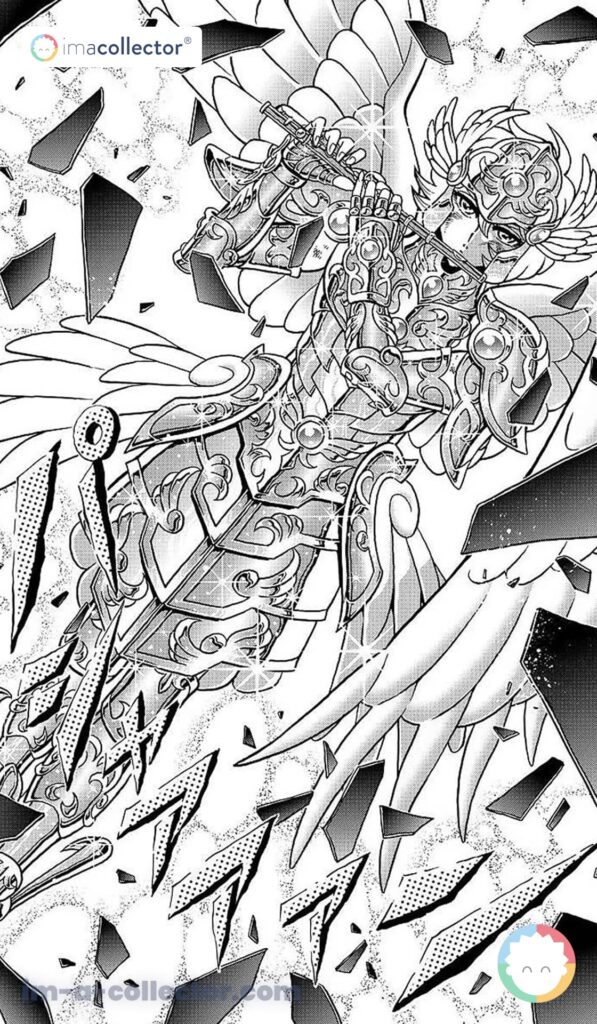
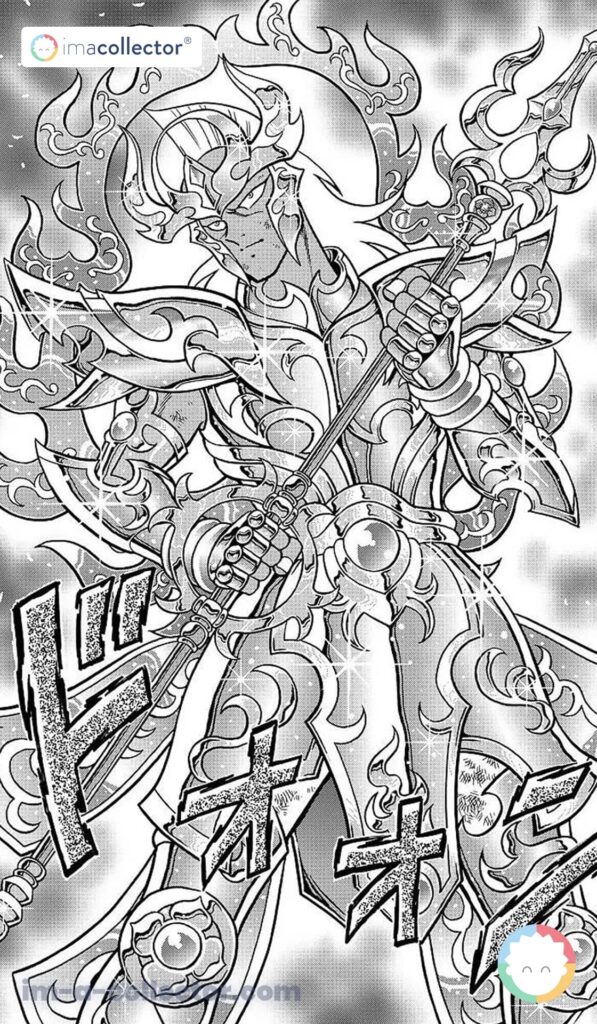
One question stayed with me throughout the volume. The Sea Generals have always had a rather unfortunate reputation when it comes to power. In the Poseidon arc, most are defeated relatively quickly by Bronze Saints who have already survived far more punishing battles during the Sanctuary arc, and even Asgard if we follow the anime. It remains one of the criticisms fans regularly make of the arc. Rerise gives the Marinas not only more time and a story of their own, but also restores their Scales in an older form presented as superior.
So with their Arch-Scales, would Baian, Io, Krishna, Kasa, Sorrento or Isaac still have met the same fate against Seiya and his companions?
The manga provides no scale precise enough to answer that seriously. Suda himself jokes about how easily the original Scales were sometimes destroyed, but there is no way to reach a definitive conclusion.
In the end, I prefer the answer to remain unknown. Rerise restores a presence to the Marinas that they had partly lost in my memory. Whether they could now defeat the Bronze Saints may not even be a question that needs a definitive answer.
What Rerise gets right when I no longer expected it to
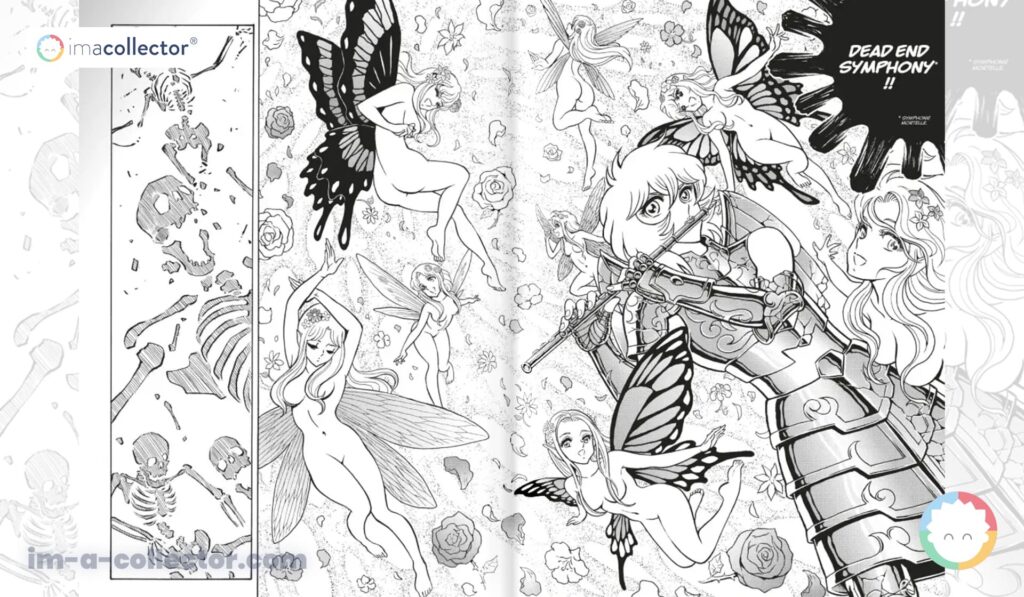
At heart, Rerise of Poseidon uses many of the things I have criticised in Saint Seiya for years. Dead characters return, a new deity appears, the armour evolves and the battles follow a structure the franchise has been using for almost forty years. Even the arrival of another opponent who fights with a stringed instrument made me smile: after Mime, Orphée, Lyra Orpheus and even Abel, that particular family of ideas has been put to very good use.
Claiming that this first volume revolutionises Saint Seiya would be dishonest. That does not really seem to be what its author is trying to do anyway. The fights move quickly, sometimes a little too quickly for my taste. They give pace to a series designed to remain short, but they also create a slight frustration: now that the Marinas finally have a chance to take centre stage, I would gladly have spent more time with them.
I am not alone in feeling that way. On Reddit, some readers consider the story merely decent but appreciate the way it gives the Sea Generals more personality without dragging things out. One reader summed up my own impression rather well: the Marinas finally become people rather than obstacles placed in the Bronze Saints’ path. Others, by contrast, find the plot and new characters fairly conventional. These reactions suggest less a masterpiece that has somehow appeared out of nowhere within the franchise than a spin-off that knows what it wants to do and works confidently with elements fans already enjoy.
The few Japanese reviews available on Comic Cmoa point in a similar direction. Several readers emphasise how well the original personalities are respected, the visual closeness to Kurumada and that particular feeling of rediscovering the Saint Seiya they knew when they were younger.
I find it interesting that this language of recognition and nostalgia appears often enough that it cannot simply be dismissed. It probably explains why the manga worked better for me than I expected.
I did not need a new generation of Saints or an attempt to rebuild the entire universe. I needed new armour designed simply to extend a collection that had already cost me enough even less. What I found here is much more modest: seven characters I had known for decades but had never really paid much attention to.
Suda’s project grew out of the observation that Poseidon and his Generals had never had a proper story centred on them, and his own comments on the original work show that he was fully aware of how little space they had been given at the time. He takes one part of this universe, looks at what Kurumada never had time to explore there, and builds his story inside that space.
When I closed the volume, I did not wonder whether Rerise of Poseidon was going to save Saint Seiya. I simply thought it was a shame I did not have the next three volumes on hand to find out how the story ends.
For a franchise whose manga I kept buying even as I gradually lost some of the enthusiasm that had once carried me along, that simple reaction already matters.
Rerise of Poseidon did not remind me why the Saint Seiya universe needed to keep existing. It reminded me why I had wanted to follow it for so long.
Once again, thank you to Kana for sending me volume 1 of Saint Seiya: Rerise of Poseidon and giving me the opportunity to discover this new take on the Saint Seiya universe and Poseidon’s Marinas.