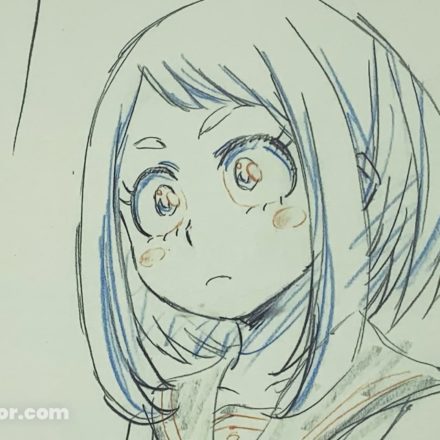


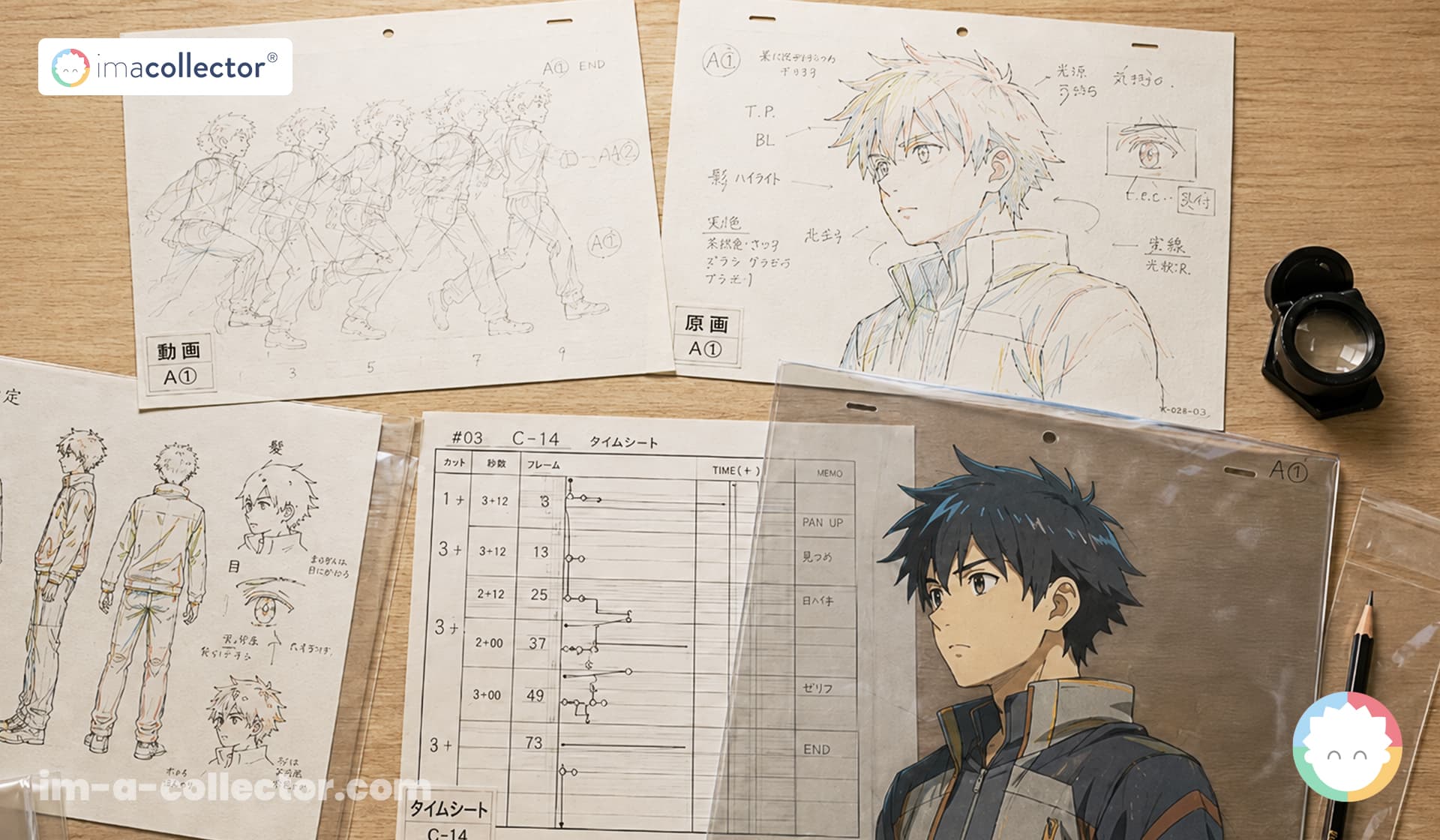
For a long time, Japan exported anime without giving much thought to its future as cultural heritage. Series and films were produced. Merchandise was sold. Production drawings, cels, dougas and working documents were first and foremost part of an industrial process: making the next episode, meeting deadlines, keeping up with demand. What seems almost unbelievable today is that, at the time, there was little to suggest that Japanese animation would become one of the most influential cultural forms in the world.
Table of contents
- When anime became global heritage
- A memory that was never meant to be preserved
- How the archives left the studios
- Japan is gradually realizing what it risks losing
- Have collectors become the unintended guardians of this memory?
- The challenge is already beginning again with digital production
- Conclusion
- Sources
The figures alone tell the story of this transformation. In 2024, the anime market reached 3,840.7 billion yen, according to the Association of Japanese Animations (AJA). For the first time in its history, international revenue far exceeded domestic revenue. Japanese animation is no longer simply a cultural industry. It has become a global heritage, studied in universities, shown in museums and used by Japan itself as a tool of soft power.
And yet, part of this memory is not held by public institutions or museums. Quite the opposite. These pieces are scattered across a far more fragmented space: private archives, specialist sales, personal collections, sometimes very far from Japan.
This situation raises a question that is both fascinating and revealing: how did a culture that has become one of the symbols of Japan’s global influence allow part of its material traces to leave the studios before they were even fully recognized as heritage?

When anime became global heritage
The history of Japanese animation is often told through its most famous works. But when we look at its evolution over several decades, what stands out is not only the success of certain series. It is the way the entire medium has gradually been reappraised.
Pendant longtemps, l’animation occupait une place un peu étrange. Elle générait des audiences importantes, vendait des jouets, remplissait les grilles de programmes tv et participait pleinement à l’économie du divertissement. Mais elle n’était pas considérée comme un patrimoine culturel à préserver au même titre que le cinéma, la littérature ou les arts traditionnels par exemple.
That perception changed gradually as anime moved beyond Japan’s borders. Goldorak, Dragon Ball, Saint Seiya, Sailor Moon, Pokémon, Evangelion, Naruto and the films of Studio Ghibli all helped create a rare phenomenon: a culture produced in Japan but embraced far beyond the country itself. Anime was no longer only watched. It was studied, analyzed, collected, exhibited and passed on. Universities began researching its history, exhibitions drew thousands of visitors, concerts sold out, and places associated with certain works even became tourist destinations.
What was once considered popular entertainment gradually became part of Japan’s cultural influence. The government itself eventually acknowledged this reality through the Cool Japan strategy. In its documents, anime, manga and video games are presented as strategic industries, able to generate economic, tourism and diplomatic value. But those same documents also point to another issue: preserving works, production materials and the physical traces of this culture. For collectors, this is an important signal. What we preserve is not merely an accumulation of objects. Sometimes, it is a fragile part of the memory of Japanese animation.
Animation is no longer only a successful industry. It has become a strategic cultural asset, capable of shaping the country’s image abroad.
This recognition still raises a question: what happens to the material memory of an industry when that industry gradually becomes cultural heritage?
A memory that was never meant to be preserved
To understand the current situation, we need to return to the way anime was produced.
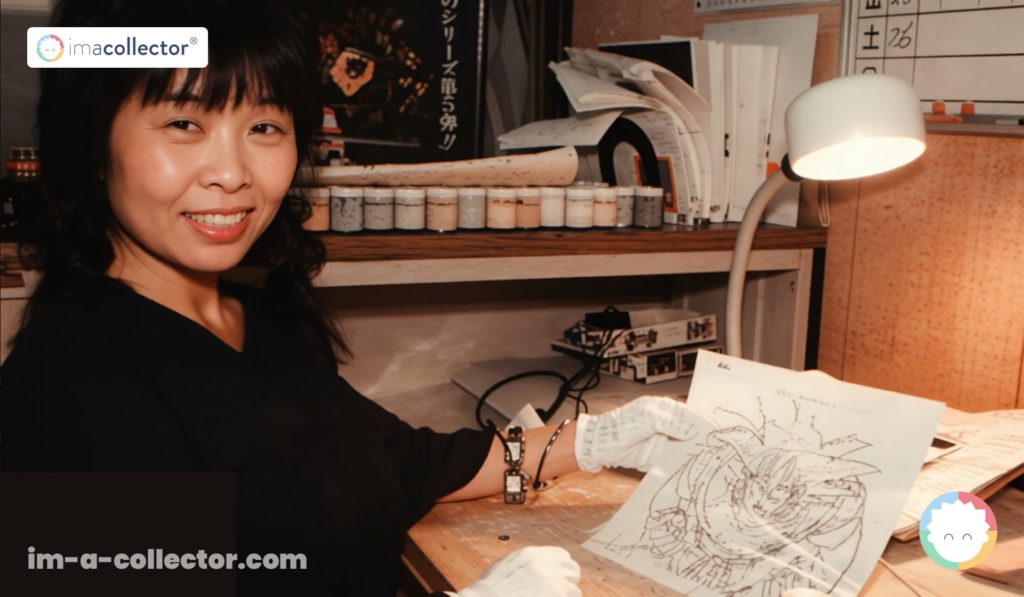
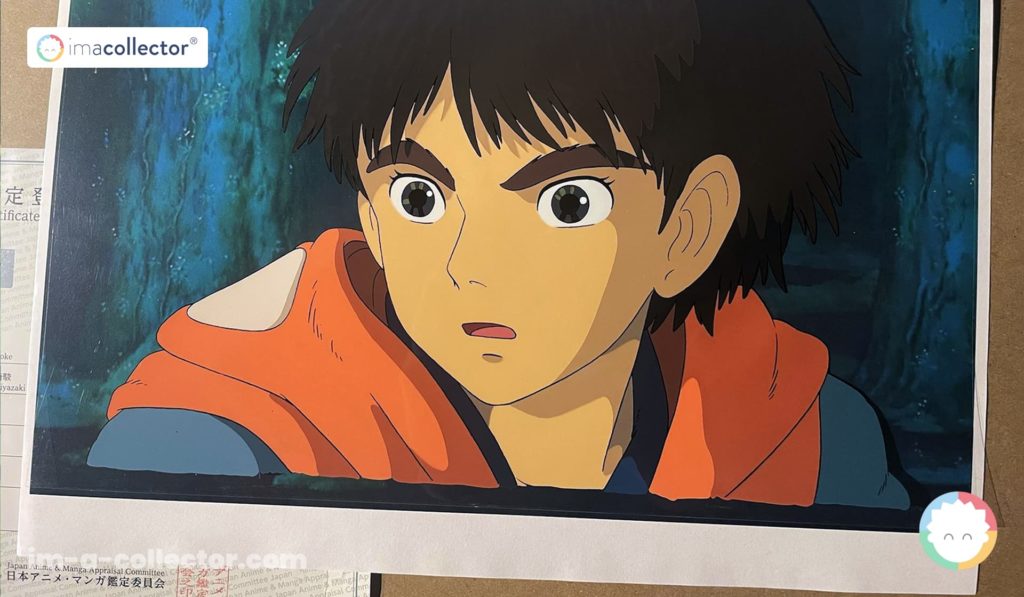
Today, a Dragon Ball cel or a Saint Seiya douga can be displayed behind glass, studied by researchers or sought after by collectors around the world. And yet these objects were never created for that purpose. Their original function was technical. A douga helped prepare the animation. A genga defined a movement. A cel was used to create an image that would appear on screen for a few seconds. That was all.
In an industry working under constant pressure, systematically keeping every element required storage space and, above all, created costs. Studios had to produce quickly, store thousands of sheets of paper, manage limited space and deal with economic constraints far removed from heritage concerns. Once these materials had served their purpose, their future became more than secondary.
With hindsight, this situation seems surprising. But in the context of the time, it was perfectly logical. No one naturally assumes that a document created to produce a television episode will become, several decades later, an object for collecting, museum display or academic study.
And it is this gap that explains much of what follows.
How the archives left the studios
When we come across production drawings in a private collection today, the first question is often how they came to leave their original studio. At least, that was the first question I asked myself.
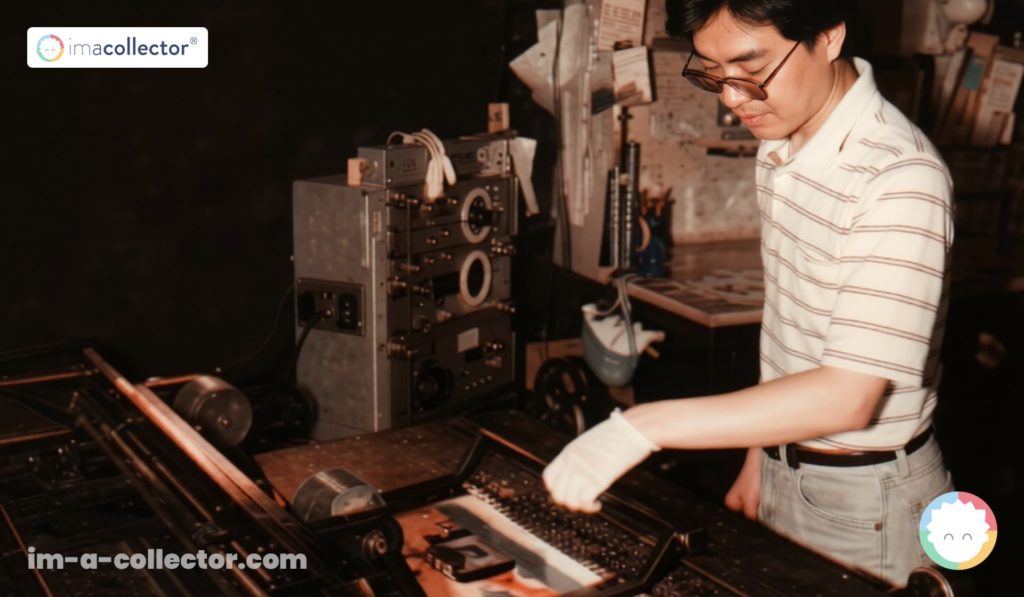
There is probably no single answer. For a long time, intermediate production materials were not regarded as archives worth preserving. Once they had served their purpose, many could be discarded, particularly because of the sheer volume of documents produced and the cost of storing them. Some materials, however, followed different paths: they were sold by studios, kept by animation professionals or recovered before they disappeared.
In the 1980s, it was not unusual for production companies to sell animation cels. Some even operated their own shops, responding to demand that already existed among fans. Some of the pieces now held in private collections may therefore have left the studios through entirely official channels.
Others survived under far more precarious circumstances. After production ended on Space Battleship Yamato, the independent studio used for the series was due to be dissolved. Ryūsuke Hikawa, an animation researcher and vice-president of the Anime Tokusatsu Archive Centre, recalls asking to recover documents that were about to be discarded. At the time, copies of settei, storyboards and many production drawings could be considered of no further use once a work had been completed.
Some professionals also kept documents throughout their careers, particularly as working references or study materials. The collection assembled by director Hideo Watanabe and later entrusted to Niigata University is one example. Other personal collections have also been transferred to archival institutions so that they can be catalogued, preserved and studied. The presence of these materials in private collections and archive centres today is therefore not the result of a single phenomenon, but of many individual, commercial and industrial trajectories.
The idea that every important drawing should immediately have been transferred to a heritage institution is largely retrospective. For much of the history of Japanese animation, such institutions either did not yet exist or did not regard production materials as a priority.
This reality forces us to recognize that the memory of Japanese animation was not built only within institutions. Part of that memory survived through far more informal channels.
Japan is gradually realizing what it risks losing
As the cultural importance of animation becomes more evident, preservation initiatives are multiplying.
The Media Arts Database is one of the most visible examples of this shift. Its purpose is to document and make accessible information related to manga, anime, video games and other forms of media arts. Through this initiative, Japan is trying to map part of its cultural production and prevent certain knowledge from being lost.
Other initiatives go even further. Anime Tokyo Station preserves and exhibits materials related to anime production. The Anime Tokusatsu Archive Centre (ATAC) works to preserve documents often seen as secondary, yet essential to understanding how works were made. Several universities, including Niigata University, are also developing research and archiving programs dedicated to Japanese animation.
These projects point to an important shift. The issue is no longer only to preserve finished works, whether famous or not. It is also necessary to preserve the traces of their creation. This distinction is fundamental. Preserving a film or an episode allows a work to be passed on. Preserving production materials allows us to understand how that work came into being.
The two approaches are complementary, but they do not answer the same questions at all.
Have collectors become the unintended guardians of this memory?
For several years now, I have often found myself asking the same question when looking at certain pieces in my collection: why is this object here, in my home, in my hands? How and why did this drawing make its way to me? Why is it not kept in a dedicated institution? How did it even leave Japan?
These questions are not only about an object’s value. They are first and foremost about its journey. A collector does not simply buy a rare piece. Sometimes, they take custody of a fragment of a much larger story. A story that begins in an animation studio, passes through several intermediaries and ends up in an environment entirely different from the one for which it was created.
Of course, this does not mean that collectors replace museums. Nor does it mean that they are necessarily the best placed to carry out this mission. But it is becoming difficult to ignore the importance of their role in preserving part of this memory.
Some archives survived because enthusiasts chose to preserve them. Information was documented because communities took the time to understand and identify it. Many works are better understood today thanks to collective efforts carried out outside traditional institutions.
So perhaps the point is not to set collectors and institutions against each other. It is to understand how these two worlds could work together to preserve a memory that has become too important to depend on a single actor.
The challenge is already beginning again with digital production
Just as Japan is trying to better preserve materials linked to traditional animation, a new challenge is emerging.
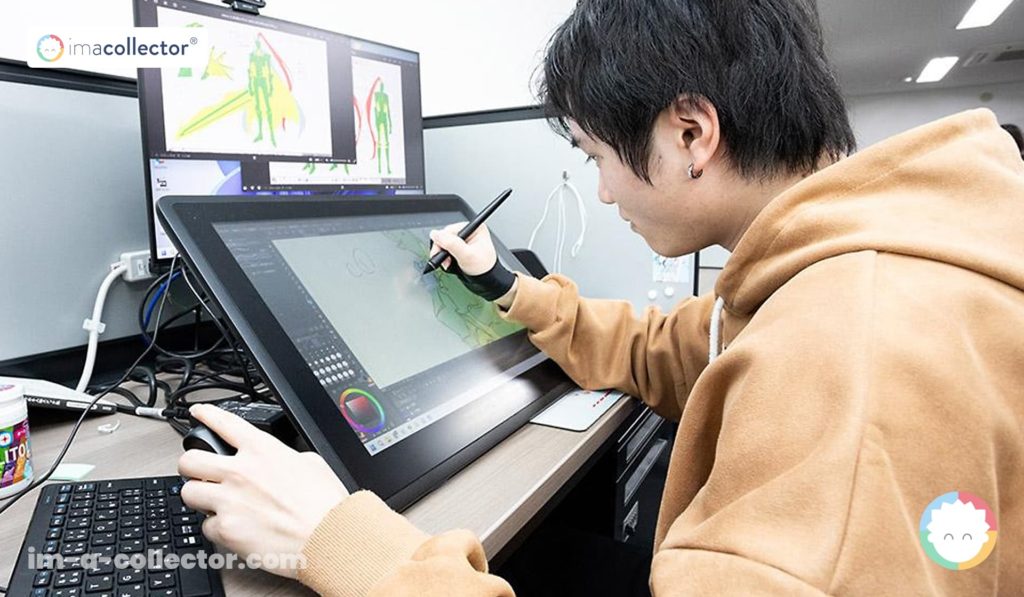
The industry is now largely digital. Files are gradually replacing physical supports, and today part of the creative process takes place through software, servers and storage spaces that did not exist a few decades ago.
This evolution solves some problems. But it also creates others.
A cel can deteriorate through vinegar syndrome, become damaged or be lost. But a digital file can disappear just as permanently if no preservation strategy is in place. Formats change, software quickly becomes obsolete, and certain stages of production may become inaccessible far sooner than we imagine.
This is one reason why initiatives such as e-Sakuga play an important role. They help document certain stages of production, make rarely accessible materials visible to the public and remind us that the memory of a work is not limited to its final result.
The risk is repeating the same mistakes as in the past by assuming that today’s production tools will have no value tomorrow. The history of Japanese animation shows precisely the opposite.
Conclusion
Japan has begun to recognize animation as cultural heritage. Museums, databases and public programs are multiplying. And yet, an important part of this memory remains scattered across private collections around the world.
This situation is not the result of a single act of neglect or forgetfulness. It is the consequence of a much deeper transformation: that of an industry that was not designed to be preserved, and that gradually became global heritage.
Will the preservation of Japanese animation rely only on institutions, or will we need to imagine new forms of collaboration between studios, researchers, museums and collectors?
As traditional archives disappear and digital productions multiply, this question is probably becoming more important than ever.
I believe that we, as collectors, also have a role to play: to preserve, share and collaborate so that these pieces survive time and oblivion, and do not become mere market objects, but remain witnesses to the history of Japanese animation.
Sources
Association of Japanese Animations (AJA) — Anime Industry Report 2025: 2024 market data showing that the anime market reached ¥3.8407 trillion in 2024, with the international market accounting for ¥2.1702 trillion and now surpassing the domestic market.
Cabinet Office / Intellectual Property Strategy Headquarters — Intellectual Property Strategic Program 2024: Japan’s strategy for intellectual property and Cool Japan, in which Japanese cultural content plays a strategic role internationally.
Agency for Cultural Affairs (文化庁) — Media Arts Archive Promotion Support Program: an overview of projects supported by the Japanese government to collect, preserve, digitise and promote works and materials related to manga, anime and video games.
Media Arts Database — official presentation of the database: a project dedicated to documenting and connecting information on Japanese manga, animation, video games and media arts.
Niigata University — Archive Center for Anime Studies — research on animation archives: the origins of the Watanabe Collection and the preservation of storyboards, scripts, settei, genga, animation cels and other intermediate materials from anime production.
**Niigata University — « アニメ中間素材とその保管についての課題 »](https://www.arc.niigata-u.ac.jp/anime-materials/3771/) : témoignages de professionnels sur le statut et la conservation des matériaux intermédiaires. Kōji Takeuchi y rappelle notamment que, dans les années 1980, la vente de celluloïds par les sociétés de production n’était pas inhabituelle et que certaines exploitaient même leurs propres boutiques.
Niigata University — Hideo Watanabe and the formation of the Watanabe Collection — presentation of the archive: the history of the materials preserved by the director and their gradual transfer to the university for research and archival purposes.
Anime Tokusatsu Archive Centre (ATAC) — Ryūsuke Hikawa — interview on Space Battleship Yamato and archival preservation: Hikawa recalls rescuing documents that were due to be discarded after the studio used for the series was dissolved, and explains the importance of such materials as sources for documenting how works were produced.
Agency for Cultural Affairs / JAniCA — “手描きアニメーション原画および各種素材に関するアーカイブ手法確立のための調査研究”: research into methods for cataloguing, preserving and archiving original drawings and other materials from hand-drawn animation production.
Anime Tokyo Station — presentation of its archive and the anime production process: a centre preserving more than 50,000 production materials and presenting planning documents, settei, image boards and other records of the anime production process to the public.
E-SAKUGA — official presentation: a digital initiative providing access to sequences of original animation drawings, accompanied depending on the work by materials such as layouts, exposure sheets and video references, with the aim of documenting and making animation work visible.