

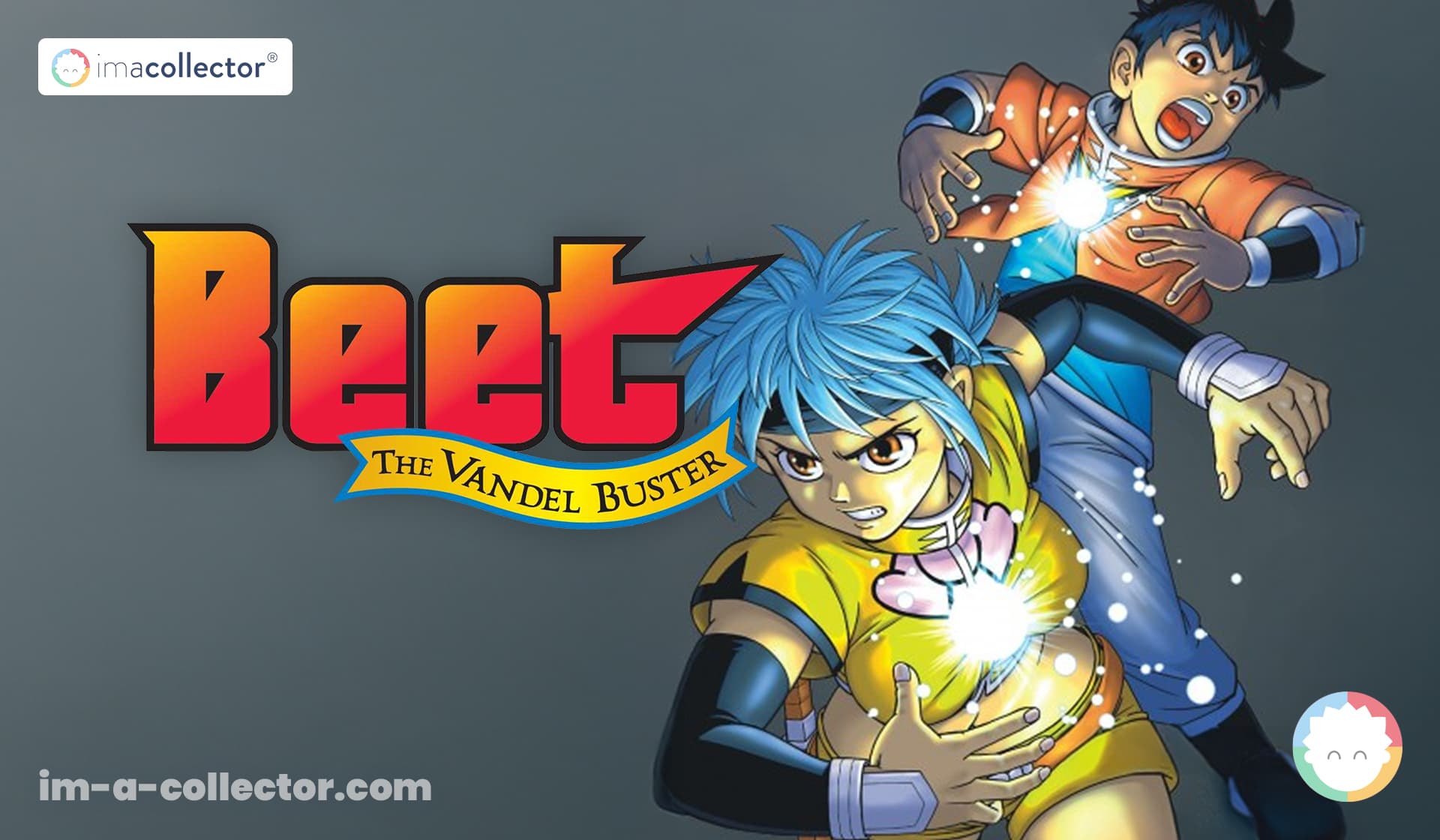
Launched in 2002, put on hold for nearly a decade and absent from French bookshops for years, Beet the Vandel Buster is finally moving forward again. I reread the first seventeen volumes of Riku Sanjō and Kōji Inada’s manga, delighted to return to a world I’ve loved since its debut, though the reread also reinforced some of my reservations.
Table of contents
- Revisiting Sanjō and Inada after The Adventure of Dai
- Beltorze, Shagie and the mysteries surrounding the Vandels
- Hystario, a Vandel unlike any other
- A cruel world where death is rarely final
- Kissu and Poala, two characters whose growth fascinates me
- The Saigas, a legacy that runs through the entire adventure
- Seventeen volumes in, and still so many unanswered questions
- A ten-year hiatus and a return I had stopped expecting
- Why I still want to know what happens next
I still remember how excited I was to hear that Beet the Vandel Buster was returning in Japan. That was back in 2016. By then, ten years had passed since the series went on hiatus. As much as I had hoped to see what happened next, I had pretty much stopped believing I ever would.
I first discovered Beet in the 2000s, when Kana began publishing the manga in France. Its world and characters won me over immediately. Like many teenagers at the time, I was already familiar with Riku Sanjō and Kōji Inada’s work on Dragon Quest: The Adventure of Dai, and it was a real pleasure to see the pair embark on another adventure.
One thing is certain: the French edition took a long time to catch up with the manga’s revival in Japan. Volume 13 came out in 2019, but we had to wait until November 2025 for volume 14. Releases have resumed since then, and I was finally able to reread the first seventeen volumes in one go.
And I enjoyed it just as much as I did back then. I was even surprised by how easily I slipped back into that world. I hadn’t realised how much I missed some of the characters, the Vandels were as fascinating as ever, and several recent developments caught me off guard.
I also rediscovered a few of Sanjō’s storytelling habits that have frustrated me since The Adventure of Dai. I love the way he develops his characters, but sometimes I wish he would be willing to let them die.
Spoiler warning: this article discusses several major revelations from the first seventeen volumes, particularly the events surrounding Hystario and the fate of the individual members of the Zenon Warriors.
Revisiting Sanjō and Inada after The Adventure of Dai
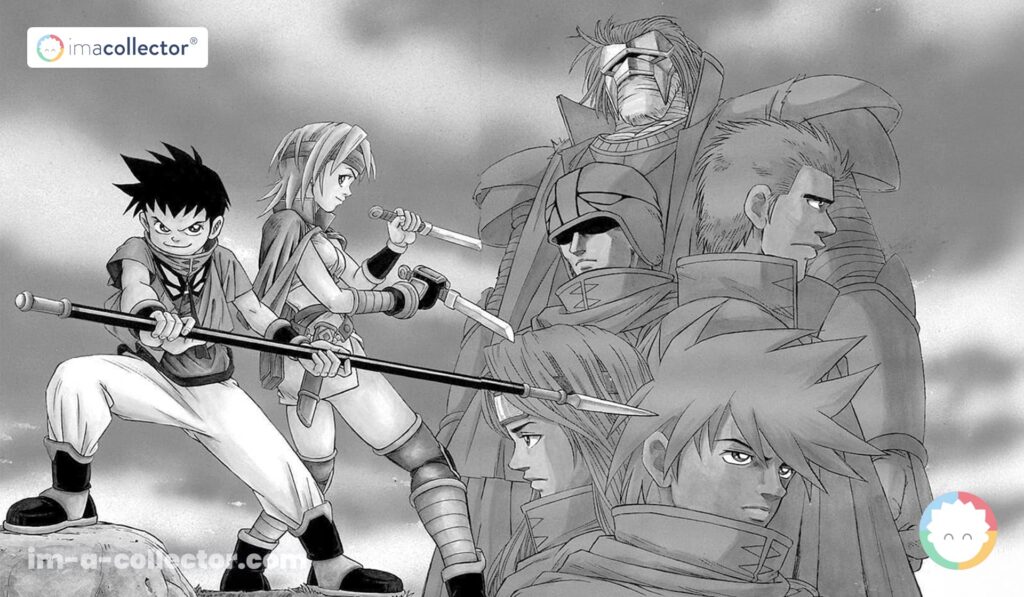
Inada’s artwork is instantly recognisable: the sometimes exaggerated facial expressions, the energetic action scenes and the panel layouts reminiscent of Dai. The similarities between the two manga drew criticism from the very beginning of Beet’s run.
I can understand those criticisms, though the similarities don’t particularly bother me. I enjoy battles in which characters have to figure out their opponents, find a solution using the powers available to them and push beyond their limits when things seem hopeless.
The levelling system, rewards and the fighters’ varied abilities also remind me of the JRPGs (Japanese role-playing games) I love.
For that very reason, Popp remains one of my favourite characters in The Adventure of Dai. His growth is inseparable from his doubts and mistakes, and it takes him time to gain confidence. Of all the shōnen manga I’ve read, his character arc and the way it is told remain among my favourites.
In Beet, Sanjō returns to his fondness for characters who reveal who they really are in battle. Kissu and Poala are particularly interesting examples because their development follows a different path from the hero’s.
Beet charges headlong into danger, learns quickly from his mistakes and always finds the strength to keep pursuing his goal. His convictions are already firmly in place when the story begins. Much of the uncertainty, conflict and surprise that drive the story comes from the characters around him.
Beltorze, Shagie and the mysteries surrounding the Vandels
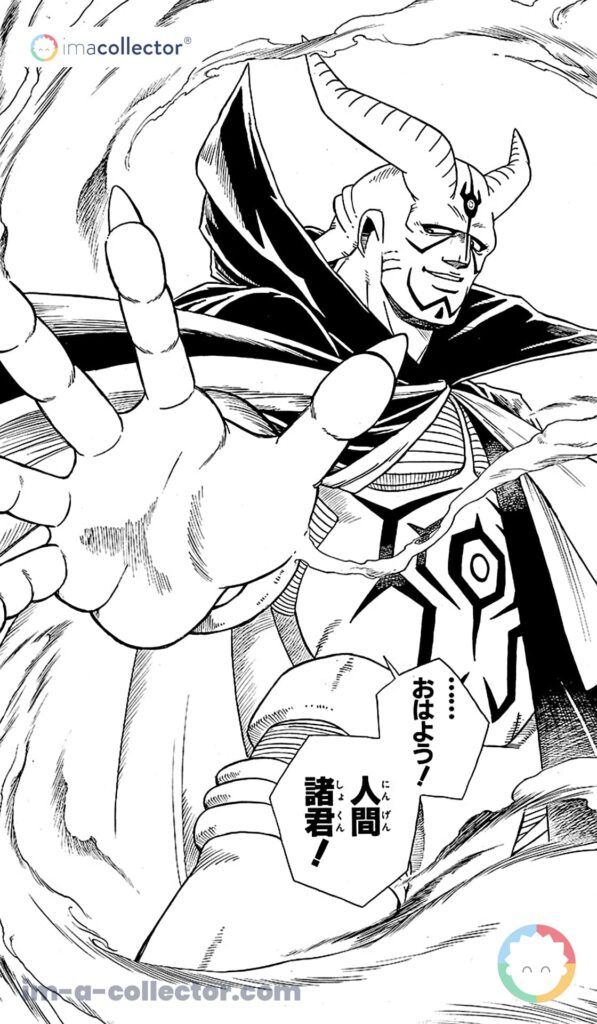
I find the Vandels particularly intriguing because Sanjō leaves so many questions unanswered about several of them.
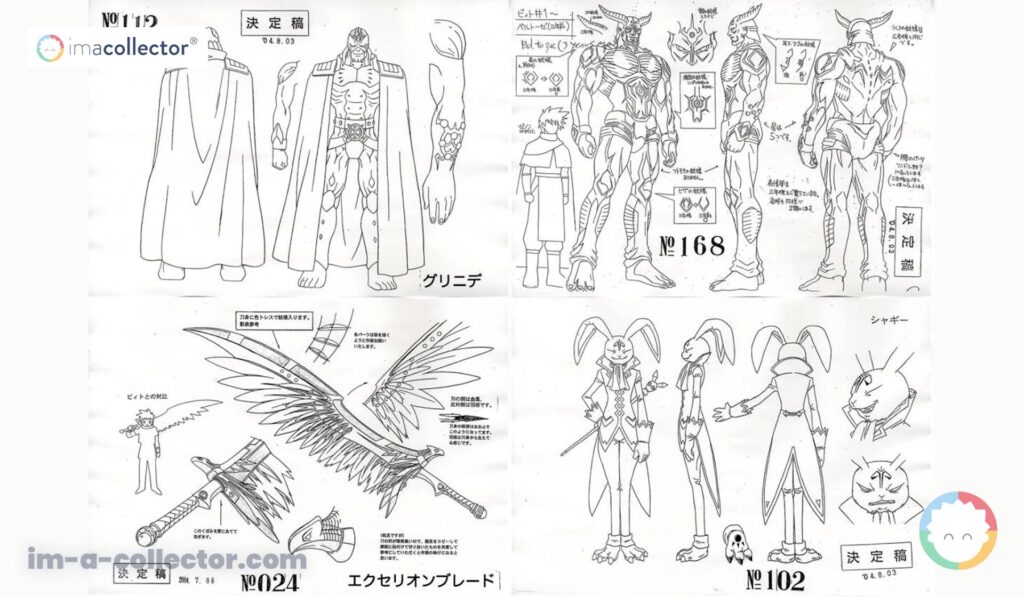
For me, Beltorze is the best example. Despite a handful of appearances over the first seventeen volumes, he remains largely on the fringes of the story. We know how important he is, but the authors have yet to fully develop his role in the narrative.
That is precisely what intrigues me. After all these years and so many volumes, I’m curious to see what Sanjō has in store for him.
Comparing him with Hadlar, who was present throughout The Adventure of Dai, raises questions about just how powerful Beltorze really is. Hadlar changed through his encounters with Dai and his companions, both in terms of his strength and his desire to surpass himself. Beltorze defeated the Zenon Warriors, one of his clones fought Beet, and we have been waiting for his return ever since.
Shagie caught my attention for different reasons. His behaviour and his relationships with the other Vandels grow more interesting as the story progresses.
The ending of volume 17 left me particularly curious. The encounter between Shagie and the professor finally tells us a little more about both characters, though their true motives remain unclear. These revelations lend new significance to Shagie’s earlier interventions and his relationships with the Vandels.
It made me want to revisit his earlier appearances, pay closer attention to his behaviour in each of them and see what the latest developments might be pointing towards.
With an eighth star promised to whoever manages to eliminate Beet, along with the prospect of becoming ruler of the Vandels, his most powerful opponents now have another reason to take an interest in him.
Hystario, a Vandel unlike any other
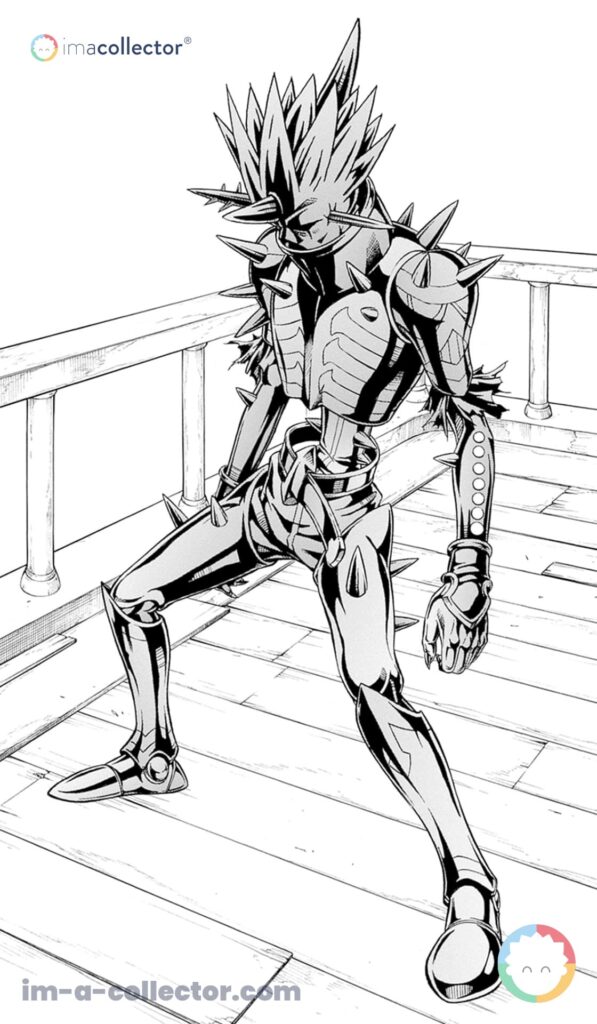
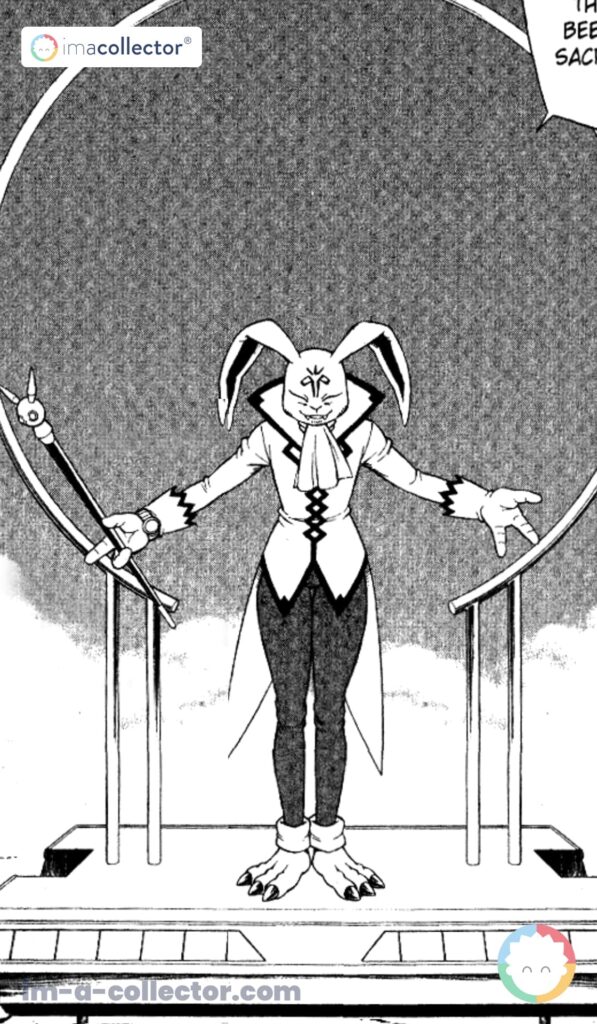
Volume 17 reminded me why I enjoy the way Sanjō constructs his battles. I found the resolution of the confrontation with Hystario especially well conceived and set up. Once again, Beet’s opponent has abilities that force him to find a solution unlike anything he has used before.
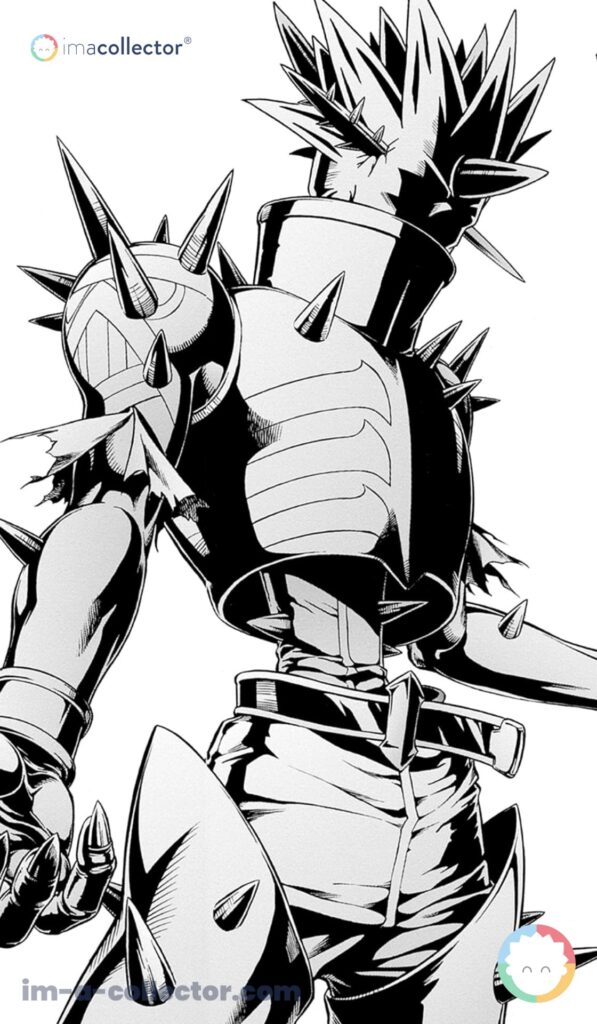
I found Hystario to be a particularly tormented character. There is something moving about this Vandel who cannot die and desperately seeks companionship, despite his unmistakable cruelty.
I like his design, too. Inada has given him a slender, almost elegant silhouette, quite different from those of the Vandels Beet has encountered so far. He doesn’t need to be imposing in size to pose a threat. His behaviour and abilities are more than enough to make him unsettling.
The way he is defeated may seem fairly simple. Still, it once again makes clever use of what Beet’s Saigas can do. I appreciated that Sanjō found a new way to end the battle instead of reusing a solution from an earlier fight.
Visually, the fight is also very well executed. My only reservation is that it felt a little short. The pages fly by, perhaps a little too quickly, and I would happily have taken another double-page spread or two to savour the confrontation. I’d rather not reveal more about the outcome, since discovering it is part of the pleasure of reading the manga.
I thought volume 17 was pretty good overall, but it was the final pages that really stayed with me. The new information about Shagie has rekindled my interest in a character who had remained largely a mystery until then.
A cruel world where death is rarely final
I’ve always found Beet’s world particularly cruel. Humans live under the rule of the Vandels, who can destroy their villages, exploit them or inflict suffering on them. Busters are all too often their only chance of survival.
In those circumstances, it is easy to understand why Beet wants to end the Age of Darkness. His goal concerns everyone living under Vandel rule.
Yet I sometimes feel that Sanjō hesitates to follow through on the consequences of the events he sets in motion.
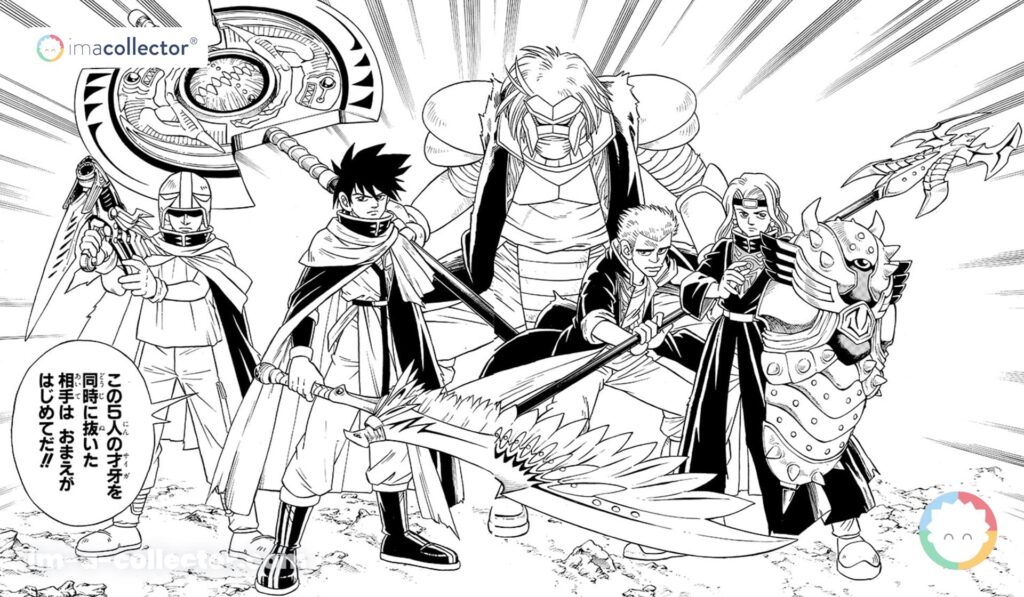
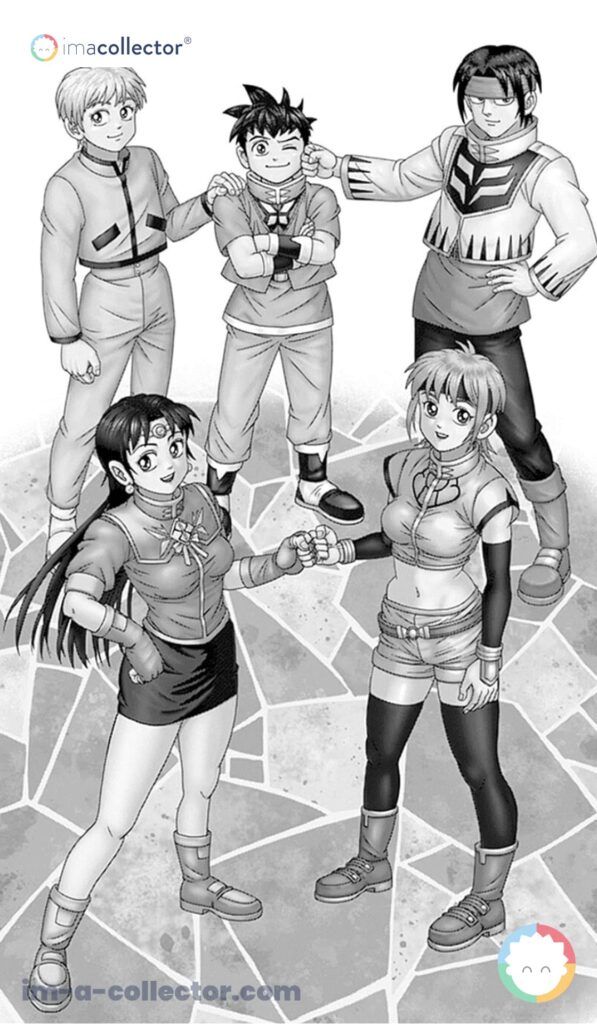
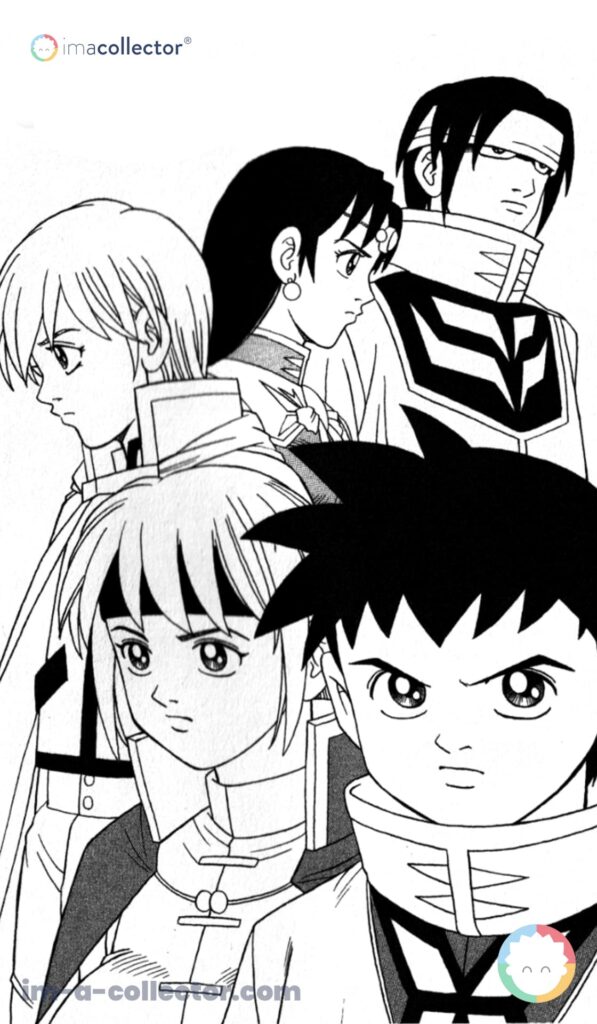
The disappearance of the Zenon Warriors is one of the foundations of the story. Beet inherits five Saigas from these elite fighters and carries the memory of their sacrifice through those weapons. Their absence is felt at every stage of his growth, as he fights with the weapons of those who saved his life.
I had hoped the Zenon Warriors really had died. Their disappearance gave particular weight to the beginning of the adventure and to the responsibility they left Beet with.
Seeing Laio return at Hystario’s side therefore came as a genuine surprise.
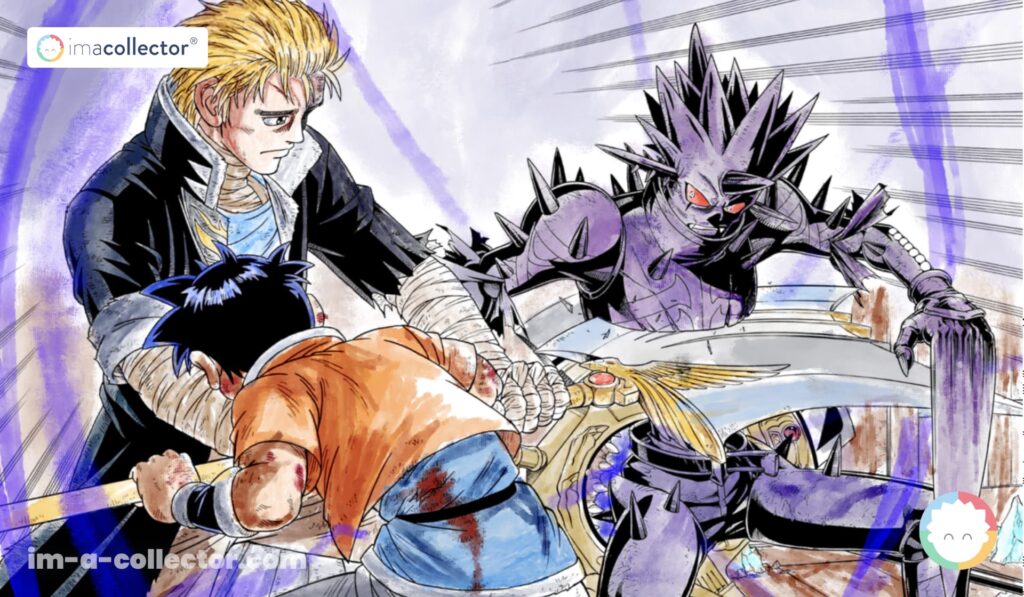
I thought the revelation was handled beautifully. It comes long after the events that led to the warriors’ disappearance, bringing back a character we thought we had lost. Hystario can turn the dead into his servants. Laio’s return is unsettling, especially given the bond between him and Beet.
This development makes Hystario both sympathetic and manipulative. There is something moving about his encounter with Laio, when his desire for companionship gets the better of him. But we also learn that Laio’s will is obscured by the eye that keeps him alive, revealing Hystario’s manipulative side.
I’m eager to see the consequences of these events. Laio’s situation is unusual enough to open up some interesting possibilities, and Sanjō has managed to surprise me after all these years of reading his work.
But among the Zenon Warriors, we now have one character suffering from amnesia and two others who have returned as the undead (I’ll let you discover the identity of the second one in volume 17). I sincerely hope the authors won’t bring back every member of the group.
Their disappearance remains essential to me. It gives meaning to the five Saigas Beet inherited and to the journey he has made since the beginning. If every warrior were to reappear, some of the narrative and psychological weight of that event could be lost.
Laio’s return works remarkably well. It simply leaves me wondering what Sanjō intends to do with the others.
Kissu and Poala, two characters whose growth fascinates me
Several of the characters around Beet have a much more complicated relationship with their own abilities.
Kissu is one I’m particularly fond of.
His lack of confidence stands in stark contrast to his actual abilities, particularly when he finds himself in danger. That contrast becomes especially striking when Beet is threatened. Kissu can suddenly show a degree of determination and power that seems completely at odds with his personality and usual hesitations.
Where Popp has to struggle and grow to become an exceptional mage, Kissu already possesses an innate talent that his lack of confidence completely undermines.
I love that contrast because it makes him so difficult to read. You never quite know how he will react.
Poala’s development resonates with me for different reasons.
She has been at Beet’s side since the beginning of the adventure and is constantly striving to improve. Yet for a long time she finds herself at a disadvantage, as her abilities often seem inadequate compared with those of the fighters around her.
Her inferiority complex reminds me of the role often assigned to female characters in shōnen adventure manga. They can be courageous, take part in battles and play an essential part in the story, yet often remain less powerful than the male heroes.
That is what makes Poala’s journey interesting to me. Despite her determination, she struggles for a long time to recognise her own worth and find her place in the group. I enjoy watching her gradually become a more formidable fighter.
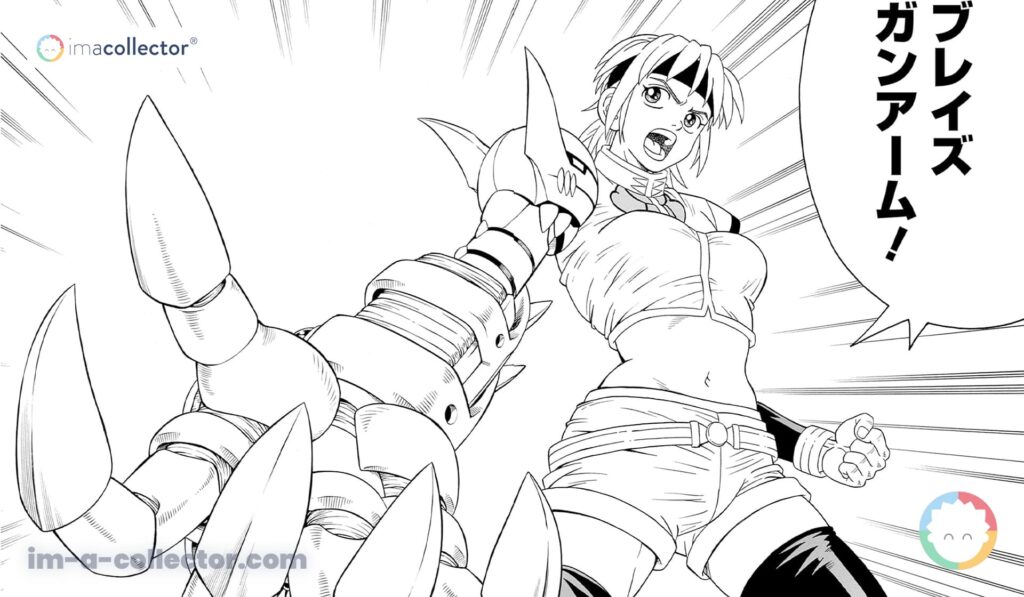
The awakening of her Saiga during the Hystario arc marks an important milestone in her development. Seventeen volumes in, she finally has a weapon that allows her to contribute to battles in a different way and prove her worth through more than magic alone.
I find this development all the more meaningful because Poala has spent so long contending with Beet’s exceptional power. Her Saiga gives her more opportunities to act on her own, without always having to rely on her companions to step in.
I hope Sanjō continues to build on this development, particularly in Poala’s relationship with Beet. She now has the means to assert herself more, and I’m curious to see how that will affect her place within the group.
The Saigas, a legacy that runs through the entire adventure
The Saigas have always been one of my favourite elements of Beet the Vandel Buster.
The hero begins his adventure with five weapons that aren’t truly his own: the Burning Lance, the Crown Shield, the Boltic Axe, the Cyclone Gun and the Excellion Blade. Each has its own distinctive properties and calls for a different fighting style.
That variety makes the battles particularly interesting. Beet must choose the right weapon for each situation, understand his opponents’ strengths, discover their weaknesses and, above all, learn more about the Saigas he carries.
I also love the connection between these weapons and the Zenon Warriors. Beet carries part of their history with him, and his growth gradually gives that legacy a new dimension.
The emergence of Beet’s own Saiga also comes as something of a surprise. After spending so long fighting with the weapons of his brother and his companions, Beet finally develops an ability of his own. Don’t get me wrong, I’m still very attached to the five original Saigas, whose designs and properties are a big part of what drew me to the series. Even so, it makes perfect sense that Beet should eventually have a weapon of his own.
The emergence of Poala’s Saiga marks a milestone of her own, after years of trying to find her place alongside more experienced fighters.
Even Slade’s Saiga eventually evolves.
The protagonists’ new powers are one of the reasons I’m so eager to read on. They open up fresh possibilities for future battles while allowing the authors to develop their characters from one volume to the next.
Seventeen volumes in, and still so many unanswered questions
Seventeen volumes in, I still struggle to imagine where Sanjō intends to take his characters.
Battles sometimes span several chapters, and Sanjō can spend a great deal of time with an antagonist or one of Beet’s companions before returning to the hero. I like that pacing. It allows the characters to develop and gives them a life beyond their immediate involvement in the battles. Supporting characters rarely exist simply to make the hero look good, and in any story, knowing each character’s background is essential to me.
Volumes 15 and 16 gave me the impression that the story was shifting its focus back to Beet and Poala, which I didn’t mind at all. Volume 17 continues in that direction.
I want to meet the next Vandels, understand what Shagie is planning and see what role Beltorze will actually play. I’m also waiting to find out what Sanjō intends to do with the Zenon Warriors.
To be honest, I’ve rarely been this eager to keep reading.
A ten-year hiatus and a return I had stopped expecting
In 2006, publication of Beet the Vandel Buster was suspended due to Kōji Inada’s health problems. Twelve volumes were available in both Japan and France at the time.
For nearly ten years, no new instalments appeared.
In April 2016, Sanjō and Inada finally resumed their work in Jump SQ.CROWN. The manga subsequently continued in Jump SQ.RISE, with instalments published less frequently than in its early years.
I had been waiting for that news for so long that I still remember my reaction. I knew the manga had been put on hold for health reasons. At one point, I had even begun to wonder whether Kōji Inada was still alive, given how little I could find about his health despite my searches. Learning that the two creators would continue working together came as a wonderful surprise.
The situation in France made the wait even longer. After volume 13 was released in August 2019, readers had to wait until November 2025 for volume 14. Several new volumes followed in 2026.
The return of the series also raises the question of whether the earlier volumes are still available. After such a long interruption, readers looking to discover Beet need to be able to get hold of those earlier books. I had some trouble finding volumes 16 and 17 myself, as several specialist bookshops no longer stocked the series. I wonder what Kana’s plans are for potential reprints and for supporting the manga through to its conclusion.
Why I still want to know what happens next
Rereading the first seventeen volumes reminded me why Beet the Vandel Buster remains one of the manga I’m so attached to.
I love returning to Kōji Inada’s artwork and the battles devised by Riku Sanjō. I enjoy the characters who accompany Beet, particularly Kissu and Poala, whose development continues to interest me.
The Vandels have retained much of their appeal, too. Beltorze remains an enigma after all these years, while Shagie’s behaviour, particularly towards the end of volume 17, leaves me wanting to know more. Hystario also reminded me that, after all these years, Sanjō can still come up with an adversary unlike any other.
Laio’s return surprised me, and I thought the revelation was handled beautifully. Nevertheless, I hope the authors preserve some of the weight of the Zenon Warriors’ original sacrifice. Their disappearance gave Beet’s journey its meaning, and I would be disappointed to see every member of the group reappear.
Beet relies on some of the same convenient plot devices as most adventure manga of its era. Characters always escape the desperate situations they find themselves in, and there are plenty of similarities with The Adventure of Dai. Yet I still thoroughly enjoy reading it.
Twenty years later, I’ve been reunited with the characters I started this adventure with. I’m still curious to meet the next Vandels and see what becomes of Beet, Poala and their companions. Perhaps we will finally find out what Sanjō has in store for the Zenon Warriors.
I had come to believe this story would remain unfinished. Now I can look forward to the next volume again.
I just hope I won’t have to wait another ten years to find out how it ends. According to the authors, we’ve reached the final arc. Let’s hope it holds as many surprises as these first seventeen volumes.